
Bodysgallen Hall Review: Historic Luxury and Spa Escapes in North Wales
Set within 200 acres of parkland near Llandudno, Bodysgallen Hall combines historic charm, fine dining, luxury spa facilities and one of North Wales' most beautiful country house hotel settings.
It is a truth universally acknowledged that four hours on the M6 – taking on the full brunt and horror of Friday afternoon traffic – is more than enough to test the appeal of any luxury hotel. Thankfully, Bodysgallen Hall in North Wales has had several centuries to perfect the art of making weary guests feel much, much better.
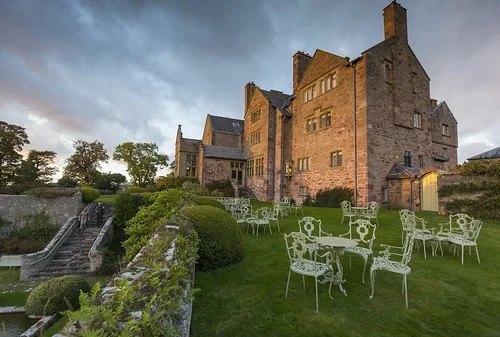
Bodysgallen Hall, a sight for sore eyes
The Grade I-listed house, perched prettily on a hilltop on the lower slopes of Pydew Mountain and outside the pastel-hued seaside town of Llandudno, has evolved gracefully over the best part of 600 years. Indeed, the history on show is tangible and all-encompassing. The oldest surviving section is a five-storey watchtower dating back to the 16th century, and successive generations of the Mostyn and Wynn families did what all great dynasties do best: gradually adding to the quintessential country pile across the eras, resulting in the handsome home that stands today.
Since 1980, Bodysgallen Hall has been carefully restored by Historic House Hotels, and in 2008 it was gifted to the National Trust. The result of this evolution is evident from the moment you arrive: here is a distinctive historic hotel that feels satisfyingly lived in, beautifully maintained and presented with real and enduring pride. I was more than a little smitten.
Peerless Hospitality, Six Centuries in the Making
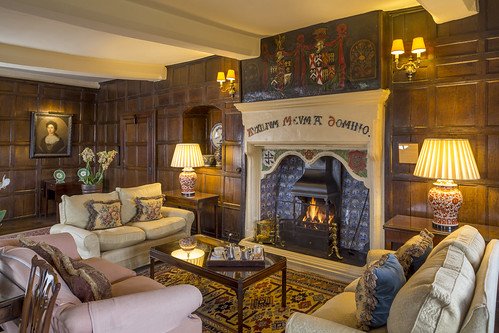
Immersive history, without the gimmicks
Bodysgallen Hall wears its proud history on its delicately carved sleeves, but it’s not a gimmick and it’s never forced upon guests. There are no presentations, no ubiquitous coat of arms. Nobody bores you with a timeline upon check-in, and there’s no risk of bumping into a disgruntled Earl begrudging the fact that his home now has a luggage room.
Instead, the building gradually reveals itself through crooked corridors, ancient beams, sagging floorboards and beautifully decorated fireplaces large enough to roast an ox. We’ve all come across country house hotels that feel like hotels designed to resemble country houses. Bodysgallen Hall feels like a country house that simply happened to become a hotel. Following the aforementioned gruelling slog through Shropshire’s least inspiring towns, all this authenticity proved impressively soothing.
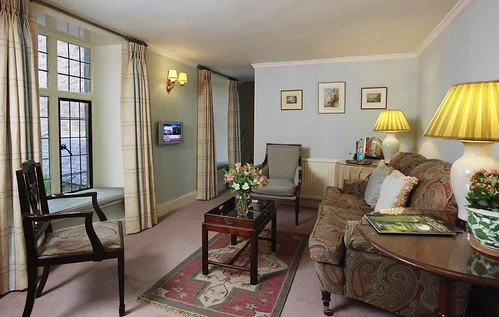
Bedrooms that are satisfyingly old-fashioned
This essence of calm continued to the bedroom – slightly dated and old-fashioned, but in a thoroughly reassuring kind of way, it overlooked the estate’s extensive lawns, maze and walled kitchen gardens. Beyond those walls, the landscape rolls away to the coast and all the possibilities it presents.
The room itself was spacious, comfortable and equipped with Penhaligon’s toiletries (the ultimate eccentric and aristocratic-coded British brand, and a savvy choice for the hotel), and imbued with the sort of blanketing, velvety quiet that’s depressingly rare in modern life. That view did most of the heavy lifting, mind you.
Gardens to Get Delightfully Lost in
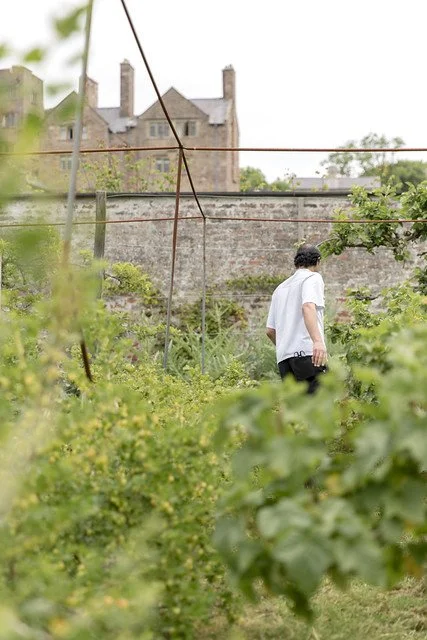
Who doesn’t love an on-site kitchen garden?
It’s no exaggeration to say that Bodysgallen’s grounds alone justify a stay. The full might and muscle of a fleet of gardeners is out in full force, and spread languorously across 200 acres, they range from formal gardens and herb-filled parterres to woodland paths disappearing beneath ancient oak trees.
Meandering across them in the golden hour, there is a wonderful sense that the estate was created to be wandered through rather than admired from afar. One path becomes another, a glimpse of a folly appears through the trees and somewhere in the distance, a church bell rings. It’s the British countryside at its best, and a stunning reminder of all that we should strive to protect.
For those seeking to stretch their legs, a trek up to the estate’s honest-to-goodness obelisk is strongly advised. It’s no epic hike – about twenty minutes, in total – but it requires a trudge up a relatively steep hill that makes you feel a little less guilty about the incoming indulgences of afternoon tea. The reward reveals itself magnificently once you reach the summit, and it neatly summarises the appeal of North Wales as a region. To one side, the Celtic Sea. To the other, the imposing hulk of Conwy Castle, still looking every inch the medieval power statement several centuries after its completion. Edward I was not a man interested in subtlety, after all.
In Defence of Old School Dining
Bodysgallen Hall restaurant is committed to continuing the themes that the hotel has set firmly in place: old fashioned but not outdated, confidence that refuses to shout, and a sense of time and place that permeates pretty much everything you come across.
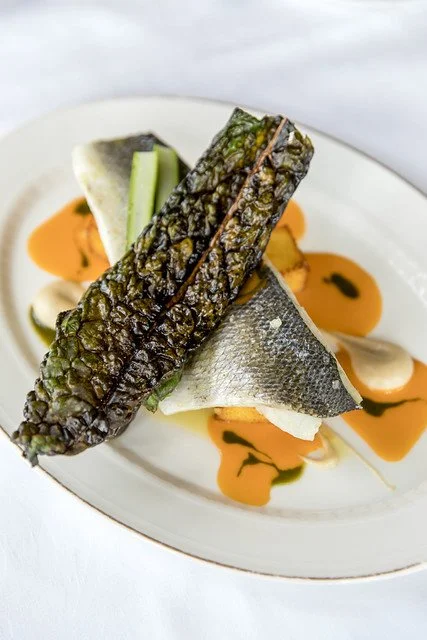
Sea bass with tomato and kale
If you’re on the hunt for a reinvention of old school fine dining, you won’t find it here. There are no groan-inducing ‘concepts’ to explain, no open kitchens featuring the clatter of pans and the grunts of manly men doing clever things with meat, fire and woodsmoke. There are no unnecessary theatrics at all, in fact. Instead, the dining room offers something that’s actually rather rare nowadays: proper silver service, executed by a team that genuinely knows what it’s doing. It’s a neat reminder that the old ways can still impress enormously when they’re done well, and that classics are classics not without good reason.
Boasting a pair of AA Rosettes, the kitchen team, headed by chef Abdalla Ahmed El Shershaby, presents seasonal, local dishes (with the occasional subtle hint of Asian and Middle Eastern influences) that are designed to please both the eye and the taste buds. I enjoyed a silky-smooth crab pâté, which offered copious briny sweetness and the kind of nursery-soft textures that make you feel all is right with the world. It came topped with a delicate saffron tuile that shattered satisfyingly beneath my fork, bringing an additional and not unwelcome aromatic and textural quality to proceedings.
With the sea breeze blowing in from the horizon, I couldn’t resist following it with the sea bass. A gorgeous slab of achingly fresh fish – given only the gentlest, mildest lick of heat to firm up the proteins and very little else – it was an uninterrupted taste of the waves, and a clear sign that the kitchen believes in the great credo of letting excellent ingredients speak for themselves. Elsewhere on my table, there were little flashes of the team’s South Asian culinary heritage; the rich Indian-style tomato chutney alongside garden vegetables, the gentle spicing of the charred celeriac, a few aromatic touches where you least expected them. Yes, this was British country house cooking, but with depth and distinctiveness seasoning the experience throughout.
Were there any minor disappointments? Yes – but they arrived alongside the courses rather than within them.
I’ve long believed that a restaurant’s bread basket has the potential to tell you everything you know about a kitchen. I’ve enjoyed exceptional tasting menus where the bread course has been an unrivalled highlight amidst a meal packed full of big-hitters. It is, after all, the establishment’s best opportunity to demonstrate a commitment to the minor details, and a chance to impress the diner before the headline acts appear on the stage. Bodysgallen offered up a selection of serviceable-but-boring slices of white, brown or onion-seed loaves. Given the quality of everything that followed, it felt oddly out of character and profoundly out of place.
Breakfast, Tea and Other Delights
Hotel breakfasts up and down the country have become fairly ubiquitous. Sure, there are subtle regional variations – Scotland’s insistence on quadrilateral processed meat products, Ireland’s bizarre habit of removing both the key ingredient and all the flavour from black pudding, to name but two examples – and little to no consistency in quality. Bodysgallen Hall, as with so much of its offering, seems once again to remind us that British breakfast classics go far beyond the depressing binary of the greasy fry-up and the bowl of cereal.
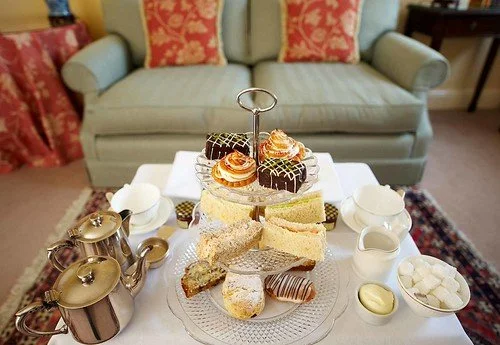
Welsh afternoon tea, done right
Yes, there’s a full Welsh breakfast on offer, which I’m sure is lovely. However, there are also fabulous grilled kippers on offer and – most delightfully – a poached fillet of smoked haddock with eggs and granary toast. Almost absurdly simple and yet utterly, deliciously comforting, it’s a relic of better times and the kind of detail I can’t help but get excited about.
The taste sensations didn’t end there, however. Following some time getting rather lost amidst the ancient oaks and chestnut trees surrounding the hotel, I was invited for afternoon tea in one of the many drawing rooms complete with 18th century portraiture, the odd tapestry or two and swords mounted above fireplaces.
This most British of rituals kicked off with a perfectly-brewed pot of my beloved Lapsang Souchong – that smoky, aromatic and floral Chinese tea that’s increasingly difficult to come across in British supermarkets – and was followed by a cake stand piled high with various treasures. Finger sandwiches with thick-cut local ham, the kind of crumbly, sharp cheese this part of the world does so well and silky ribbons of smoked salmon hit all the right spots. I piled freshly baked scones with a slightly absurd amount of clotted cream and jam, and I somehow made room for choux pastries, meringues and slices of bara brith (the underrated hero of the Welsh kitchen) spread thickly with butter. From the corner window, we oversaw manicured gardens stretching away beneath a blanket of Welsh greenery. Inside, there was tea, cake and nowhere urgent to be.
What’s more, considering the quality and quantity of ingredients and the spectacular setting, at £35 per person it proved remarkably good value for money. Civilisation, for all its flaws, does occasionally get some things right.
Bodysgallen Spa and the Wonder of GAIA Treatments
Bodysgallen's spa has long been one of the hotel's major draws. Tucked away from the main house, it includes a 15-metre heated swimming pool, sauna, steam room, gym and a suite of treatment rooms, all surrounded by the same sense of calm that pervades the wider estate. On a sunny day, it's difficult to imagine wanting to be anywhere else.
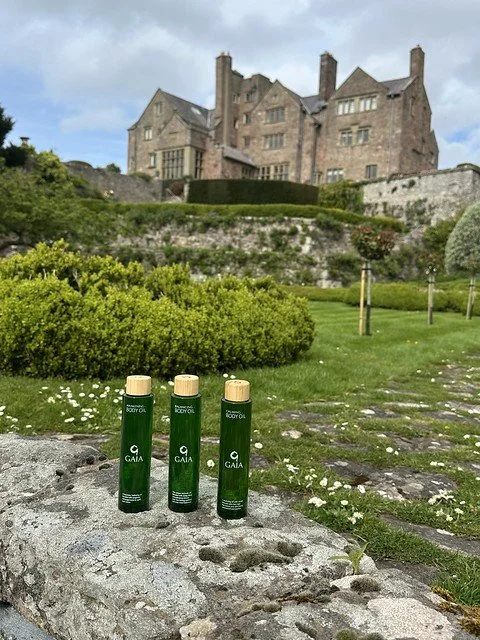
Cornish GAIA Skincare in North Wales’ finest spa hotel
The hotel's latest spa partnership is with Cornwall-based GAIA Skincare, whose products are handmade in Britain and built around a straightforward idea: relaxation shouldn't feel like hard work. Wellness can often disappear up its own backside, buried beneath layers of jargon and optimisation. GAIA takes a simpler approach, with treatments built around blends designed to awaken, balance or calm.
I opted for a full-body GAIA Calming Massage and found myself in the capable hands of Megan, who spent the next hour attempting to reverse the physical consequences of a career spent hunched over keyboards. It cannot have been easy, but she made a heroic effort.
The treatment began with a choice of oils before settling into a deeply restorative massage that combined aromatherapy with the sort of firm, instinctive technique that instantly reassures you you're dealing with someone who knows their way around a musculoskeletal system. As calming notes of lavender, chamomile and orange blossom filled the room, Megan worked patiently through shoulder knots that have been tightened and wound across decades, and by the end, muscles I hadn't realised were carrying tension had finally surrendered, and I emerged feeling considerably looser and calmer.
This sense of bliss was deepened by some time in the spa’s jacuzzi, 15-metre heated swimming pool, sauna and steam room – all superb ways to while away your time and give in to relaxation, with no rules needing to be rewritten, no boundaries or envelopes needing to be pushed.
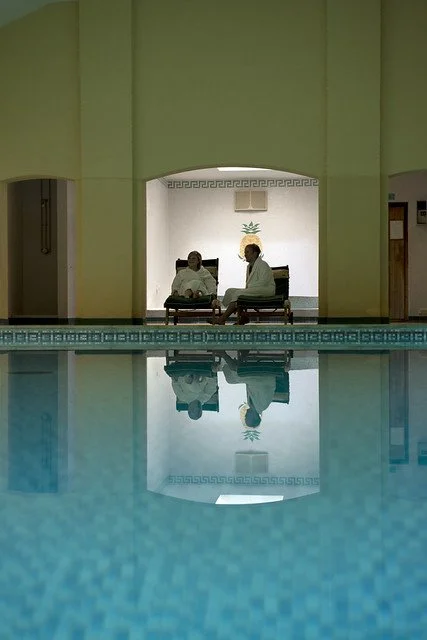
Unwinding, unwinding, unwound.
It’s a neat encapsulation of what the hotel is doing as a whole: Bodysgallen emphatically isn't trying to reinvent the country house hotel. It isn't chasing trends or attempting to manufacture memorable moments for the pervasive hellscapes of social media. Instead, it focuses on the things that have always mattered: beautiful surroundings, comfortable rooms, thoughtful service, good food and the simple pleasure of having time to slow down.
After a weekend spent wandering through its gardens, admiring silverware and sitting beside centuries-old fireplaces, the outside world felt pleasantly distant. It hadn’t been forgotten altogether. The emails were still waiting, and so were the deadlines. However, they felt considerably less urgent than they had 48 hours earlier.
The ultimate proof? I deliberately took the long way home and barely noticed the traffic at all.
Love historic country house escapes? Check out our reviews of Hartwell House, Jane Austen hotels in UK, Chillingham Castle and The Falstaff Hotel.
