
Craving a truly unique getaway? Experience Croatia’s most exclusive retreat and uncover the secrets behind Villa Nai 3.3’s globally recognised olive oil.
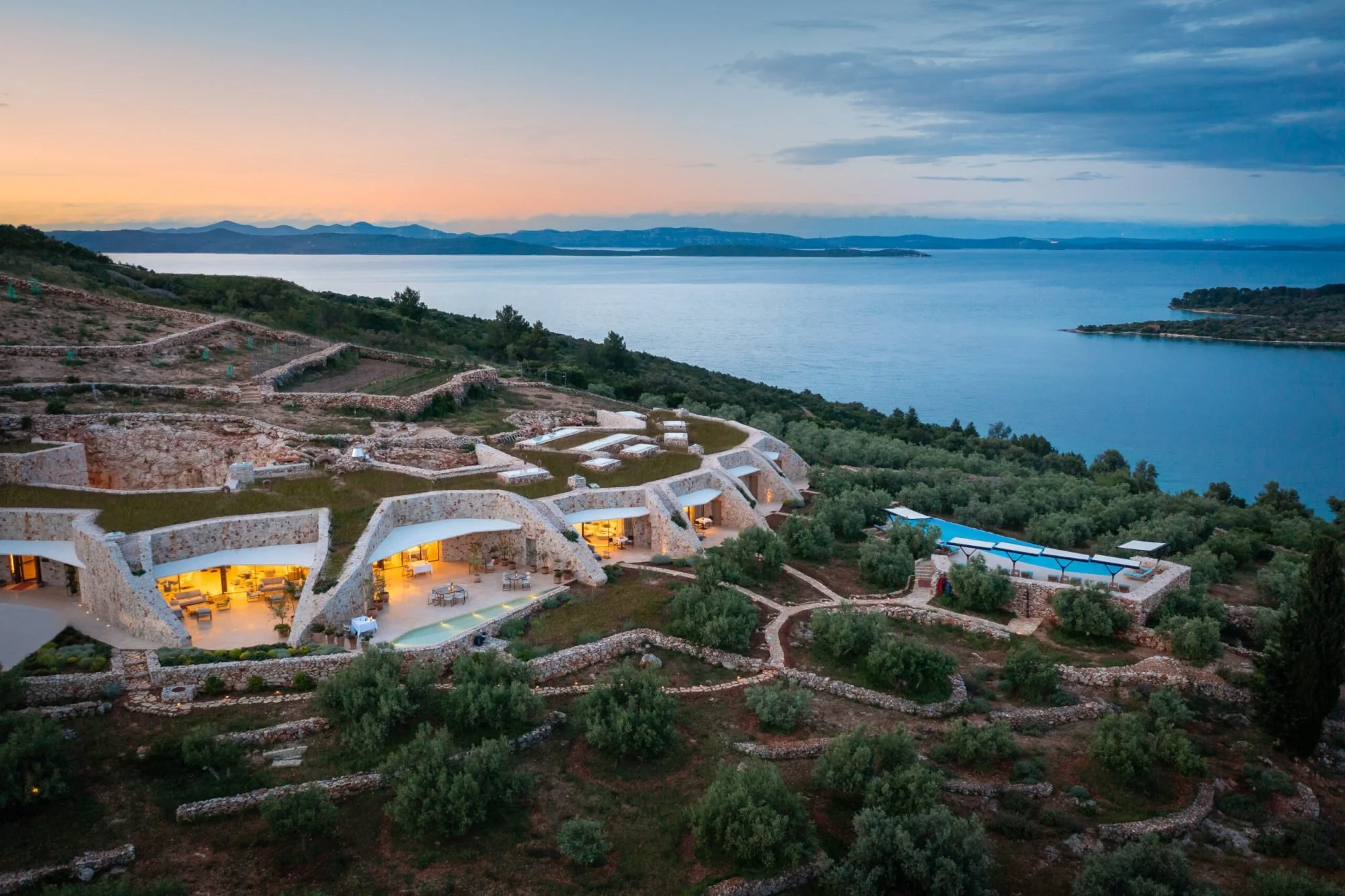
Villa Nai 3.3, Dugi Otok, Croatia.
Set in the hills of Dugi Otok, Croatia's largest and westernmost island, a 500-year-old olive plantation conceals a secret. As the country's only three-Michelin-key venue (in both 2025 and 2026) and a member of Leading Hotels of the World, you might be surprised to find an operational farm. Even more, how the most sought-after stays at Villa Nai 3.3 take place during their most industrious period: the harvest.
When one thinks of a working farm, you might picture muddy boots at the door and excitable spaniels at your heels, not necessarily tasting menus and spa treatments with fresh, handmade skincare. The fragrance of livestock and sound of heavy machinery might come to mind, but certainly not four-poster beds, crisp Italian linens, or bespoke pillow menus. Yet, as the only non-hotel venue on these lists, this intersection of agriculture and hospitality cultivates one of the world's most distinctive and luxurious escapes, and thoroughly deserves each accolade.
After a swift flight to Split, a brisk drive to Zadar, and a brief ferry to Zaglav (a jetty and helipad on site offer alternative arrival options), we swing up a steep, winding road lined with olive trees, reaching Villa Nai 3.3 in the late afternoon, with the sun still lazing over an amiable coastal breeze.
The ultra-modern farmhouse
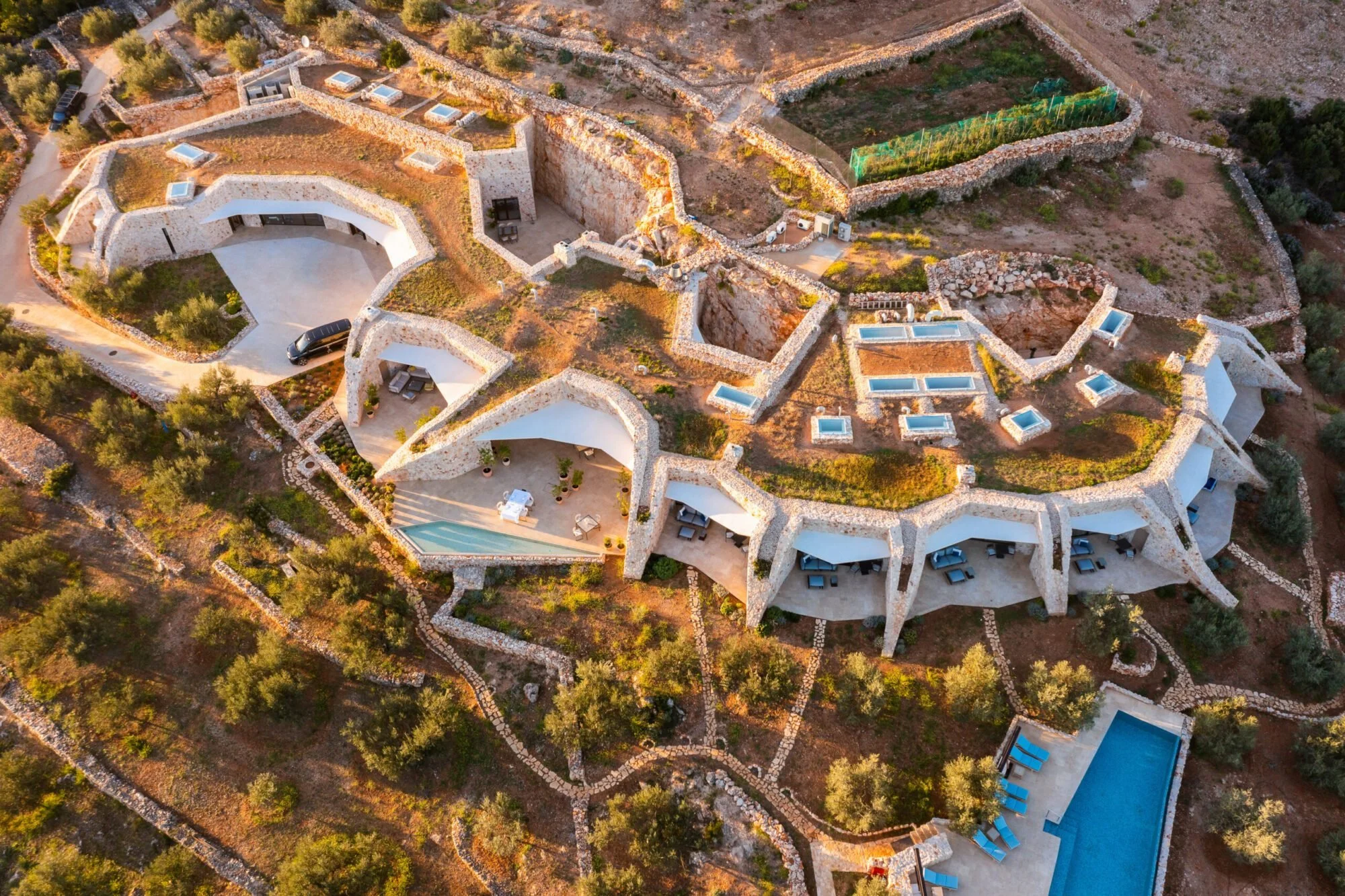
Even with words as my craft, it's formidable to describe a place this disarming. As we enter, an ambience designed to make any thoughts of the outside world evaporate absorbs us. Cared for by the same family for 400 years, this newest iteration of the land is its most adventurous: a super contemporary estate that tiptoes from the rocky ground in a flow of connected geometric blocks around the slope that houses it.
The notion of a traditional stone farmhouse that may have stood here centuries ago gives way to a sweeping open-plan space comprising the reception, lounge, two restaurants and bar. Inside, Italian marble floors meet vast glass doors that offer an uninterrupted view of the groves; natural limestone walls rise into artfully lit stepped ceilings that follow the movement of each area, akin to the undulation of the land that created the Croatian islands thousands of years ago, and sleek Italian-designed furniture defines each space.
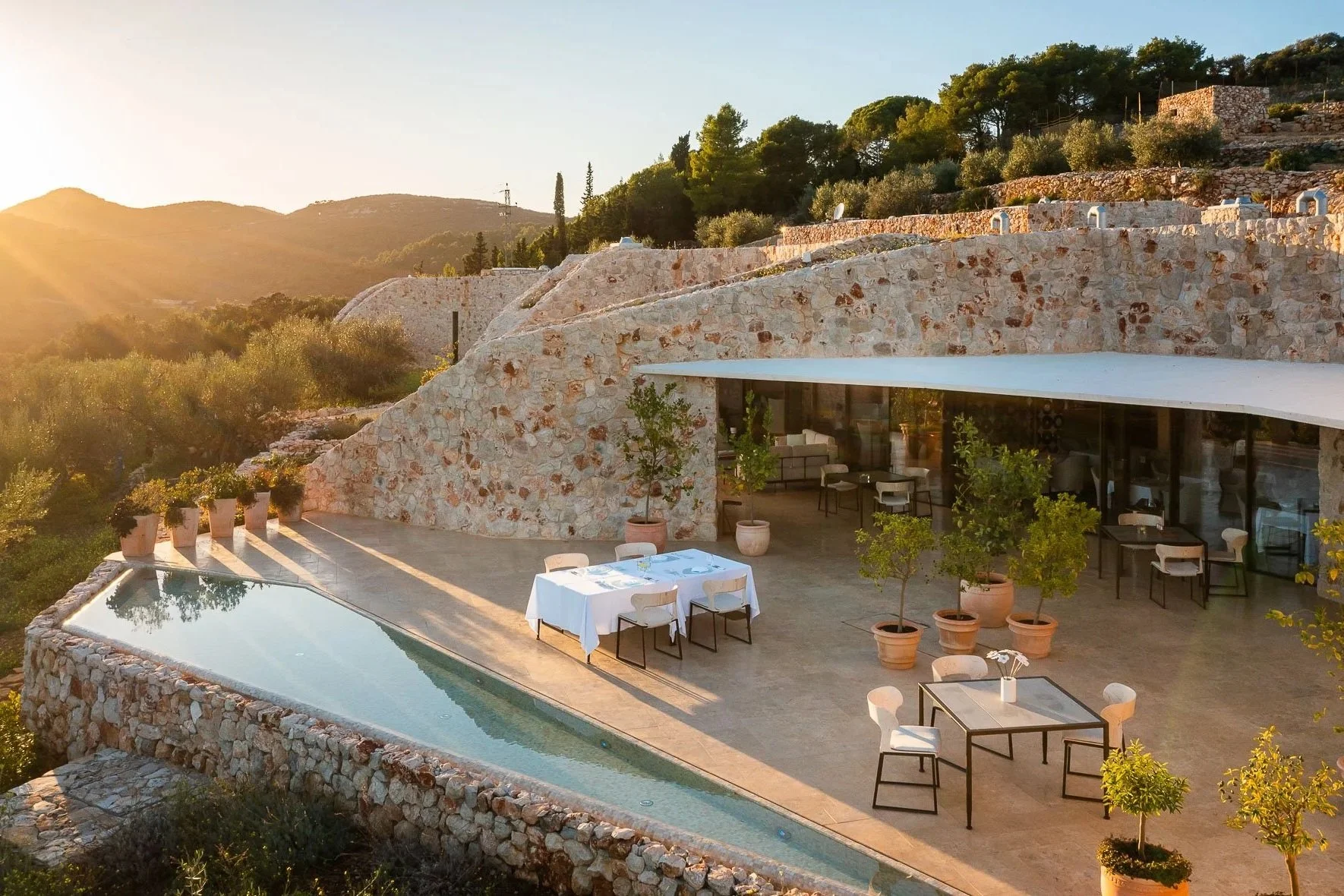
Nonetheless, a working olive mill nestles right among it all—along with five deluxe rooms and three suites—quietly producing around 1000 litres of championship single-estate oil each year.
Our arrival one Tuesday in late September coincides with the onset of the harvest. “It’s looking like it might be Saturday,” we are told before we travel. On arrival, an update: “They expect it to be Friday instead”.
As we settle into armchairs in the lounge, olive leaf tea arrives at the table. Steeped with fresh lemon and honey and blissfully ice-cold, it's a tonic after hours of travel. A generous welcome spread follows with an aperitif of Italian sparkling rosé, as we relish home-baked bread still warm from the oven, marinated local anchovy, charcuterie, and beautiful, plump preserved olives with the bite of glacé cherries, all with lashings of their three house olive oils.
Just beyond the terrace, I watch a pair of gentlemen, I later find out to include owner and producer Goran Morović, wander the grove just 50 yards away. Reaching up to grasp the fruit as they snake back and forth between the trees, they perform their daily progress check of the crop.
Villa Nai 3.3: secluded rooms and suites
As I tread softly down a double-height corridor just off the main lobby, I pass a glass window peeking into the spa, with a Finnish sauna and indoor saltwater pool. Leading to a courtyard carved into the rockface, it offers an outdoor gym that could tempt even the most reluctant of gym-goers.
Reaching my room, the Signature Adriatic Panoramic Suite, the impeccable attention to biophilic design continues to soothe the nervous system, with a palette of neutral tones, raw stone and blond wood personally selected by co-owner Nieves Morović. A generous 60 sq m is split between an elegant, uncluttered living area, with two deep armchairs and a coffee table surveying the terrace, a writing desk and a thoughtfully stocked bar and larder.
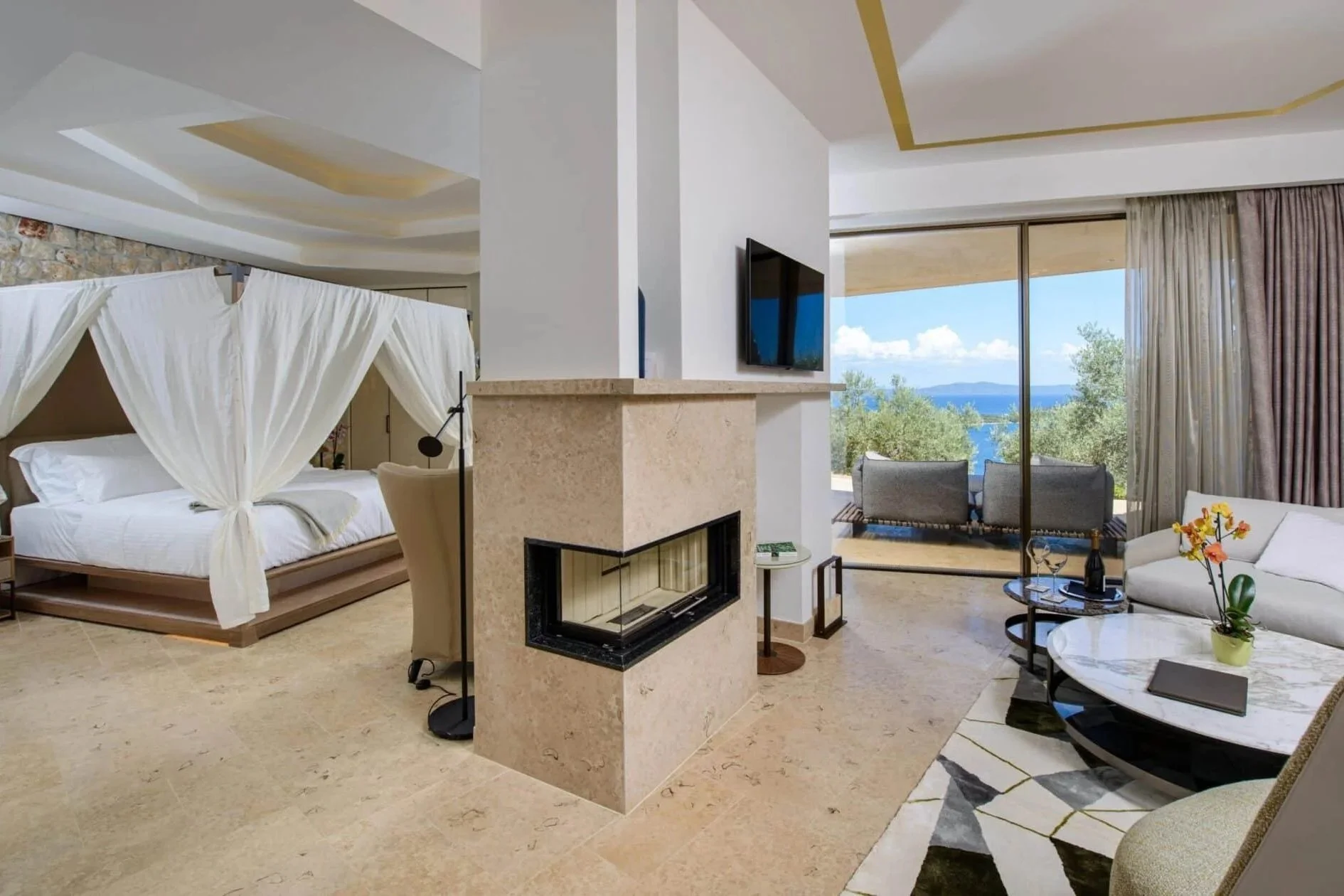
Signature Adriatic Panoramic Suite
Open plan, yet separated from the spacious bedroom zone by a partition wall with a contemporary fireplace, I find an enticingly draped four-poster king bed under another stepped ceiling, dressed with crisp Frette linens.
A swathe of glass opens fully onto the private terrace, a genial 38 sq m, overlooking the coast, letting in light as whispers of birds and rustling trees pour in on the breeze, creating a feel that is ever so un-subterranean.
An adjacent bathroom offers accents of dark marble and gold, yet the polished Italian marble floors continue from the villa's entryway, containing intriguing fossilised shells and ammonites, as if lifted directly from the nearby seabed.
Fitted with a double vanity and a floating makeup mirror—an elegant touch—a rain shower joins a separate bath under a vast skylight, ideal for soaking and stargazing.
Visionary architecture for an agricultural heritage
As I take an early evening swim in the 23-meter outdoor saltwater pool, my view shifts from the rugged Dalmatian coastline over the infinity edge to the estate behind me as I ponder the building with each stroke.
To say the villa feels more of a performance than the average farm building would be an understatement.
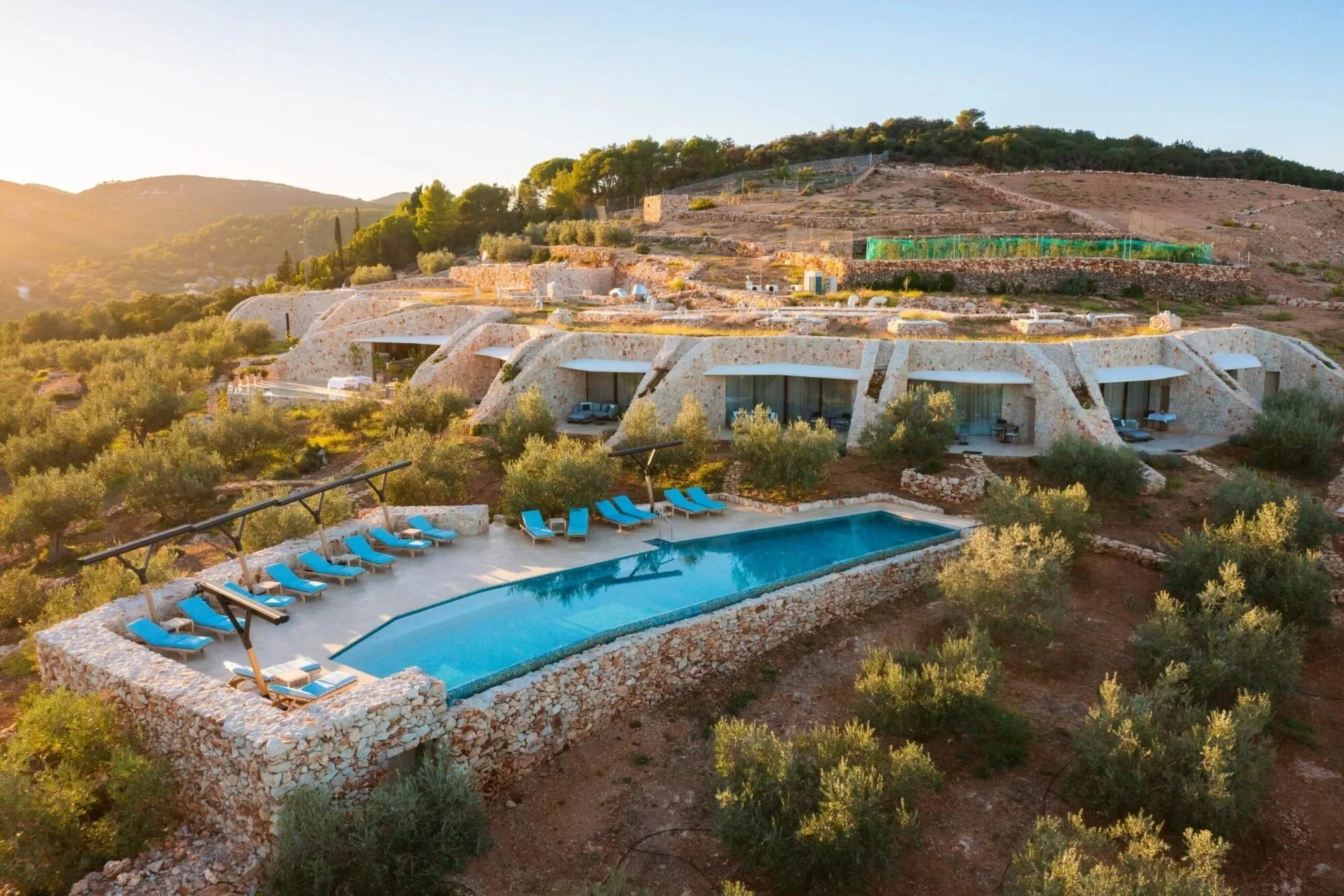
Designed by renowned Croatian architect Nikola Bašić—best known for Zadar’s Sea Organ and Greeting to the Sun—and built by Goran Morović—owner of the family land and a local, esteemed engineering company—it’s an architectural masterpiece, earning its place as one of five global, and the only European, finalists for the Michelin Guide Design and Architecture Awards for 2025.
As if the ridge took a stand, rolled its shoulders, and rearranged itself for a more comfortable seat, or, possibly, to gain a better view; room by room, its vantage shifts from across the coast to the neighbouring islands of Otok Iž and Otočić Krnata, as the building sweeps inland to overlook its olive groves and the surrounding pine forests of the Telašćica Nature Park. Hewn from the limestone bedrock it sits in, it took ten men two months to cut and shape the stone before construction began.
Ambitious in its design, it took multiple rounds of applications; it’s one of the few buildings whose first floor and basement are on the same level, thanks to its intersection of the elevation, with the basement-to-ground-floor threshold somewhere in the bar.
Alfresco dining at Grotta 11000
Later that evening, we join Goran and Nieves, the husband-and-wife team behind the estate at Grotta 11000, at one of their two on-site restaurants.
In perfect cohesion, a stone precipice hems a private open-air courtyard just off the lounge, offering alfresco dining for around 16 guests. Grotta, Italian for cave, mirrors the architectural design, whilst the numeral honours Šime, an ancient Dalmatian caveman whose remains, dating back roughly 11,000 years, were discovered in the Dugi Otok Vlakno cave.
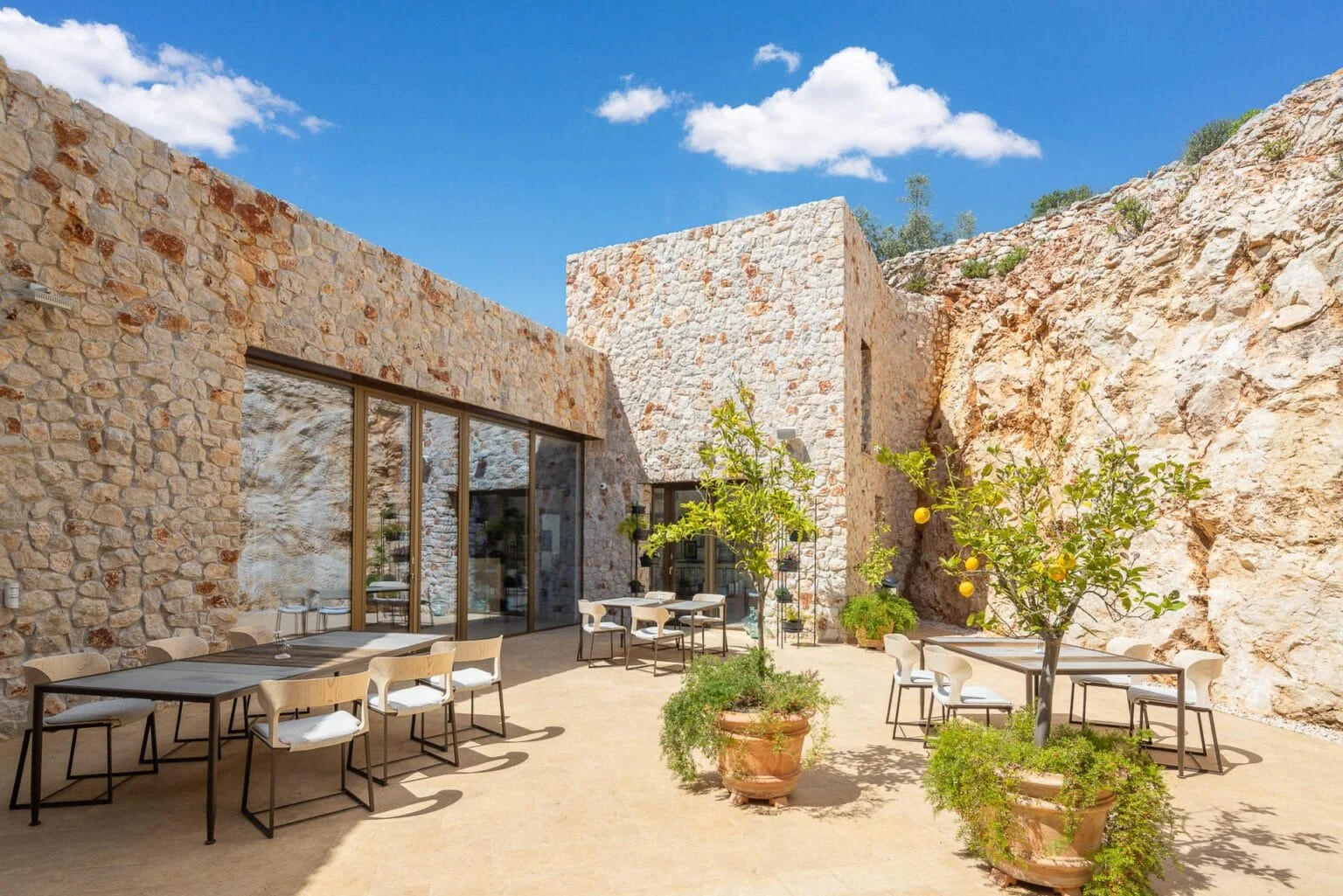
Grotta 11000
Numerology is seemingly one of Goran’s interests; he shares how ‘3.3’ denotes the average number of snowfall days—with nai meaning snow in Old Dalmatian—perfect for good olive tree growth.
In honour of Šime’s available methods, it’s home to cooking by fire. Guests can watch idly as their supper is cooked in their company on an open-fire griddle, pizza oven, or peka; a traditional Croatian cooking method in which embers enclose a lidded metal pan, this evening holding baby goat. The next night, head chef Santosh Yadav prepares the fish a fellow guest caught that day.
As we start with bread and oil, Goran shows us through the three oils they produce, each known for its exceptionally high polyphenol content. Their Nai 3.3 Blend is a multi-varietal composition of oils, including karbunčela, oblica, pendolino, and leccino, and offers an incredibly creamy, mellow flavour that pairs beautifully with bread and vegetables.
Their Nai 3.3 Drobnica is made from the native Dalmatian olive variety drobnica. An international gold-medal winner; it builds in intensity, with verdant fruitiness and a clean, mildly warming bitterness.
Finally, the Nai 3.3 Coratina boasts a decadent fruit aroma, increasing the intensity with lively green, herbaceous notes toward fresh rocket or mountain herbs, with a resounding peppery finish over a slight sweetness.
Greeted by a glass of Vučemilović Pošip, our evening begins with an amuse-bouche of scorpion fish ceviche and fresh beef tartar crowned with grated butter. “In Croatia, they will tell you a fish swims three times,” Goran explains, “the first time in seawater, the second time in olive oil, then the third in wine”, but notes that Coratina is a great pairing for red meats. “I focus on the olive oil.”
As the peka arrives, the vast cooking pot is wheeled to the table. The meat falls off the bone into its braising liquid, joined by a selection of slow-cooked vegetables from their rooftop garden. Goran’s favourite olive oil potatoes join us too, as wandering hands reach for them again and again, jubilantly dipping them in their Croatian bush strawberry ketchup.
Not partaking in goat, a buttery-soft squid arrives on my plate after a trip to the coals, stuffed with airy mashed potato imbued with capers and herbs, served over a chard velouté that is nothing short of incredible.
Goran shares that their promenade through the grove earlier shows the Italian varieties, pendolino and leccino, are ready. Tomorrow they prepare; “The harvest starts on Thursday.”
Nai 3.3 Harvest
On the first day, it’s a hive of activity as machinery is relocated, tools are readied, and trees are lined with nets in preparation.
“Different varieties will change colour at different times,” explains Goran. “Having different varieties is an advantage; with ripening across two or three weeks, you can spread the harvest.”
Exceptionally helpful for a small operation, for sure, as staff from all over the estate join in. “It’s my first year here for the harvest,” a member of staff at the bar tells me. “I wanted to join in to experience it; I was there all morning!”
It seems the lower groves have turned first. It’s a fine-tuned process, Goran explains, as each tree ripens. “We will start to pick with our Italian variety from the lower slopes where the grove meets the sea; these first trees are completely green. The next variety will start to change in approximately ten days.”
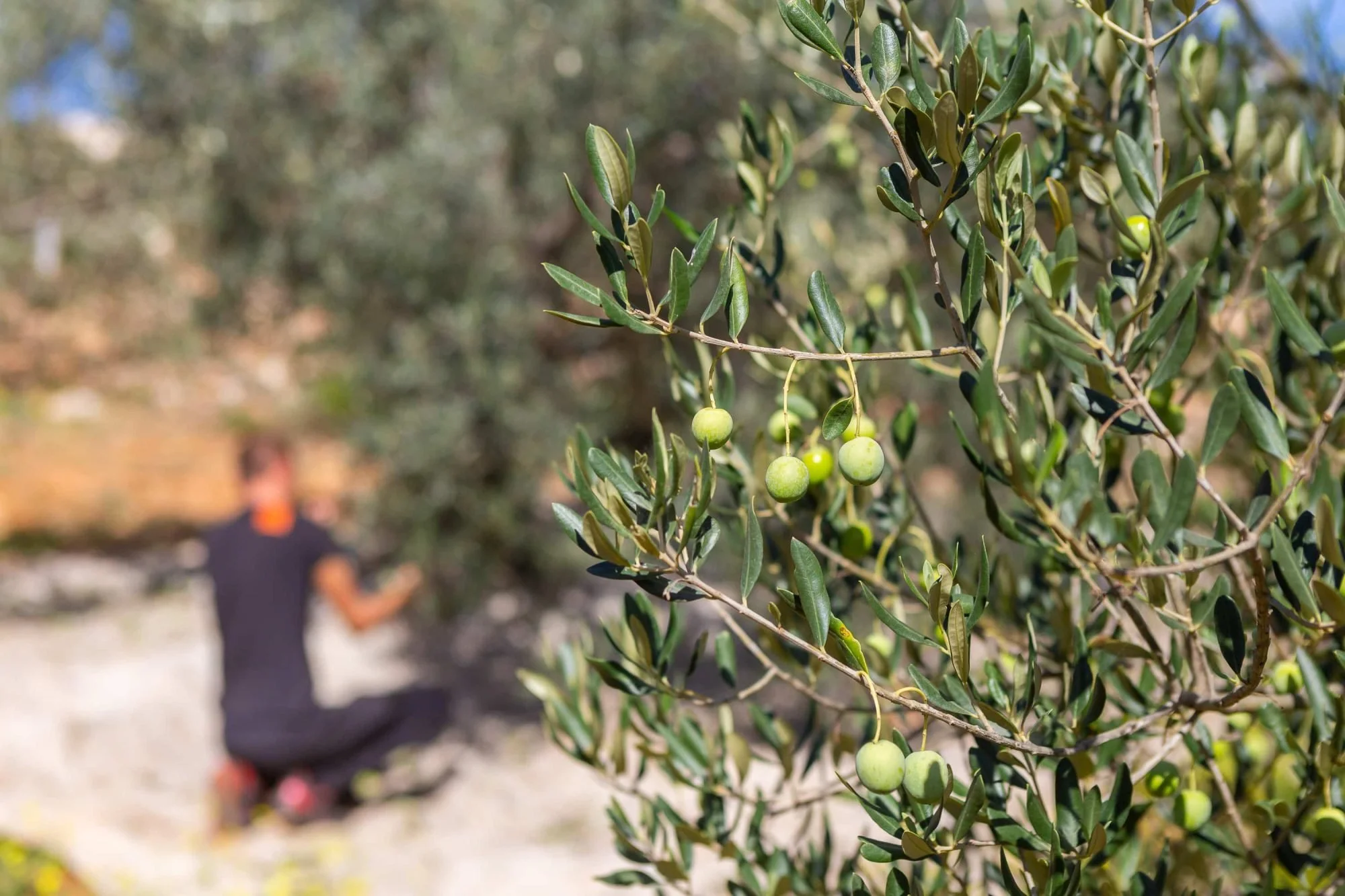
Flow through each variety is paramount; across the 40,000 m² estate, they have around 1350 trees, producing around 1000 litres of oil. It’s a small yet mighty crop compared to the 5000 tonnes produced in Croatia and the 1,500,000 tonnes produced in Spain, yet their competition wins speak for themselves. In 2024 and 2025, Nai 3.3 Drobnica made the highest-ranked Croatian olive oil on the EVOO World Ranking.
“To pause, you will lose the quality due to fermentation; that's the reason that it's impossible to have zero acidity in a lesser product.”
And for oils that won six gold medals and two best-in-class titles at Olio Nuovo Days 2026, and Gold Medals at Olive Japan in 2023, 2025 and 2026, that’s not an option.
“Say you’re making apple pie; you can still make a good pie if you have a few kilos and one apple is a little bit rotten, but not if 90% of them are rotten. You will not survive the harvest if in every olive there are a few worms; and that is our fight here.”
As the reaping moves across the hillside, trees are jostled, netting is furled, and crate upon crate of gem-like fruits in a rainbow of green tones are neatly stacked for transport.
The first pressing
Over the three weeks, the mill runs discreetly 24 hours a day, just behind the lobby. A network of conveyor belts, vibrating trays, washing drums, pipes, tanks and grinding mills snakes around the room like an oversized Rube Goldberg machine. In the room, it’s clamorous, it's captivating, and it’s extremely exciting.
“Any delay in processing, then you will be in trouble; it’s all about the pressing equipment,” Goran warns. “With our volumes like this, you cannot pause and clean it; to clean it, you must unscrew all equipment. You lose two weeks to do that, and then harvest is finished.”
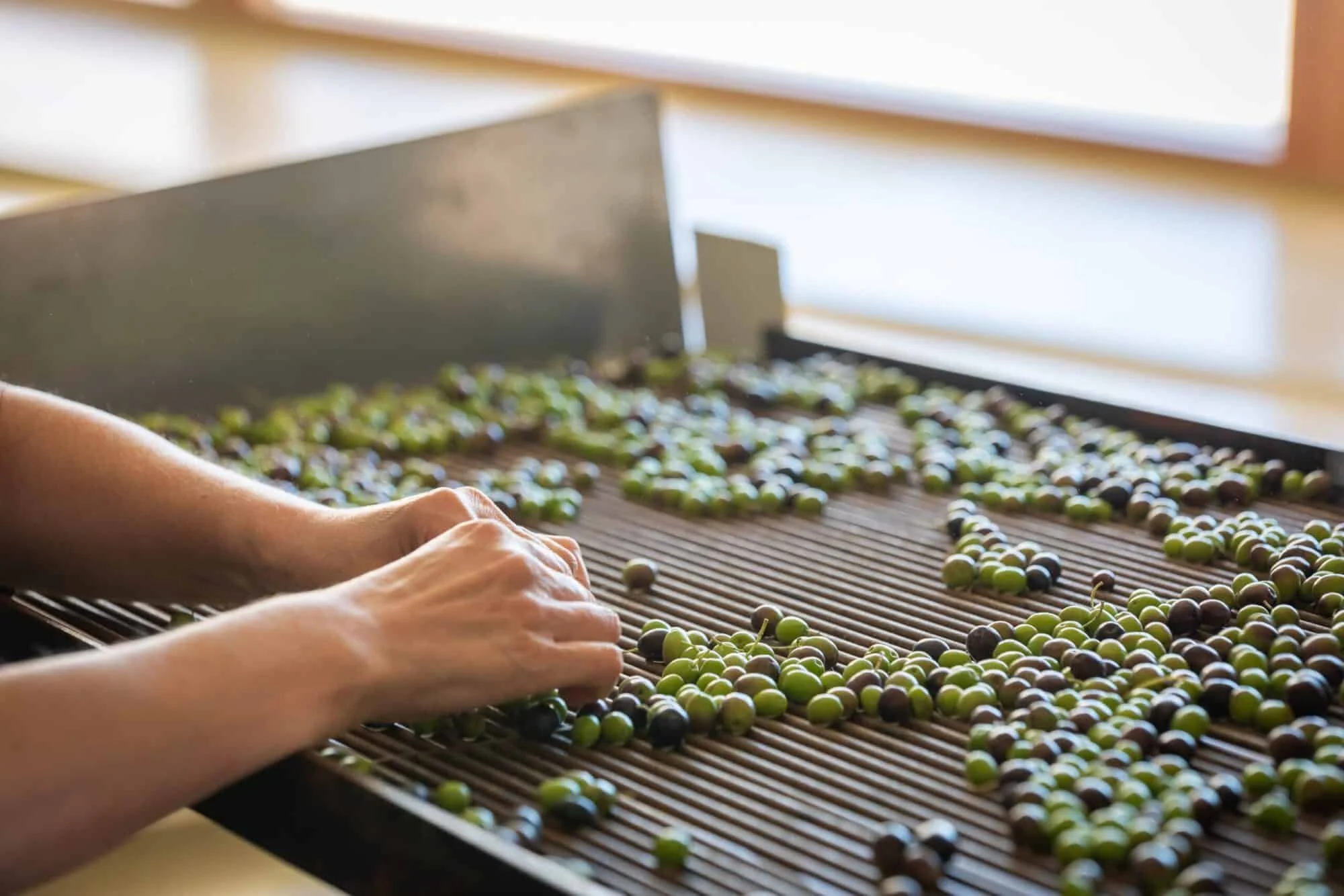
Undoubtedly, the olives we saw neatly stacked that afternoon are making their way through the grinder as we watch on that same evening.
“The importance of the early, middle, and late varieties means we have approximately 30% of each ready, and then every day we will mill a very similar quantity.”
Indeed, as we close out our last night, we watch the monumental moment of the year as Nieves and Goran hold glasses under the first extraction of the neon-green, unfiltered fresh oil. With a couple more processes before it reaches the next round of awards judges, we sip the herbaceous, zesty, piquant oil and toast the harvest moon.
Looking for more Croatian inspiration?
Where to Stay in Zadar, Croatia: Falkensteiner's Dalmatian Coast Resorts
