
How to Become a VIP Guest at Hotels and Restaurants
The real secret to luxury travel isn’t what you book, it’s whether they remember you when you come back… and what those moments of recognition lead to.
Why Being a Returning Guest Changes Your Hotel Experience
There’s something that happens when you return to a hotel or a restaurant for the second time, and it’s difficult to explain because, on paper, almost nothing has changed. You arrive, you check in, you go to your room. You have a drink, you sit down for dinner. Structurally, it is the same stay as the first time you visited.
And yet, and yet. This time, it really isn’t the same at all.

Travel differently
Someone remembers you, or thinks they do. Your name is greeted with a flicker of recognition rather than polite neutrality. A table is found more easily than it probably should be, and someone asks if you’d like the same wine you had last time. You begin to get the sense that your stay is no longer being assembled in quite the same way as before, and something has shifted in the air around you. You are not just another arrival being processed efficiently through a system; you are someone who has been here before… and you’re being treated as someone who, with the right treatment, might just come back again and again.
I remember arriving back at (the frankly wonderful) Hotel Telegraaf in Tallinn for a second stay and noticing this shift almost immediately. Nothing was said explicitly and nothing dramatic happened, but the tone was perceptibly different from the first visit. Conversations were slightly warmer, recommendations slightly more specific, and the whole stay felt less like a transaction and more like a continuation. It felt, in a small but noticeable way, like returning rather than arriving. The interesting part? It was exactly this delicate recalibration that led to me to book a third, even more satisfying visit. Everyone’s a winner.
Hotels don’t advertise this feeling and you obviously can’t book it as a room category. However, it is, in my experience, what people are really talking about when they talk about luxury in the emotional sense rather than the marketing sense.
The Difference Between Transactional and Relational Travel
What most people experience when they travel, even at very high price points, is a very efficient form of anonymity. You book, you arrive, everything works, everyone is polite, and then you leave and are immediately replaced by someone else who will have more or less the same stay you just had.
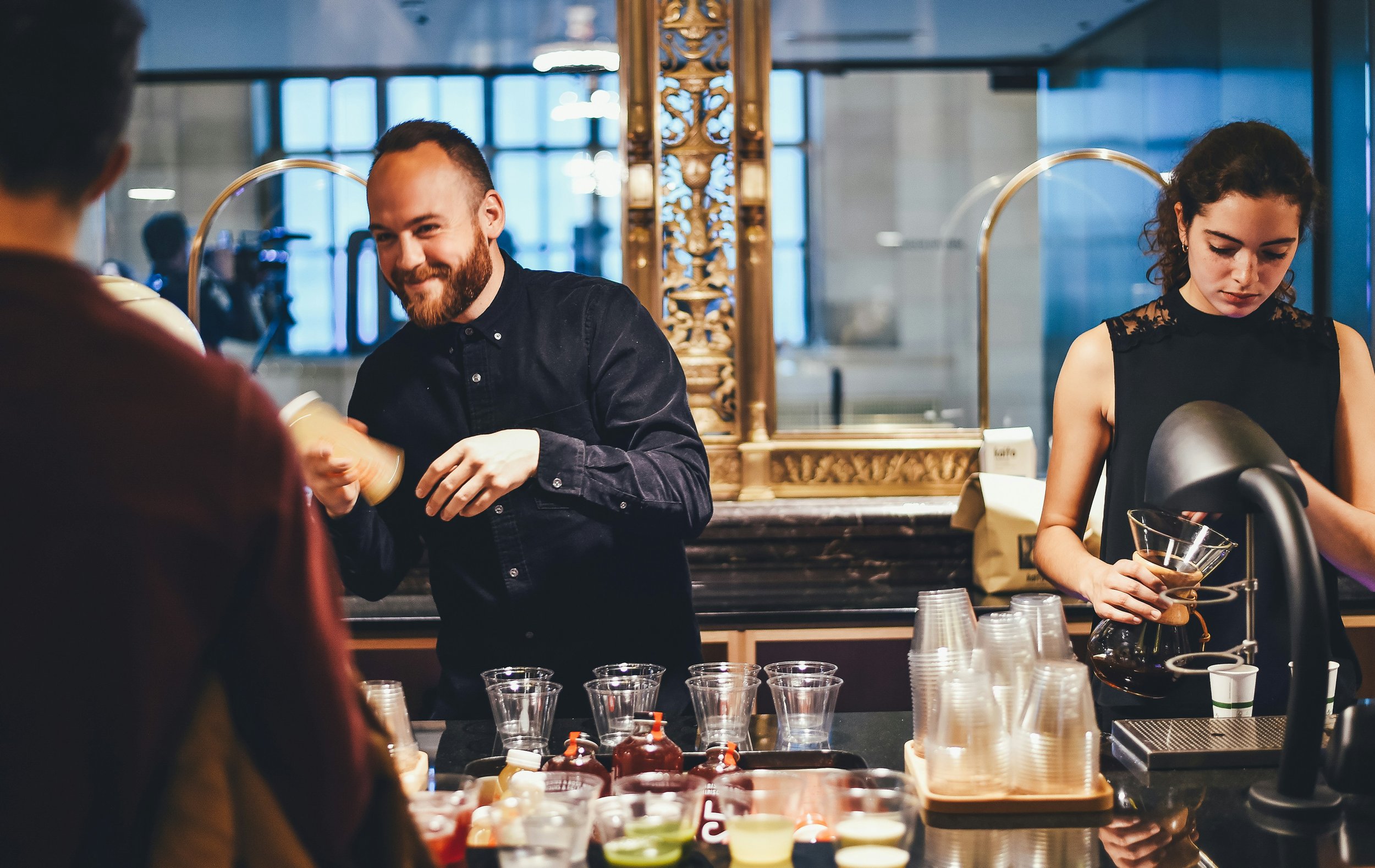
The people make the place
There is nothing wrong with this. In many ways it is an impressive system, and one which allows people to move around the world with remarkable ease. There’s no getting away from the fact that it is, essentially, completely transactional. You pay, they provide, and the relationship ends when you check out. If that’s what you’re after, fill your boots.
However, the places people return to again and again tend not to feel transactional for very long. They begin to feel relational, and that shift usually happens not on the first visit, but on the second. The first visit is an introduction. The second visit is when a place decides whether you are someone they recognise.
This is why people who travel a lot – including myself, and to an almost ridiculous degree at times – often return to the same hotels, the same restaurants and even the same bars. I often joke with my partner about this, as there are some eateries I go to where I’ve only ever ordered the exact same dish, every single time I’ve visited. My argument? I know that this particular dish is cooked brilliantly, and I know I’m going to love it.
From the outside, it can look like a lack of imagination. In reality, coming back to the same hotel over and over is really about returning to places where you are no longer anonymous, and where you’re compounding your relationship with their offering.
Which Hotels and Restaurants Actually Remember Guests
It’s important to point out that not every hotel or restaurant works like this.

Building relationships, place by place
Large chain hotels try to systematise recognition with loyalty programmes, profiles and status tiers. These things can be useful (and I’m sure there are plenty of cost saving benefits I’m always a little too lazy to look into), but they are not the same as being known by actual people who remember that you like a certain table, or that you prefer a quiet room, or that you always arrive late. Systems remember data, people remember individuals. The two experiences feel very different when you are on the receiving end of them.
Smaller hotels, independent properties and chef-run restaurants are usually where this still matters most. These businesses notice who comes back, and they pay close attention to how people behave. They notice who treats the place like a one-time purchase and who treats it like somewhere they intend to return to, and they understand the importance of relationships with their clientele. Over time, they begin to treat their circle of regulars slightly differently, in much the same way as happens as a treasured British pub or a local cafe.
I once walked into a small bar in Berlin for the third time in as many trips and realised, as I sat down, that I wasn’t being given a menu anymore. The bartender just nodded and started making the same drink I’d had the previous two visits. It was a small thing, and the bar itself was not especially grand or expensive, but the feeling of being recognised in a city like Berlin (a city that does not go out of its way to make strangers feel known) stayed with me far more than the design of the bar or the quality of the drink.
Again, it became a regular haunt, and having a regular place in Berlin achieved what I always want whenever I’m in the German capital: to feel a little more like Bowie each time I return.
Whether it’s receiving a free upgrade to a better room or being given a great table in a restaurant (and a treasured complimentary glass of something fizzy on arrival), coming back to a place that prizes return visitors is always a joy.
How to Become a Known Guest
There’s no grand secret at play here, no hidden codeword or complicated handshake to learn. Indeed, if there is a secret to becoming a known guest, it is probably just that you have to make the effort to go back to the places you feel will appreciate your return.
A factor to consider, however, is that all too many people often behave on a first visit as if it is an exam that the hotel or restaurant must pass; as if the entire relationship will be decided in that single stay or single meal. But the people on the other side are also making an assessment, quietly and over time, about whether you are the kind of guest who arrives, consumes and disappears forever, or the kind of guest who might become part of the life of the place.

The joy of returning awaits
Becoming known usually has very little to do with how much money you spend. It has more to do with whether you return, whether you stay more than one night, whether you talk to people like people rather than like staff, and whether you show a small amount of interest in the place you are in.
Once you start looking for this, you see it everywhere. From the outside, it can look like status or influence. Sometimes it is, but very often, it is simply history… and history, in travel, is built by remembering and returning.
Why Returning to the Same Places Makes Travel Better
This is also why, over time, many frequent travellers begin to travel slightly differently. They stop trying to see everything and they stop moving from hotel to hotel every night. First, they start staying longer, and then they start coming back: sometimes to the same city, sometimes to the same street and sometimes to the same hotel.
What they are really doing is building a small network of places around the world where they are known: to hotels where they recognise your name, or restaurants where they are pleased to see you and bars where you’re not treated like a stranger.
Once you have a few places like that, travel becomes a different experience. It becomes less about constant movement and more about returning to certain places where life is just a little bit easier and a little bit warmer than it would be if you were starting from zero every single time.
It is a slower way of travelling, and in some ways a smaller one, but it is also, I think, a more rewarding one. Because in the end, what most people remember about hotels and restaurants is not the room or the food, but how they felt in those places.
And feeling recognised, even in a small way, is something people rarely forget.
