
Vespa at 80: The History of Italy's Most Iconic Scooter
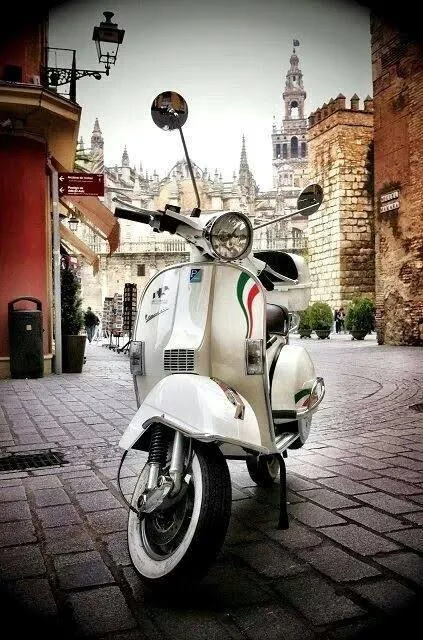
The iconic Vespa PX range (not mine)
Your first love has a tendency to be both the messiest and the most enduring. Mine arose somewhere between wearing out a battered VHS copy of Quadrophenia and convincing myself that owning a Vespa would possibly make me cooler than I actually was. It was 2004; I was already 40 years too late to the party, and as out-of-step with the tides of fashion as I ever was. I also wasn’t a Mod, but a goth in an ASDA two-piece suit. Somehow, it didn’t really matter.
That first Vespa, one of the PX models from just beyond the brand’s 60s heyday, was a faintly ridiculous thing. It was resplendent in enough chrome mirrors and spotlights to illuminate half of Bristol, it smoked like an Edwardian factory chimney, backfired aggressively and leaked oil with quiet confidence. It was gloriously impractical, and I wouldn’t have it any other way.
Friends who rode newly-minted Japanese bikes thought I was completely mad, but while they had reliability, speed and electric starters, I had style and a two-stroke engine.
With Vespa celebrating its 80th anniversary this year, I can’t help but feel proud of the path I chose 22 years ago and the heritage I’ve always been compelled to align myself with. I also can’t help but realise that, when we grow up, all that really changes is that our toys become a lot more expensive.
The Origins of an Icon
We don’t write about motoring at The Last Concierge, because articles about almost anything on wheels bore me senseless. We do, however, write about style and culture, and the Vespa is one of very few things with a motor that managed to become a cultural icon. That it achieved this accidentally only adds to its air of nonchalant, oh-so-Italian cool.
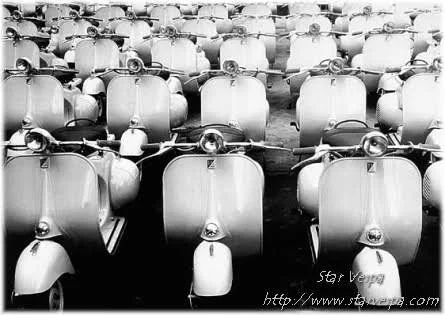
Mid-century icon of Italian cool
In the aftermath of the Second World War, Italy needed affordable transport. Founder Enrico Piaggio wanted something ordinary Italians could actually use, so he turned to an aeronautical engineer called Corradino D'Ascanio; a man who disliked motorcycles and set about solving everything he considered wrong with them. The result was a machine that looked nothing like the bikes of its day: a step-through chassis, enclosed mechanics and clean lines borrowed as much from aviation as motorcycling.
Legend has it that when Enrico Piaggio first saw the finished machine and heard its gentle buzzing engine, he remarked, "Sembra una vespa" – "It looks like a wasp." The name stuck, and remarkably, that original silhouette stuck with it. Eight decades later, Vespa manages to look modern without trying to be futuristic, and it’s still unmistakably Italian.
Plenty of manufacturers have spent the last eighty years reinventing themselves every few seasons (we’re looking at you, Lambretta), while Vespa has quietly carried on looking like a Vespa. There's probably a lesson in that somewhere.
The Power of the Silver Screen
Beautiful and practical designs can only take you so far. Mid-century cinema, however, has a knack for sending things stratospheric.
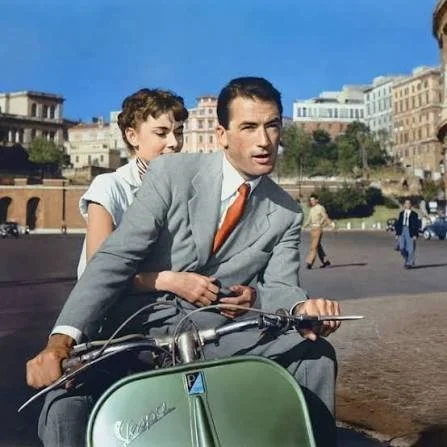
Roman Holiday (1953)
Few images from the Golden Age of Hollywood are as enduring or as evocative as Audrey Hepburn zipping around Rome on a Vespa with Gregory Peck hanging on behind. Roman Holiday (1953) arguably did more for the Vespa brand than anything dreamt up by a million advertising executives; it sold the idea of freedom, of glamorous independence.
The humble scooter became a romantic expression of sophisticated escapism overnight, and Hollywood recognised immediately that which Italian designers had merely stumbled upon: the Vespa looked incredible on camera. It wasn't long before it became one of those rare objects that seemed capable of improving almost any scene simply by appearing in the background.
With a Vespa in shot, Roman piazzas felt more romantic, coastal roads became more inviting. Fashion photography discovered it leaned beautifully outside cafés, and it looked equally at home beside Audrey Hepburn, Marcello Mastroianni or, decades later, Matt Damon drifting through the languid heat of The Talented Mr. Ripley.
Even Marvel’s Deadpool bombed through San Francisco on the back of a Primavera model, and Disney’s Luca proved a full-length animated movie could be built around the Vespa brand, albeit with a subplot about shape-shifting sea monsters. Few vehicles have become cinematic shorthand for romance, freedom and continental sophistication. The Vespa achieved all three.
From Milan to Brighton Beach
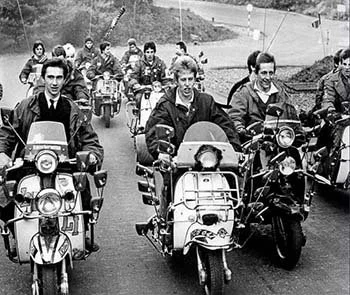
Quadrophenia’s countercultural heroes
Italy imbued the Vespa with elegance. The UK gave it personality, cult status and a rebellious edge, courtesy of the Mods. Somewhere along the way and somewhere between Milan and Brighton Beach, perfectly sensible and practical Vespas acquired forests of mirrors, chrome crash bars, raccoon tail embellishments, spotlights and more. None of it made them any faster – that entirely missed the point, as ‘style over speed’ became something of a tagline that still echoes to this day.
For the Mods and those who imitated and followed, Vespa represented independence, rebellion and the kind of misadventures that scandalised the middle classes, sent shockwaves through the masses and redefined the brand forever.
I was born a couple of decades too late for all of that, and I’m frankly more of a lover than a fighter – to misquote the Manic Street Preachers, I’ve walked Marine Parade, but not with real intent. The fact that those shockwaves could still be felt in 2000s Bristol, and inspired me to join the masses of enthusiasts and never truly leave, is a testament to their power and influence.
Why We Never Really Grow Out of Them
Charm, grace and a recognisable silhouette
Eighty years after the first Vespa rolled out of Pontedera, the world of motoring has changed beyond recognition. Modern scooters unlock without keys, connect to smartphones and, increasingly, glide through cities on electric power alone. Vespa has embraced most of those changes with surprising confidence, yet it has resisted the temptation to redesign itself simply for the sake of appearing modern.
The details evolve, but the shape remains reassuringly familiar, and that's really quite unusual when you take a moment to consider it. So much of contemporary design seems almost embarrassed by its own past; cars grow larger every generation despite our roads becoming no wider, and logos are endlessly simplified before becoming fashionable again a decade later. We’ve watched, often heartbroken, how hotels rip out perfectly attractive interiors in pursuit of the next design trend, only to spend a fortune recreating exactly the atmosphere they demolished ten years earlier. We seem to have convinced ourselves that change automatically equals progress, and yet over 80 years, Vespa has – more or less – quietly ignored all of that.
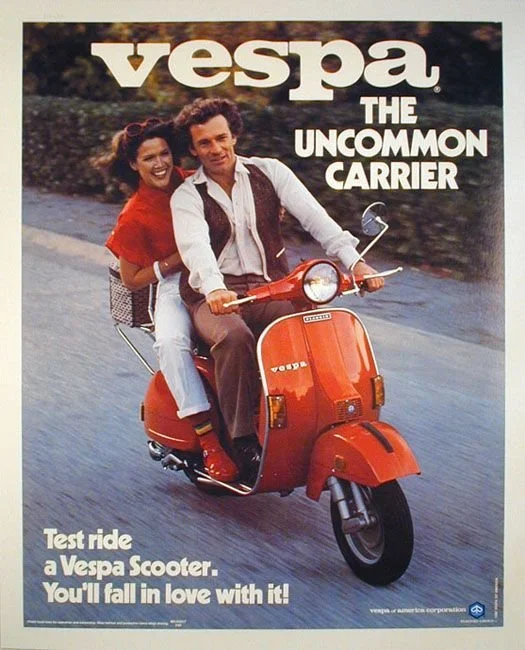
Contemporary and classic Vespa models still look perfectly at home parked outside a café in Rome, just as they do outside a supermarket in suburban Bristol. Sitting astride their leather seats, the scooters still encourage you to take the scenic route home, even when you're running slightly late. Perhaps most importantly, they still manage to make an ordinary journey feel faintly cinematic, and they remain bundles of fun to ride.
That's probably why the Vespa has endured as both a mode of transport and a style icon, while so many other supposedly revolutionary designs have quietly faded into history. It has never relied on fashion because it has never really chased it, remaining content to be itself.
Not many machines can claim 80 years of heritage and consistent cool, while remaining true to practicality and (relative) affordability. Fewer still can make a 40-year-old man kick-start the crackle of a two-stroke engine and, now in a far more well-fitting suit, feel eighteen all over again.
