
Remembering Asha Bhosle: Bollywood Legend Who Changed Indian Cinema
I’ll admit, it’s a slightly absurd scene to paint. I’m often to be found in my flat in Bristol – the skies overcast, the rain pattering in across my windows as it blows inwards from the estuary – imagining I’m a long way away, a long time ago. On my turntable and howling from my speakers is a warmly scratched, mono-pressed 1968 vinyl record from old Bombay, and I’m nodding along with an intense and stubborn devotion. It’s not a guilty pleasure (I don’t believe in such things), but a private escapism I’m completely unwilling to apologise for.
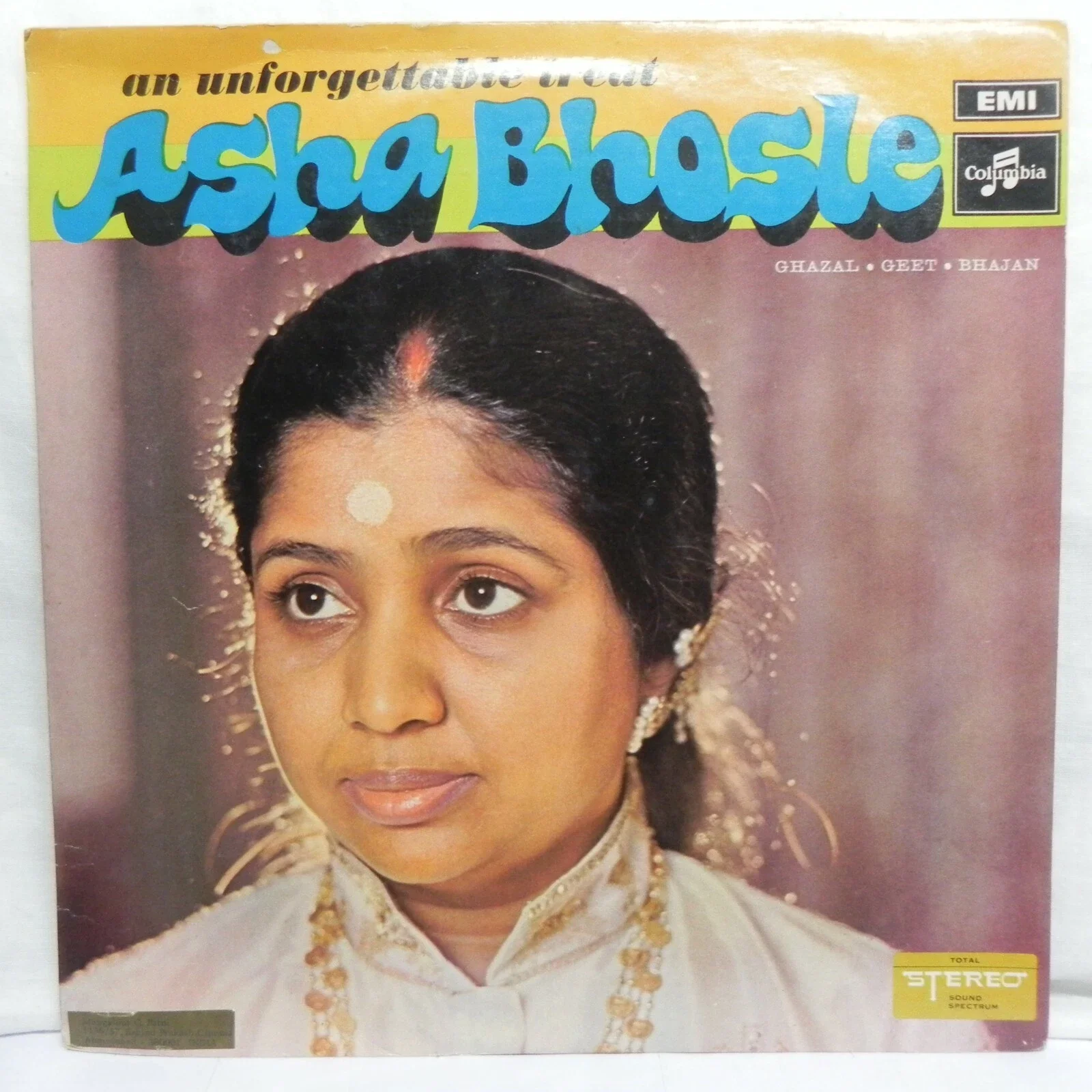
A brimful of Asha
I’m fully aware that, to many of my friends and colleagues, my quiet obsession with the Golden Age of Hindi Cinema looks like yet another symptom of my terminal case of eccentric collector syndrome. Bollywood, despite seismic shifts and no shortage of crossover successes in recent years, is still all too often associated with technicolour melodrama, over-the-top orchestration and synchronised dancing… as if that’s in any way a bad thing.
The point, especially here in England, is missed entirely. There’s real rebellion in those grooves, and nobody embodied it as sensually, as profoundly or as ecstatically as Asha Bhosle.
With Asha’s passing in April 2026, at the grand age of ninety-two, Bollywood’s most deliciously counter-cultural voice – the voice of an entire era for millions upon millions of fans – has gone quiet. For this particular Englishman, the loss hits close to home.
The Soul Against The Body
Few aspects of Bollywood music are as crucial or as central to its identity as the playback singer; the vocal talents shining behind the scenes and providing the overdubbed score to many of the industry’s most iconic scenes.
To the casual observer of Bollywood history, the industry's playback landscape was split neatly down the middle. On one side stood Asha’s elder sister, Lata Mangeshkar – sweet-sounding, almost bird-like and the undisputed moral anchor of what was a newly independent India. She sang for the pure, self-sacrificing heroines and was the "soul" of the film, operating in a celestial realm of piety and devotion.
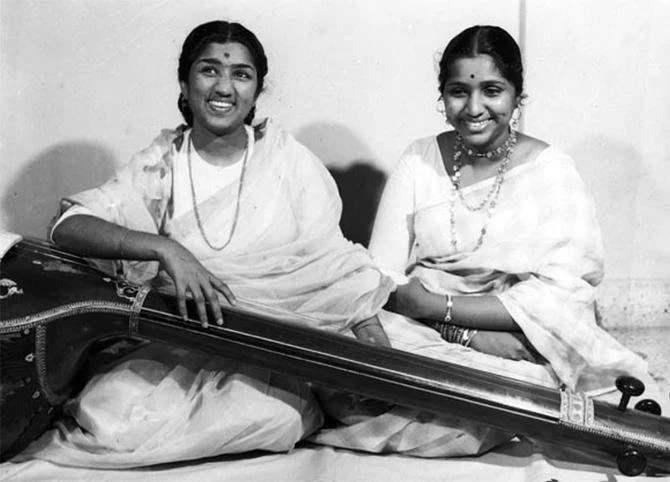
Sisters Asha and Lata
Her younger sister Asha, by contrast, was handed the "body." Because Asha’s voice possessed a rare tactile grit, the studio system effectively exiled her to the margins. It’s there in black and white (and later in glorious technicolour) – if a character was a cabaret dancer, a sultry courtesan, a scheming mistress or a tragic misfit, she was assigned Asha’s voice in the recording booth. The result was as consistent as it was fascinating, and it wasn’t long before Asha Bhosle became the designated voice of cinema’s fallen women.
Counter-Cultural Anthems Snuck Through the Vocal Booth
Nowhere is her innate sense of rebellion and sensuality clearer than in my absolute favorite Asha track, and one of the crown jewels of my vinyl shelf: Dum Maro Dum from the 1971 film Hare Rama Hare Krishna.
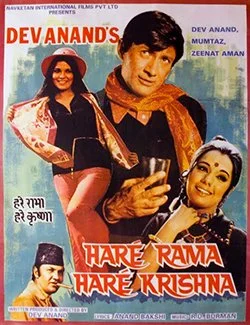
Hare Rama Hare Krisha
The film itself was supposed to be a cautionary tale about the dangers of the 1970s hippie counter-culture; a classic example of mid-century Bollywood’s obsession with trying to project lessons in morality to the masses from the silver screen. At least, that’s what the filmmakers probably told its investors. During the film’s climax, the stunning Zeenat Aman sways through a haze of smoke, surrounded by backpackers representing the hedonistic, misguided westerners. However, R.D. Burman’s iconic, distorted guitar riff starts up, and Asha's voice cuts through the mix. The moment she takes a deep, melodic drag of air and hits that opening hook, the moral lesson completely evaporates into clouds of unbridled, undeniable sensuality.
Asha didn't sing Dum Maro Dum like a broken, tragic addict or wayward hippy. Whether intentionally or not, she enters the song with a sultry, swaying and utterly hypnotic nonchalance that turned an anti-drug warning into an absolute anthem of defiance and a complete hijack of the film's script. By the time she reaches the second verse, the morality behind the scene had been swept away – her vocal swagger, the implied swinging of hips and batting of eyelashes reframes the scene and, by extension, the entire film. Naturally, it was a massive, unstoppable hit.
Seduction as Atmosphere
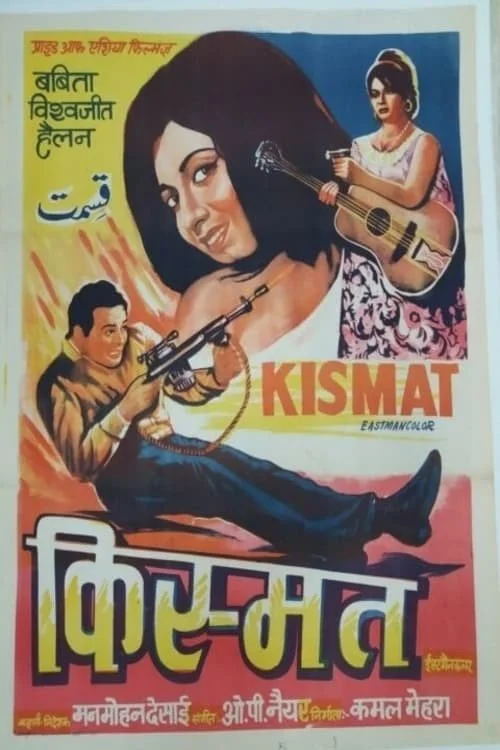
Kismat, 1968
Therein lay Asha Bhosle’s superpower, and it’s something her fans and admirers held onto even once she’d been fully and wholeheartedly embraced by the mainstream. Through her singing alone, Asha took characters that the screenplays treated as disposable plot devices and turned them into fascinating, complex and multi-faceted human beings, without ever having to show her face.
Take another favourite of mine, Aao Huzoor Tumko from the 1968 thriller Kismat. Visually, it’s a standard, campy seduction scene, with the actress Babita doing a mildly tipsy routine for her leading man. But if you take a step back from the screen and just let the audio breathe, you realise Asha isn't performing for the male gaze at all. She is completely wrapped up in the texture of her own sense of fun and female sensuality.
During the song itself, she laughs, she hiccups, she sighs and croons languorously. In less capable hands, these would be cheap studio gimmicks. In Asha’s, they are microscopic acts of genius. When she lingers on the notes, she injects a massive dose of genuine human longing into a standard pop lyric, turning a straightforward scene into a masterclass in atmosphere.
Appetite Over Devotion
I’m not going to sit here and claim I have some profound understanding of Indian classical and pop music, nor am I going to paint myself as some misfit out of sync with Western cinema. I’m not. I enjoy Bollywood films from across multiple eras, primarily because I appreciate how Indian cinema often revels in the fact that it isn’t real life – it has the tools to heighten, accentuate and exaggerate reality, and the music, dancing and playback singers are a central part of that particular gameplay.

The voice of 12,000 songs
I will, however, say that discovering Asha’s catalogue as a young man was something of a revelation, and learning more about her as I delved deeper into her music and mythos was hugely rewarding on multiple levels. If nothing else, Asha was cool. While the pure and pious heroines of the studio system were permitted only dignity and suffering, Asha’s women were granted appetite, ambivalence and raw ambition. The characters she sang for were allowed to be playful, pensive, hungry, theatrical and contradictory all within the span of a three-minute song. The quality of her voice and the way she sang had a natural knack for filling in the blanks, reading between the lines and adding depth and dimension even the director and scriptwriters often hadn’t planned for.
She was also wonderfully witty about her own domain. She famously adored the legendary screen dancer Helen, for whom she sang countless iconic numbers. Asha once joked that Helen was so drop-dead gorgeous that she would occasionally lose her cue when the dancer walked into the recording studio, adding that if she had been a man, she would have eloped with her on the spot.
The Last Track
Asha Bhosle has left the sound booth, and India mourned the loss of a bona fide legend. However, now that the needle has finally lifted from her final record, the internet is already flattening her twelve-thousand-song legacy into tidy, bloodless algorithms, focusing on the statistics and the predictable family rivalries that ran through her career.
But back in Bristol, as the rain keeps coming down and the record crackles to a halt, I know exactly what we’ve lost. Asha Bhosle didn’t just sing; she rewrote the rules of who was allowed to feel and just how deeply those emotions ran.
