
Paris Men’s Fashion Week: Overbaked But Still Smouldering
Paris didn’t grind to a halt for Men’s Fashion Week so much as slowly cook itself in its own all-encompassing city-wide oven. With a heatwave like no other blanketing the city in a soup-like miasma of humidity, the nonchalance and elegance associated with this annual event was never going to come easily.
Indeed, by day two, the usual choreography of high hospitality had entirely collapsed. Jackets came off. Collars gave up. Someone of immense international importance, who would normally rather faint than show a crease, was spotted in a ribbed vest negotiating for ice lollies with the frantic urgency of a child left behind at a resort. There wasn’t a single person at the event not shifting uncomfortably on sticky asphalt or stickier seats, praying the catwalks could be air-lifted to some distant, snow-capped Alp. The shows continued because the industry lacks the imagination to stop. However, there was no escaping the fact that the mood had shifted from performance to grim endurance.
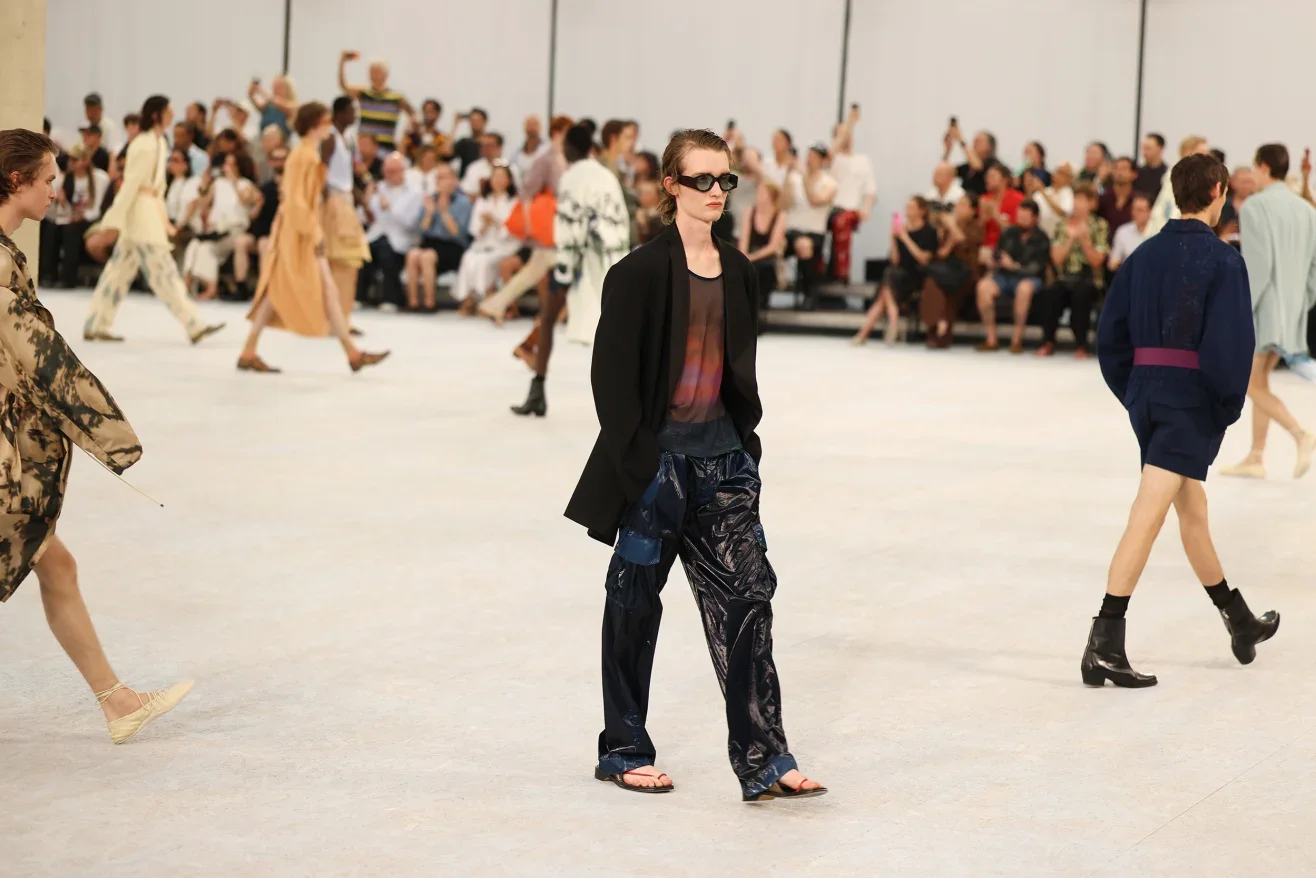
Dries Van Noten
There is a particular strain of Parisian pageantry that relies entirely on distance; that unflappable Gallic cool, hard-won by decades of New Wave cinema and a veritable mountain of Gauloise cigarettes. Paris Fashion Week lives and dies on the gulf created between the clothes and real life, between the impeccably poised front row and the sweltering pavement beyond. The heat collapsed all of that. With everyone visibly, damply uncomfortable, the illusion of exclusivity evaporates. A fascinating effect began to form, as all pretence was stripped away and nothing but reality was left in its wake.
If nothing else, it made for a particularly interesting set of shows – not all an abject disaster – and I’m more than happy to dive in and wade through the muggy clouds of perspiration in search of what lay beneath.
A Slight Misreading of the Room
Perhaps perfectly on brand although far from wise, Pharrell Williams chose not to notice the barometer at all. In fact, his Louis Vuitton set arrived in the form of a perfectly engineered, entirely unnecessary wave dropped into a university garden.
Truth be told, it was impressive… but very much in the way expensive engineering projects tend to be impressive. Large, glossy and entirely frictionless, whatever artistry was on display was also completely tone-deaf to the heavy, stagnant air it had landed in.
The collection leaned hard into polished escapism; there were surf and preppy references everywhere, each lavishly laundered through the house vocabulary the brand has built a world-beating empire upon. In fact, looking at the pieces on display, every single person present could easily picture the archetypical LV client somewhere coastal, heavily serviced, probably lightly sedated and entirely at ease. The problem (and yes, I completely recognise this wasn’t Williams’ fault) was that the crowd could not, there and then, quite believe in the existence of such a place, such a person, such a situation. There has always been an argument for fantasy in fashion, but this felt less like an escape and more like a refusal to check out.
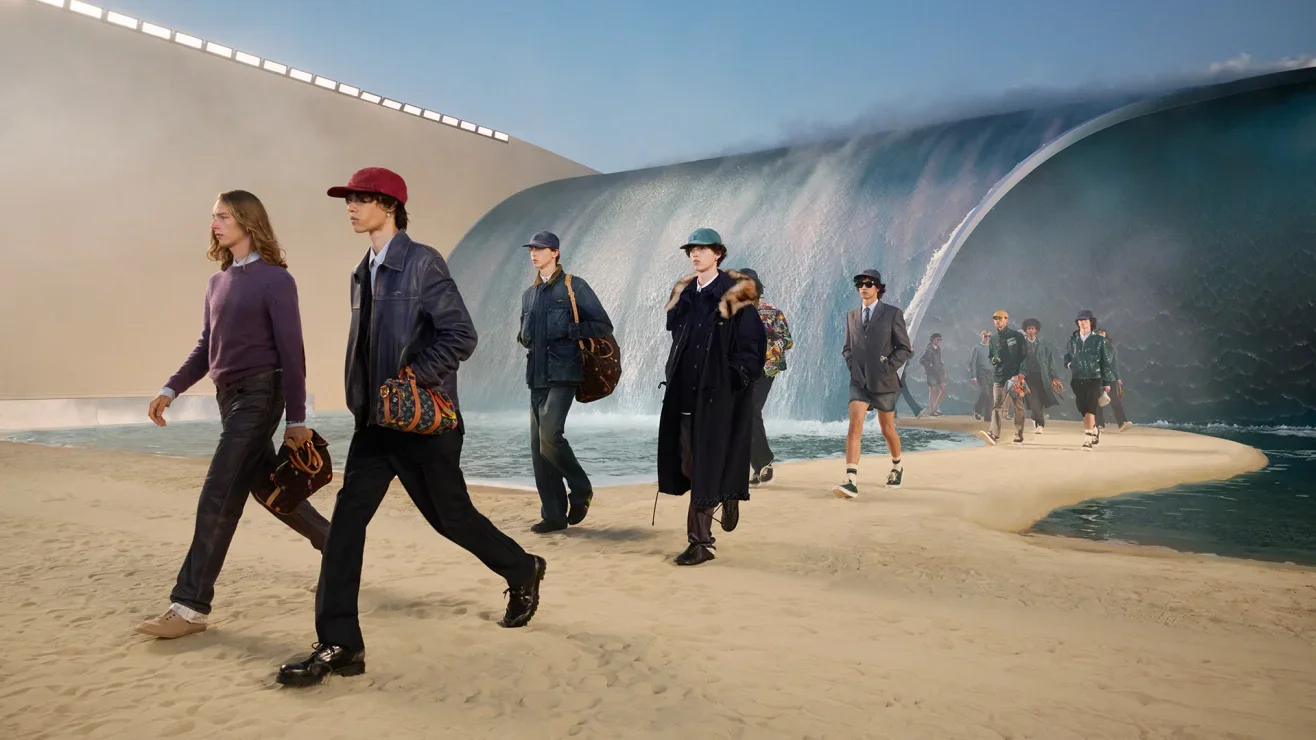
A wave of LV nonsense
The Climate Joins the Guest List
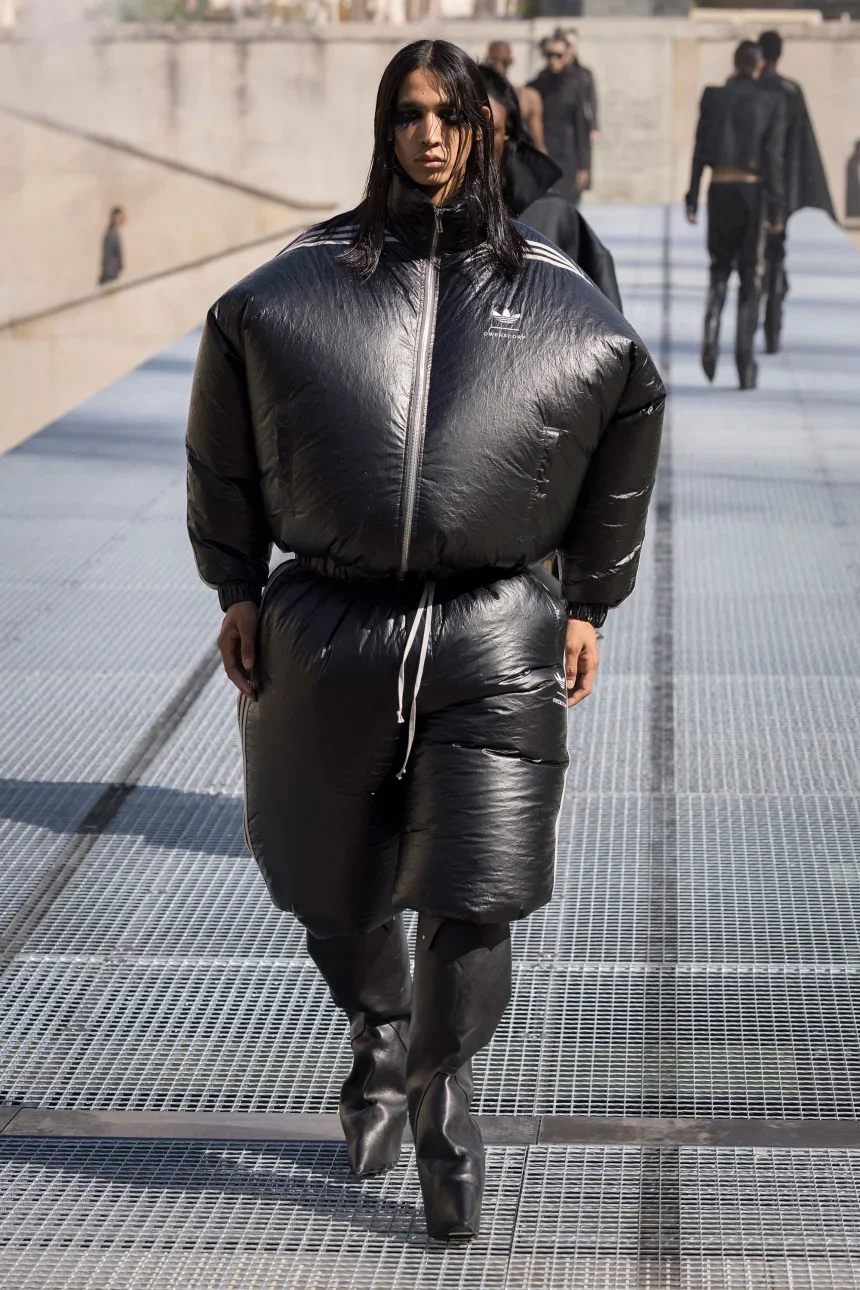
Rick Owens
Williams’ struggle to (literally) acclimatise set the baseline for the shows that followed. Some designers adjusted admirably with all the grace of a seasoned Parisian maître d' faced with a guest armed to the teeth with the full gamut of dietary requirements and intolerances. Others struggled to pivot with an almost visible shudder.
Schedules shuffled. Venues retreated indoors to whatever subpar air conditioning could be salvaged. Nobody made a statement addressing the intolerable conditions, but the message registered regardless. The environment was no longer a passive backdrop, but rather an uninvited guest making quite the scene.
Rick Owens, predictably, leaned into the discomfort. His collaboration with Adidas came equipped with built-in cooling systems, quietly humming away inside inflated tracksuits that expanded the human silhouette into something faintly absurd. He spoke of climate collapse without the usual marketing buffer, which in this room counted as a minor act of rebellion.
Visually, everything stayed in his lane – impressively so. There were severe lines, an impractical amount of black, and cloaks that suggested a dark liturgy in a grotto somewhere rather than a morning jog. It was performancewear passed through a gothic filter, delivered with a dry humor he’d likely deny under oath. I’m a fan.
Heatwave Pragmatism and Boxer Shorts on Show
Away from the conceptual theatre, there was a quieter, much more welcome recalibration at play – one that’s been long overdue in men’s fashion. 2026, it seems, is the year that designers began removing rather than adding, realising not a moment too soon that the best service a garment can provide in a record-breaking June is brevity.
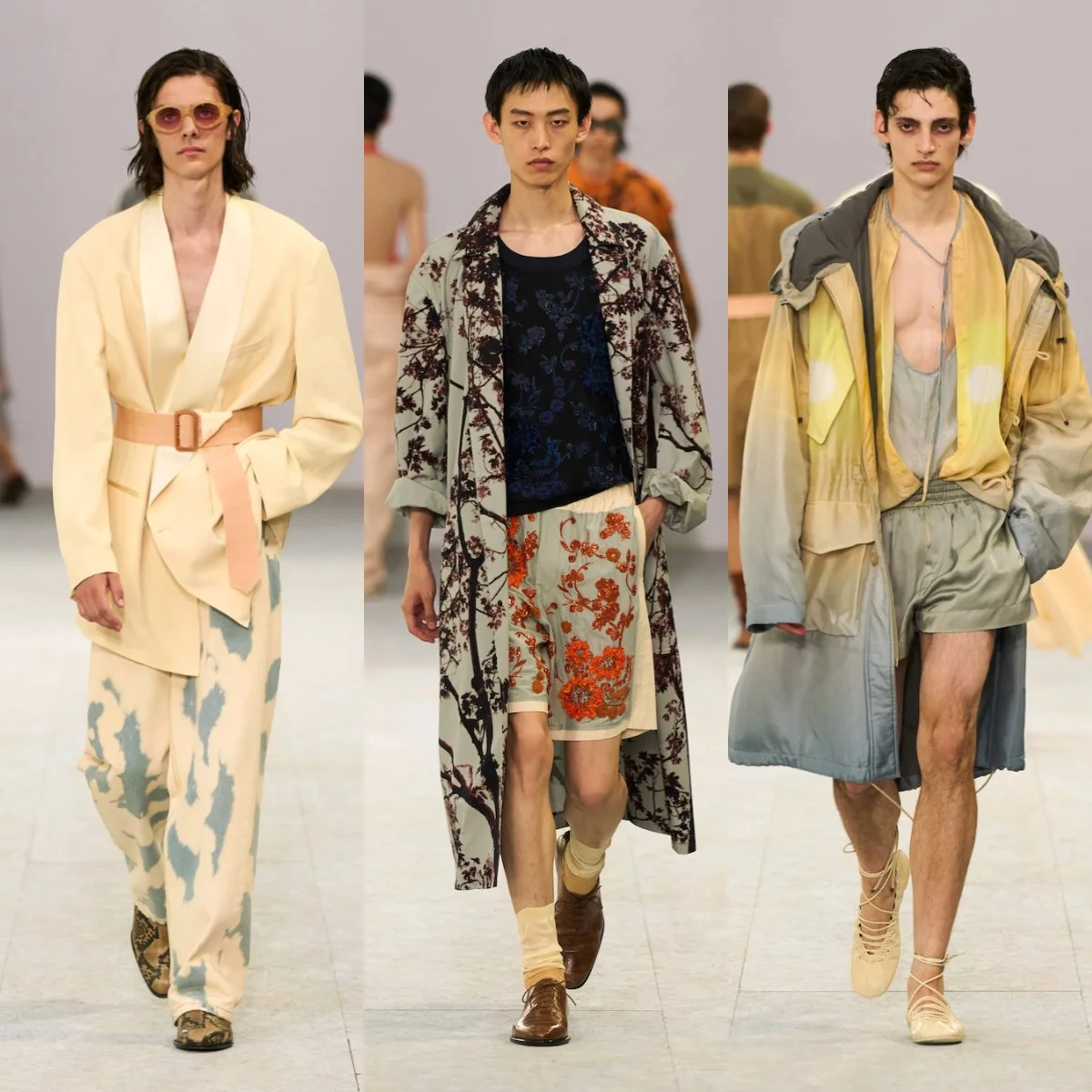
Dries Van Noten
Lighter fabrics, fewer layers and less insistence were never needed more. Lanvin’s tailoring softened to the point where it barely held its own structure, draped like a high-end linen sheet and speaking of Mediterranean influences through a surrealist lens. Dries Van Noten left backs exposed and legs uncovered, as if anything more would be an administrative error. Willy Chavarria, confronted with the same humidity index as the rest of us, arrived at the logical conclusion: he sent out boxer shorts, upgraded just enough to ensure that anyone wearing them wouldn't be tossed out of the lobby.
None of it was radical, but that was precisely why it worked. Sometimes, the best choices in fashion really do adhere to the ‘less is more’ adage that seems to be forgotten every other year.
Dior, But With All Windows Open
Jonathan Anderson is hitting his stride with a highly civilised rhythm at Dior, and it’s been remarkable to see his growth within the house. The proof was very much on show this summer: Paris saw him opening with what looked, from a distance, like traditional, heavy tailoring, but before long the illusion dissolved. These were chiffon suits, pleated and printed to mimic substantial British flannels, but with the heavy innards entirely stripped away. The joke was clever without being laboured, and importantly, it actually managed to look both elegant and aligned with what Dior does best.
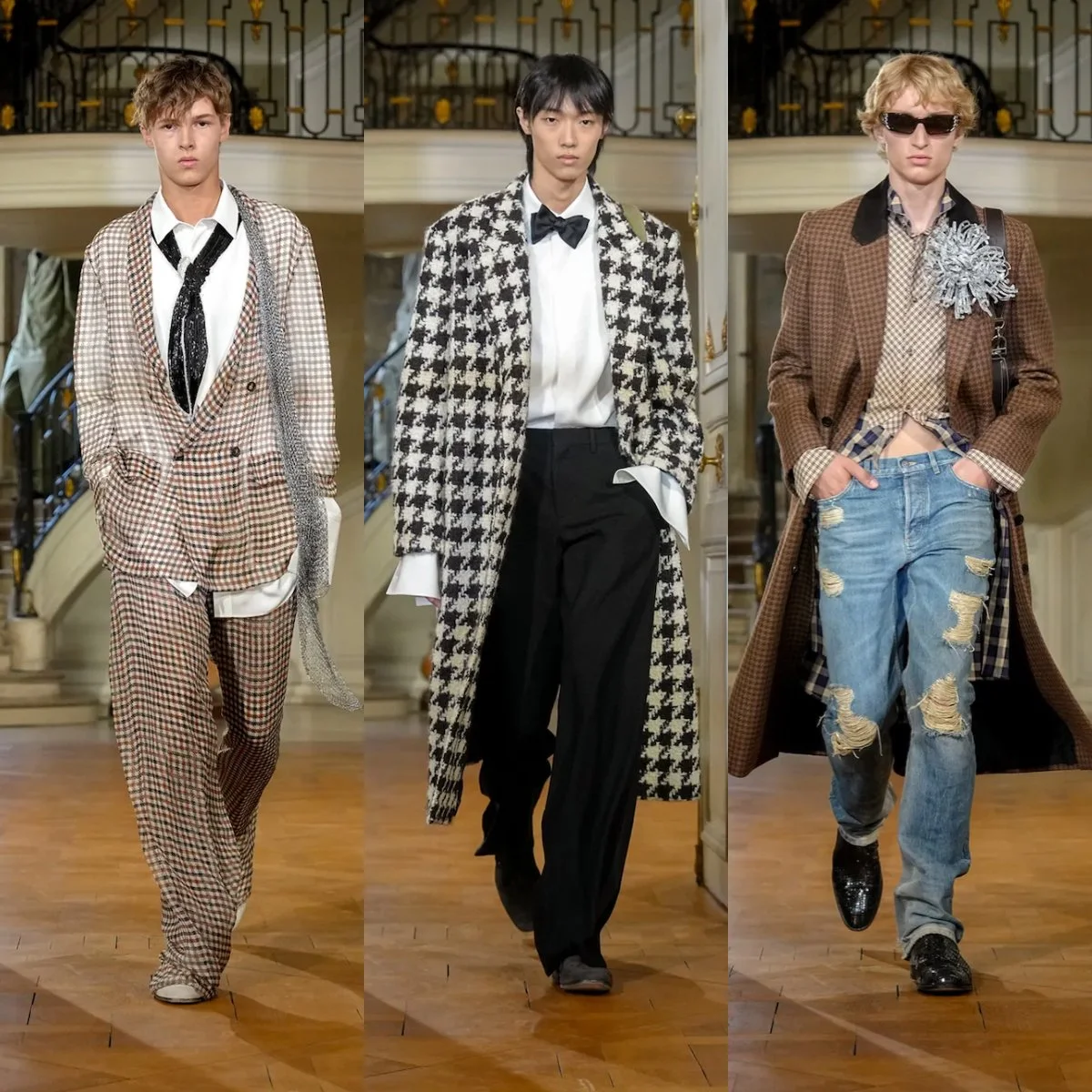
Dior
From there, things relaxed with proper pinstripes, cut so they refused to sit still. There is a way of loosening tailoring that makes the wearer look like they’ve given up, but this wasn’t that at all: it felt deliberate, like a host opening the French doors to let the evening breeze in.
Even the historical ghost of the house had been given a lighter uniform, specifically a frock coat rendered in cotton poplin – an item that felt functional rather than ceremonial, and the kind of thing I’d have given my left arm for as a gothy teenager at the turn of the millennium. Anderson understands the weight of Dior’s heritage, but more importantly, he seems to have stopped letting it ruin his summer or his willingness to bend the rules to his whims.
The Case for Restraint
Sarah Burton approached her debut at Givenchy from an entirely different posture, one of absolute quiet. Her first presentation was defiantly lacking in spectacle, with no grand sets or overt messaging, just a sequence of rooms and clothes that held up under close inspection. In a week characterised by frantic posturing, that sort of restraint reads as pure confidence and a commitment to craft we’d all like to see more of.
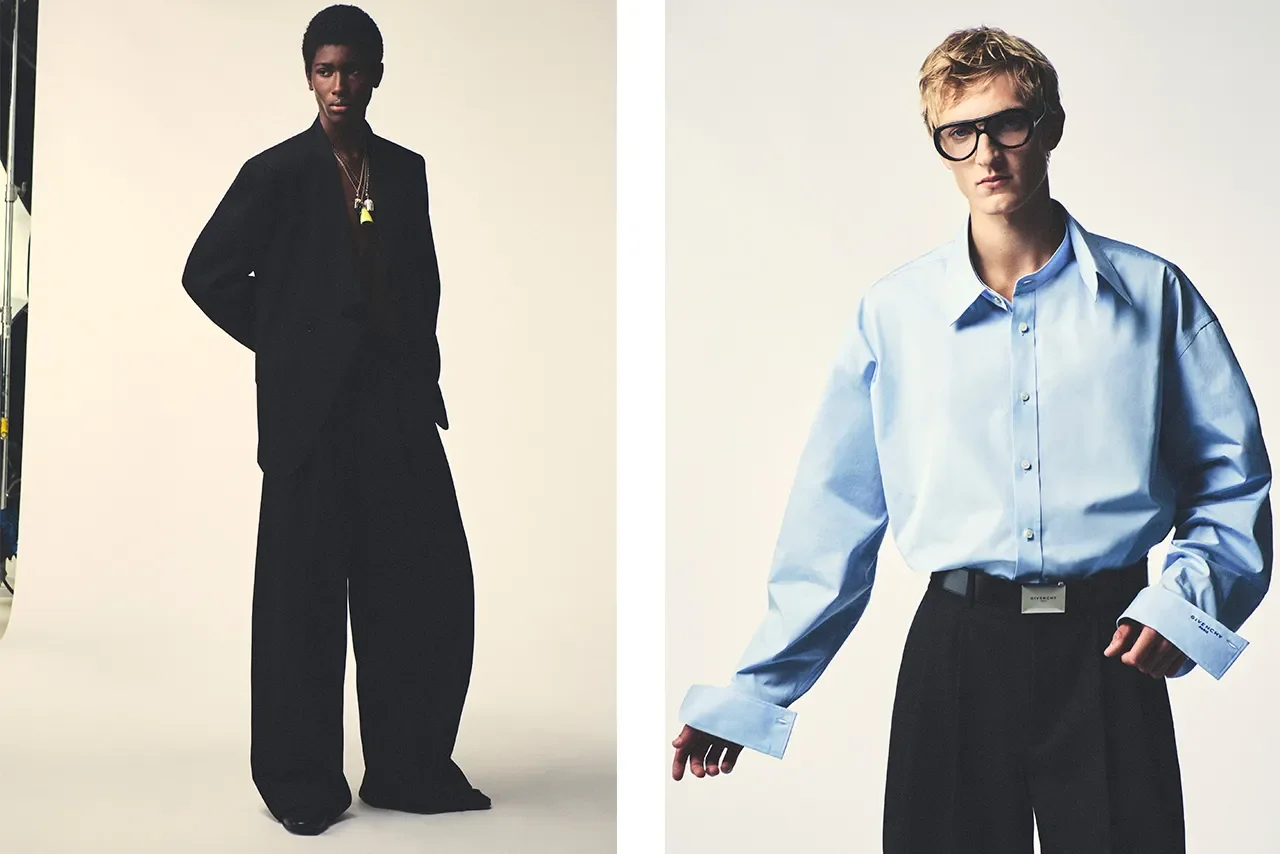
Sarah Burton for Givenchy
As expected, Burton’s tailoring did all the heavy lifting, with items that were strong through the shoulder and easing out through the body in a way that felt thoroughly grown-up. You could see the immense skill of the ateliers in the seams (which, again, is something that we perennially forget is almost the whole point of these shows), and the suits on show were still proper ones, light enough for the climate but substantial enough to make a bold impression. They didn't beg for attention, which is precisely why you couldn't look away… and that’s something that’s incredibly difficult to convincingly fake.
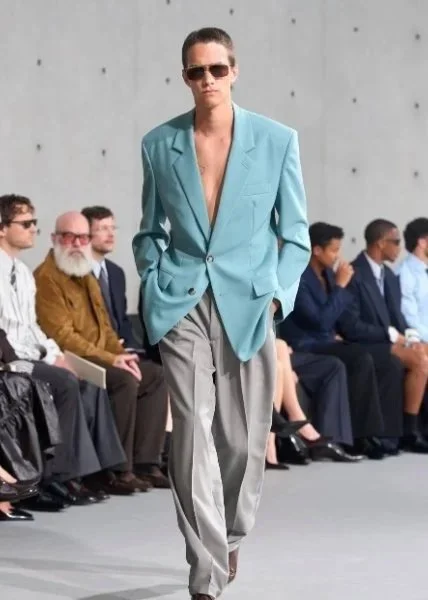
Anthony Vaccarello, Saint Laurent
No Excess. No Apology.
Anthony Vaccarello has spent years refining a singular, razor-sharp idea for Saint Laurent, and his execution remains flawless.
This season, he tightened that well-honed line even further with less decoration, fewer distractions and with silhouettes pulled flush against the body. The only real indulgence came via the buttons, which were mismatched, slightly off-centre and yet exactly where they needed to be.
In several looks, the trousers simply vanished, and yet it didn't feel like a cheap play for shock value, but rather a logical extension of the weather report – when the temperature hits a certain point, decorum becomes negotiable, and let he who would keep his clothes on given the choice throw the first stone. His Saint Laurent is coherent to the point of inevitability, with no visible effort left in the presentation, which as we all know is the sign of an immense amount of hard work behind the scenes.
What Remains After the Fever Breaks
The heat, in the end, did what the schedule never could: it forced a kind of honesty out of the artifice normally seeping from the very pores of events such as this. Grand gestures stopped reading as generous and started to feel strangely inefficient, like overdressing for a conversation that was never that important to begin with. The more elaborate the proposition, the less convincing it became.
What actually held up, once the sun had set and everyone could breathe a little easier, was actually a whole lot simpler: the winners of Paris Men’s Fashion Week were clothes that allowed for relief, for movement and for the basic reality of being a person occupying space in a difficult climate. Not in a utilitarian sense, not in the dreary language of “performance”, but in the far rarer ability to coexist with the wearer rather than impose upon them.
In fact, it became very easy, very quickly, to spot the difference between either edge of this binary: some collections are designed for a photograph that would outlive the moment, while others were built for the moment itself, and looked better for it. The former may shout a little louder, but the latter lingered in the mind in that quieter, more irritating way good things tend to do.
Fashion, for all its insistence, rarely enjoys being edited in real time. Paris this season had very little choice as the conditions did the editing on its behalf, stripping things back until only the intent remained. What survived the heat, it seems, was the minimal, the clear and the precise.
