
What Is Poetcore? The Menswear Trend Redefining Modern Style
I have an interesting personal relationship with men’s fashion. Maybe it was my wayward years as a teenage goth – when frills, lace and guyliner was key to my daily armoury – or perhaps it’s simply been my contrarian nature, but I’ve long been of the belief that there’s more to masculine styling than slipping into something that represents little more than the bare minimum.
I’m clearly not alone in my thinking, and it’s arguable that the men of the UK are starting to catch up with many of our European counterparts on the subject of dressing beyond the most obvious gender norms. I remember wandering through Massa Marittima in Tuscany last year; even in this small town, several men sitting outside cafes were dressed in ways that once would have turned heads in any medium-sized English city. High-waisted, slightly cropped trousers paired with soft leather loafers. Linen shirts, open at the neck and with sleeves pushed back – nothing particularly remarkable, but put together with intention.
They were men entirely at ease with themselves. This – in essence – is what modern masculine fashion is based upon, and it’s a subtle shift in the paradigm that’s arrived not a moment too soon.
The End of Hard Edges in Men’s Fashion
Since time immemorial, menswear has been built either upon rigid structure or the complete absence of it. Clean lines, neutral palettes and sharp tailoring on one end, a total lack of regard on the other. The former is all about clothes designed to project control and competence, the other exudes a sense of masculinity built upon a strange sort of pride in looking like you’ve slept in a hedge. Even when things are relaxed, they’re rarely softened. There’s an underlying rigidity to the whole affair; a sense that masculinity, however casual, still needs to hold its shape.
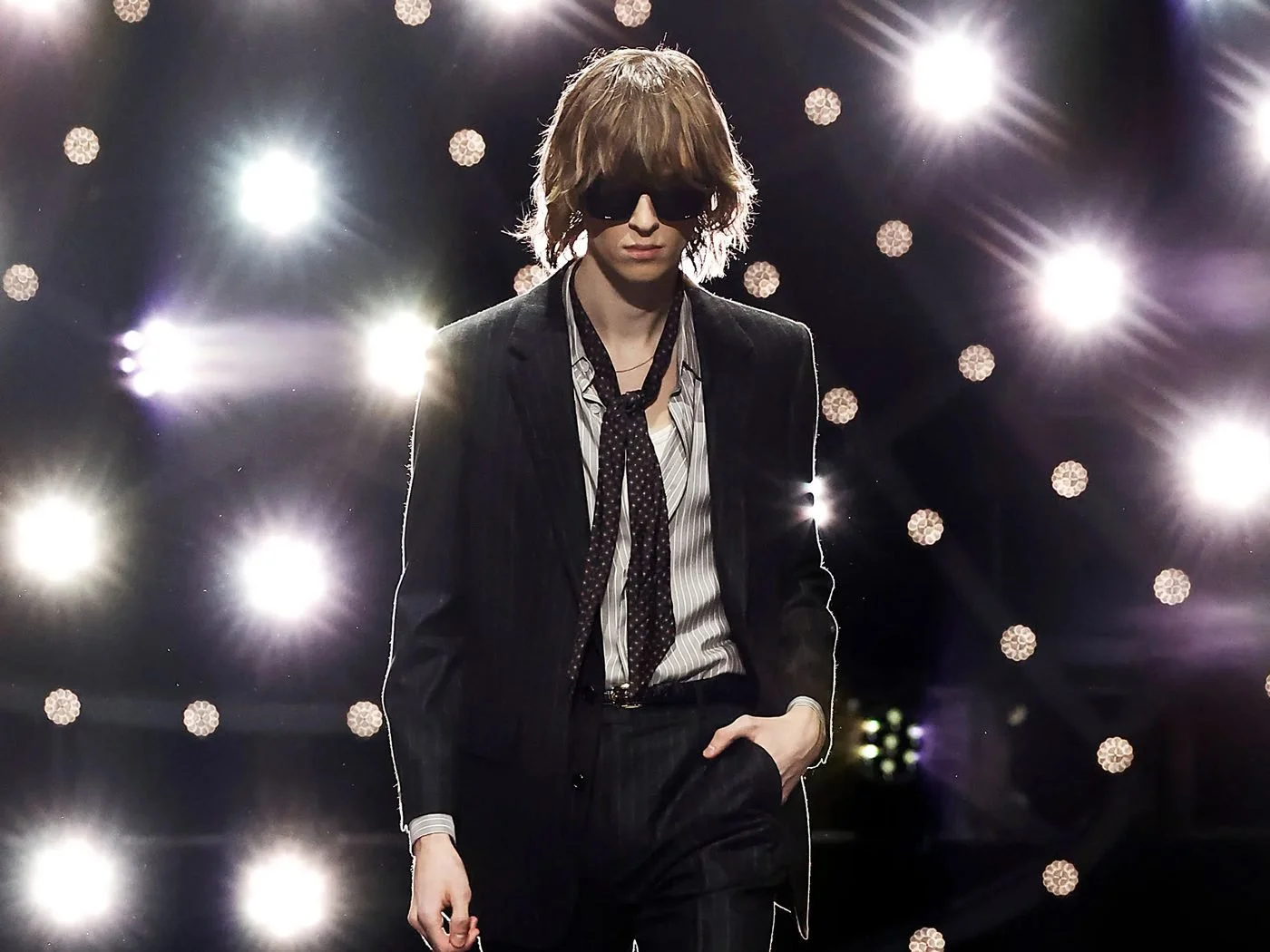
Rockstar nonchalance, Heidi Slimane
That’s beginning to change, although not in a dramatic sense or in a way that loudly announces itself. Men’s and women’s fashion moves in entirely different tidal patterns, but for those of us paying attention, this shift is becoming more and more noticeable. Those trousers are sitting a little higher on the waist, the shirts are falling a little more loosely on the body. Fabrics move rather than hold, and there’s a flourish of the romantic on both the high street and catwalk.
The edges haven’t gone away completely, and there’s always going to be a place for a well-tailored and structured suit. However, things are blurring, and it feels as though we’re on the edge of a deeper and more profound change in the way British men are dressing.
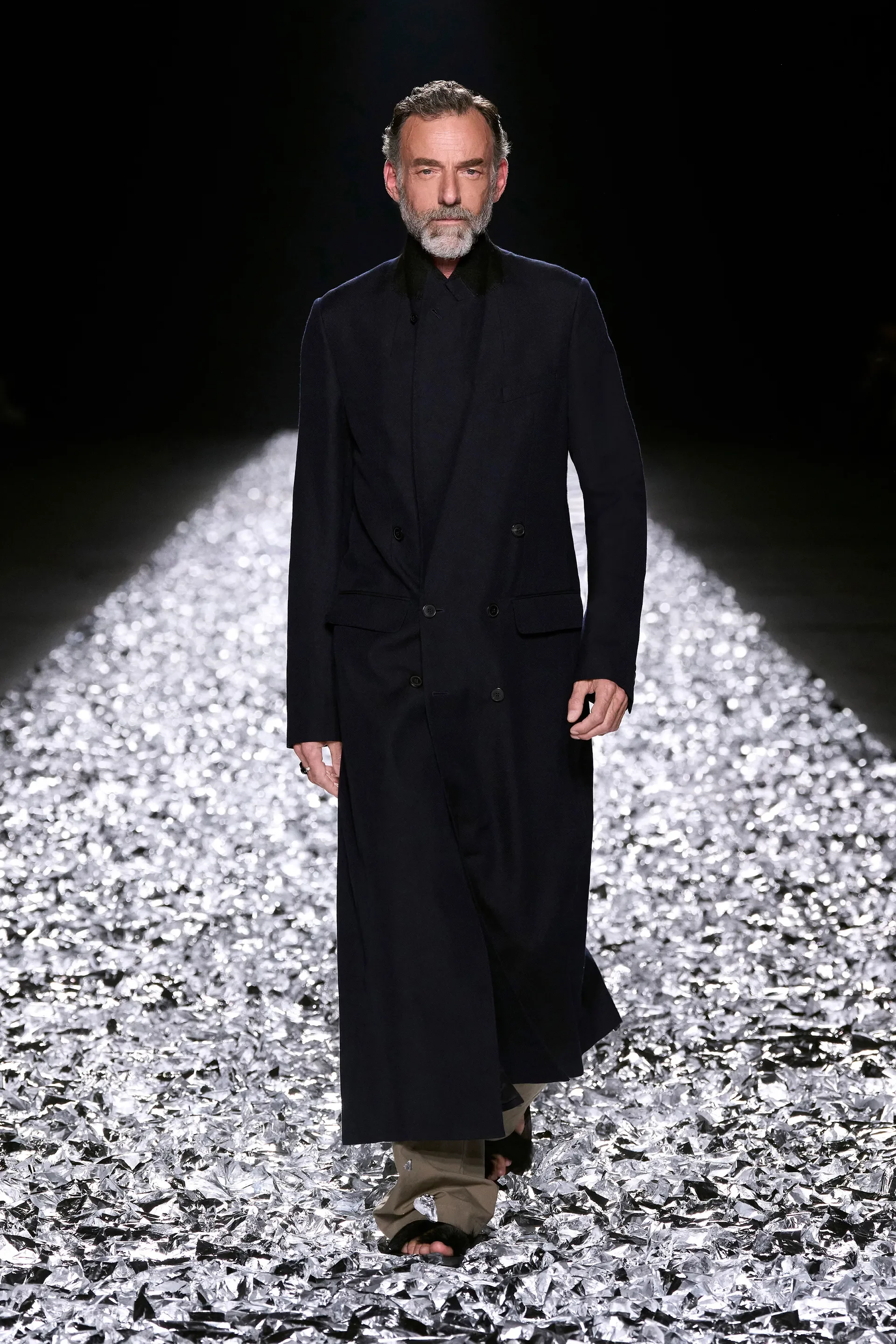
Dries Van Noten, Spring 2025
Now, look – I’m not suggesting this is an entirely new concept. Nothing in fashion is ever truly novel, and I don’t have to look far into my own stylistic history to recognise where precedents lie. Growing up, I wasn’t interested in fashion designers, but I was fanatically into the rock stars of my youth. Back in the 90s, a corner of British music was fighting against the US-centric griminess and faux-authenticity of grunge, and musicians were (possibly accidentally, possibly entirely intentionally) playing with preconceptions of men’s style.
Brett Anderson of the still-brilliant Suede was a key example, and remains one of my favourite Englishmen to hold up as an evergreen style icon. In those halcyon days, he spanked himself with a tambourine while dressed almost exclusively in thrifted blouses hanging from his emaciated frame. Ripples of that look still linger on him today. Other bands – namely Placebo, Rachel Stamp (the criminally-underrated heroes of the glam-punk revival), Strangelove and Subcircus were playfully blurring the lines of what men could dress like, holding a torch lit by Bowie and Jagger in the decades that preceded them.
Yes, there was a deliberate gender-bending angle to all this; the responsibility of the rock star, once upon a time, was to stand out and scandalise polite and mainstream society, after all. What remained, and what I can’t help but feel the influence of, was a notion that masculine fashion didn’t need to be hard-edged to be convincing. The opposite, when handled correctly, could feel every bit as assured and swaggering.
Enter Poetcore
The fashion world, perhaps inevitably, has given this shift a name in 2026: poetcore. Yes, I also think it’s a bit redundant and rather silly, but the idea is simple enough: men’s clothing that lean into softness, romance and a certain intellectual ease that’s at once postmodern and pre-raphaelite in its visual vocabulary. Open collars, fluid tailoring, fabrics that drape instead of dictate, and clothes that suggest observation and whimsy over performance and power are increasingly de rigueur, and it’s been fascinating to see it gradually lose its scandalous edge as it saunters into the mainstream.
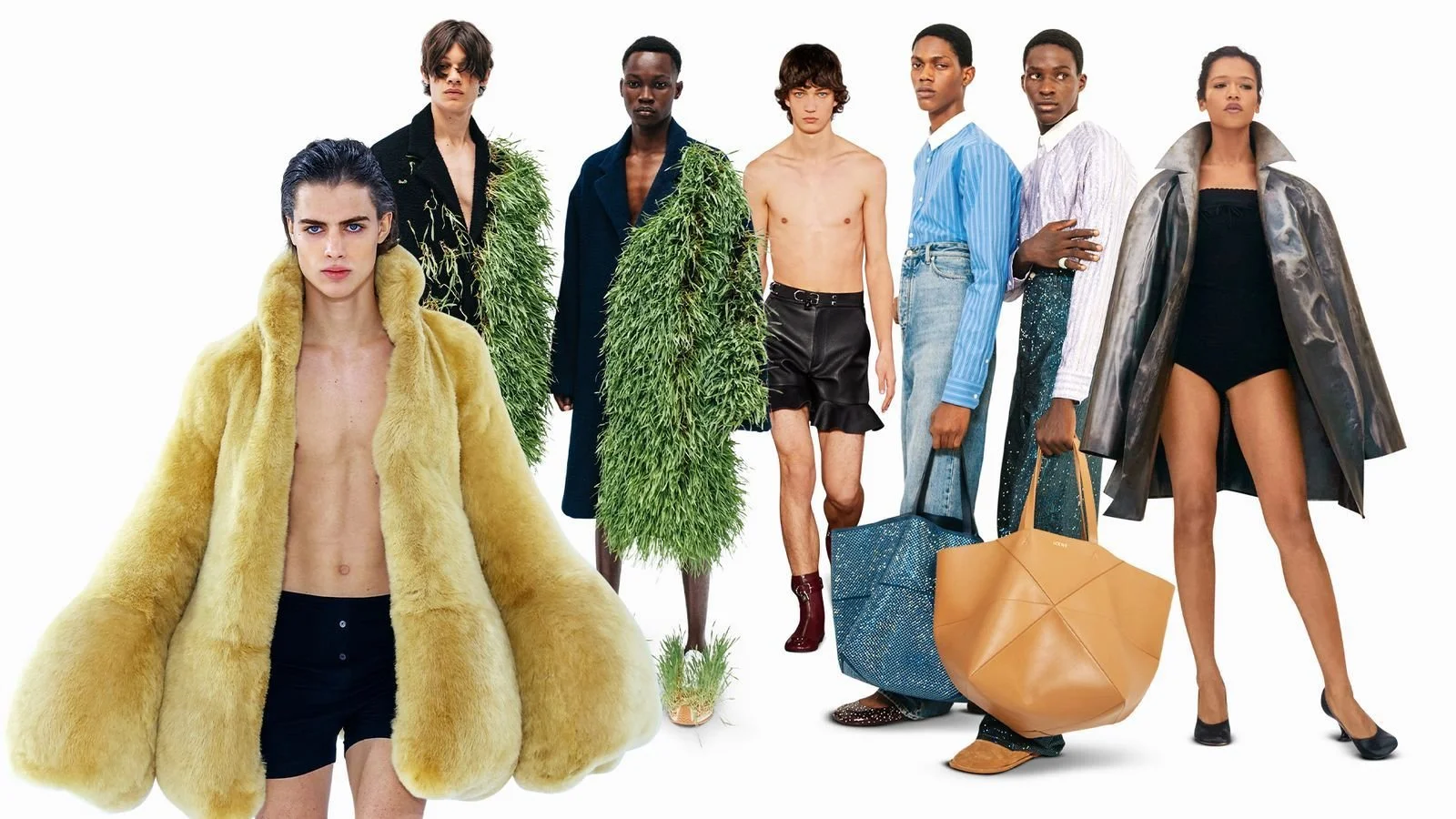
Jonathan Anderson for Loewe
On the runway, designers like Jonathan Anderson have been quietly reshaping menswear in this direction for years, with shows that introduced silhouettes that feel less rigid, more instinctive. At Dries Van Noten, the shift comes through in texture and colour: garments that feel expressive without ever becoming loud. One could also look to Hedi Slimane, whose influence lingers in the continued fascination with youth, fragility, and a kind of studied nonchalance.
It’s all very well to see poetcore take the lead in the world of high fashion, but as always, the idea becomes most interesting when it moves to the high street as something far simpler. Step into those aforementioned medium-sized British cities, and you’ll see it: the slightly fuller trouser, the softer shirt, the mid-length jacket that billows slightly. Flashes of the flamboyance that once felt risky now feel far more everyday, and yet no less masculine in their delivery. Men’s clothing has become, to put it in basic terms, far less defensive.
The Influence of Elsewhere
Travel has always shaped how we dress, but this shift feels particularly tied to a sense of place.
Spend time in southern Europe and you notice it quickly; men dressing with a kind of ease that has nothing to do with trends and everything to do with rhythm. It’s not poetcore in any studied sense, but rather clothes are lighter because they need to be and silhouettes are softer because life allows for it.
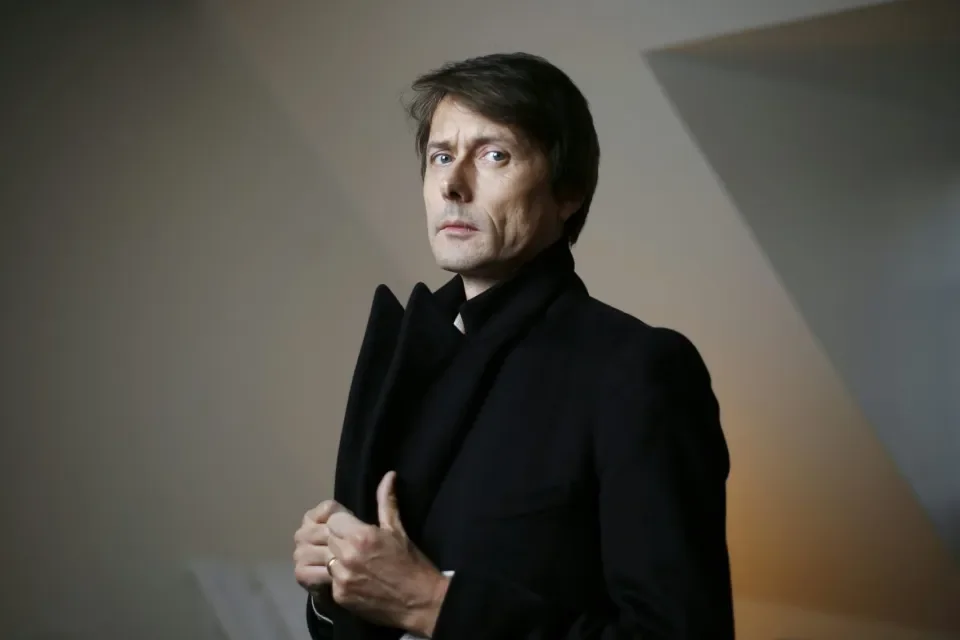
Brett Anderson, still a dandy pioneer
Once you bring that sensibility back home and into a culture defined more by pace than pause, and it starts to feel like something else entirely. It’s not exactly escapism, but it is a quiet refusal to dress as though everything is urgent and against the clock. What ties all of this together? It’s not a simple thing to pin down, but it remains as a subtle change in what men feel they need to communicate. Times, they are a-changing: there’s less interest now in signalling authority through structure, and less need to project a fixed idea of masculinity. Space has been carved out for ambiguity and softness, and for clothing that doesn’t insist on anything at all.
Perhaps that’s why this shift feels so natural: the most noticeable thing about all this is just how unnoticeable it is. The sharp edges have been rounded out and replaced with a sense of quiet confidence not reliant on precision or performance. The modern man increasingly dresses to communicate that he’s entirely uninterested in proving anything to anyone else, and my inner teenager – guyliner and billowy shirt included – couldn’t be more proud.
