
Tracey Emin: A Second Life at Tate Modern Review
Tracey Emin’s A Second Life at Tate Modern: A Major London Exhibition for 2026
I must have been twelve, possibly thirteen. A precocious young man, for sure, and one who was first dipping his toes into the heady, challenging world of contemporary art. I remember vividly the sense of confusion and bemusement surrounding the opening of the Tate Modern – I was desperate to head to London from my home in Bristol to wander its halls, and I can clearly recall the raised eyebrows and curiosity this provoked among my peers.
A considerable amount of those raised eyebrows were the direct result of a very particular bed; one which had hit the headlines, scandalised the country in a way no artwork has achieved since, and in ways I sincerely miss.
Yes, a bed. Not simply unmade, but unapologetic – strewn with the intimate debris of real life and installed, brazenly, in the hallowed rooms of a major gallery. It felt seismic, as if someone had cracked open the polished façade of the art world and let a rather grimy, sticky sort of daylight flood in. Something improper had slipped past the gatekeepers, and it was genuinely thrilling. That was my introduction to Tracey Emin.
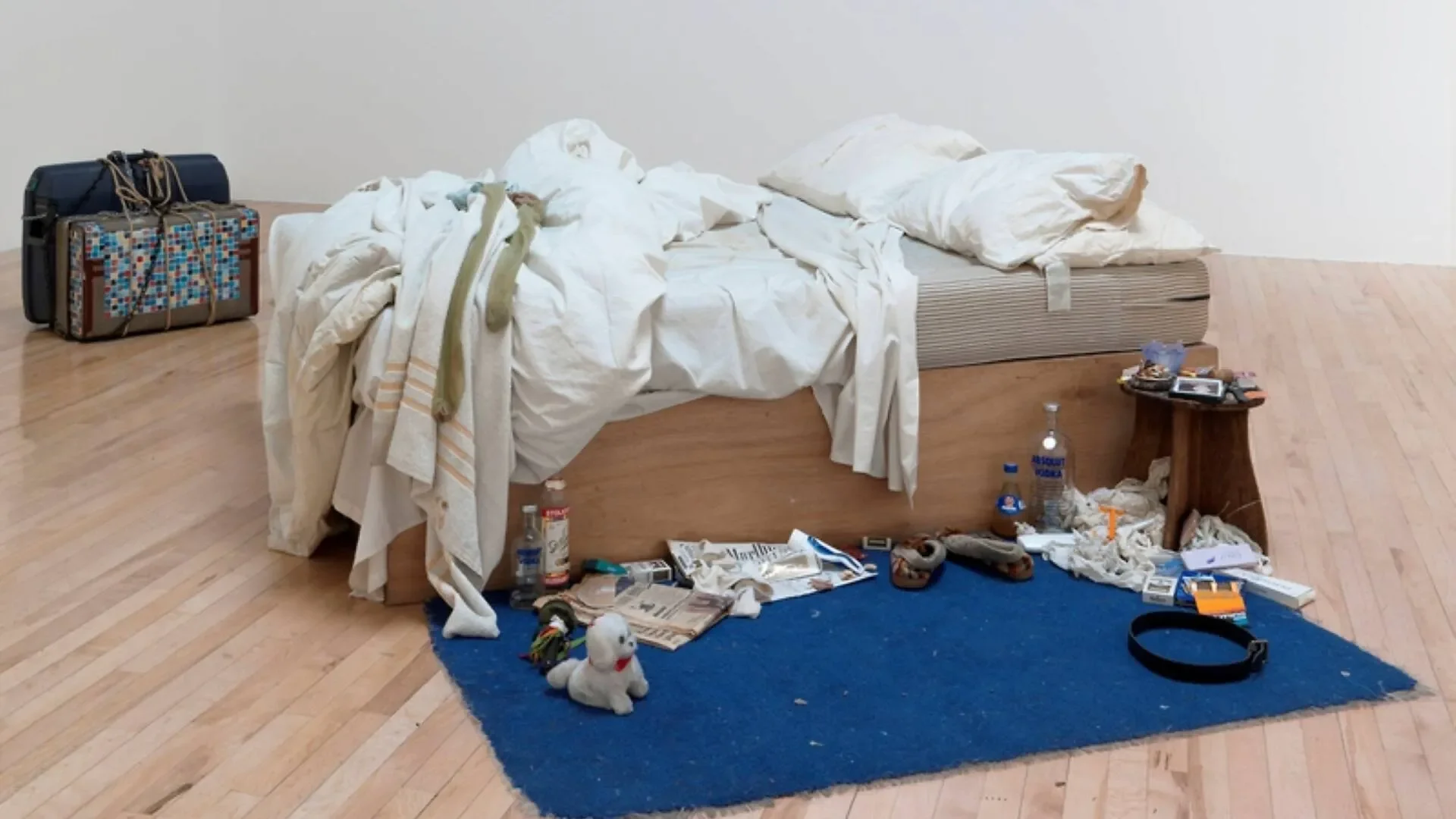
Stickier. Sadder. Cooler than ever.
Nearly three decades later, walking into A Second Life at Tate Modern, that early shock feels distant, but not diminished. The bed is here, of course – stickier, grimier, aged and withered. What’s striking, however, is how small it now seems within the breadth of a career that has been far more expansive and resilient than the tabloids ever allowed.
A Second Life – our Trace’s barnstorming retrospective – doesn’t present a neat chronology so much as an emotional landscape. Early works carry the restless energy of the 1990s; there are neon declarations scrawled in Emin’s unmistakable handwriting, textiles that read like diary pages stitched into permanence and all the shock and awe of the decade. There’s bravado, certainly, but also a startling directness. Her work in situ doesn’t posture in the way we remember, but rather lays out a series of confessions and often heartbreaking truths.
Seeing My Bed in this context reframes it entirely. At the time it felt naughty and transgressive; a manifesto for the grubby realities of sex and languor. Now, the stains and crumpled fabrics littered with detritus feel less like a provocation and more like an opening statement. It was, after all, Tracy’s entry point into a lifelong excavation of love, loneliness, illness and survival. And sex, but sex as much as function as expression of any kind of emotion.
Inside the Tracey Emin Retrospective: Neon, Textiles and Emotional Candour
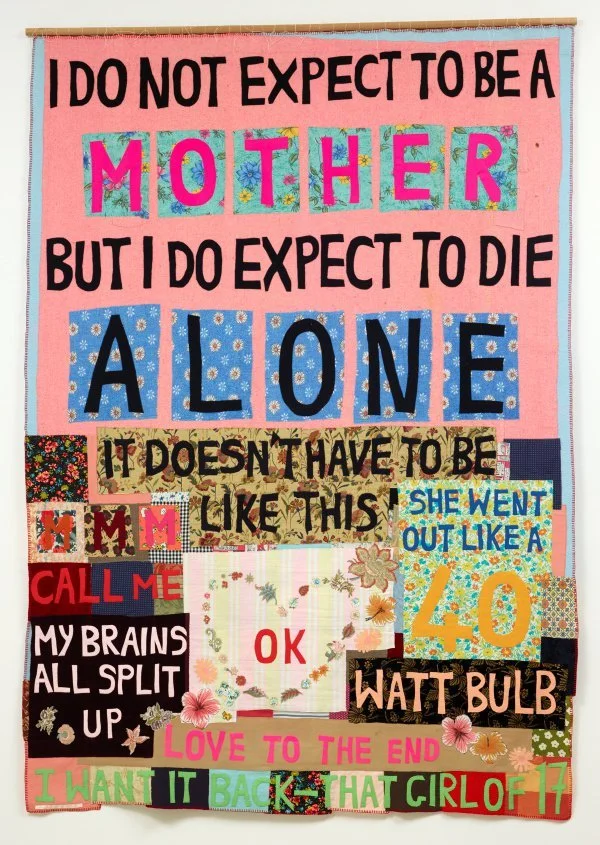
"I do not expect” 2002
Despite the fact I originally found them a little underwhelming, Emin’s neons have become among the most compelling pieces in the show. Her often bizarre phrases flicker against the white walls and tell tales that are intimate, romantic and rather bruised. They hover somewhere between private admission and public proclamation, being at once theatrical without tipping into performance. They’ve been aped countless times, of course – you can see their legacy in any crap wine bar (there’s a rip-off near me that reads “Stay classy, sassy and a bit bad-assy” which always makes me cringe) but it’s a neat reminder that the YBA’s art was always somewhat Warholian in its willingness to both take from and give unabashedly to popular culture. As is so often the case, the OG grows stronger through the plagiarism of the masses.
Her textiles, which include an array of rather impressive appliqué, embroidery, patchwork pieces, quietly subvert their own history. Traditionally domestic and often dismissed as craft, here they become tactile vehicles for autobiography. There’s a real immediacy and inevitability to them, and one cannot help but sense that emotion has been physically worked into the surface, and that art made by women will always end up being compared to the hobbyist. Tracy Emin both embraces this and sticks two British fingers up to the notion – skill is skill, gender norms and prejudices be damned.
Why Tracey Emin’s Art Still Matters in Contemporary Britain
I’m as guilty as most at forgetting that Tracey Emin is a very fine painter indeed. In the large, gestural canvases that dominate the later rooms, we see her figures emerge and dissolve in restless lines. Bodies are outlined with urgency rather than precision, and while these are not polite works they succeed in feeling lived both in and through. Her palette is often subdued (there’s a lot of delicacy in her colour usage, and I can still see her love for Egon Schiele – the pornographer of Vienna for whom I share a deep devotion – in many of her works) and yet the emotional temperature runs relentlessly high.
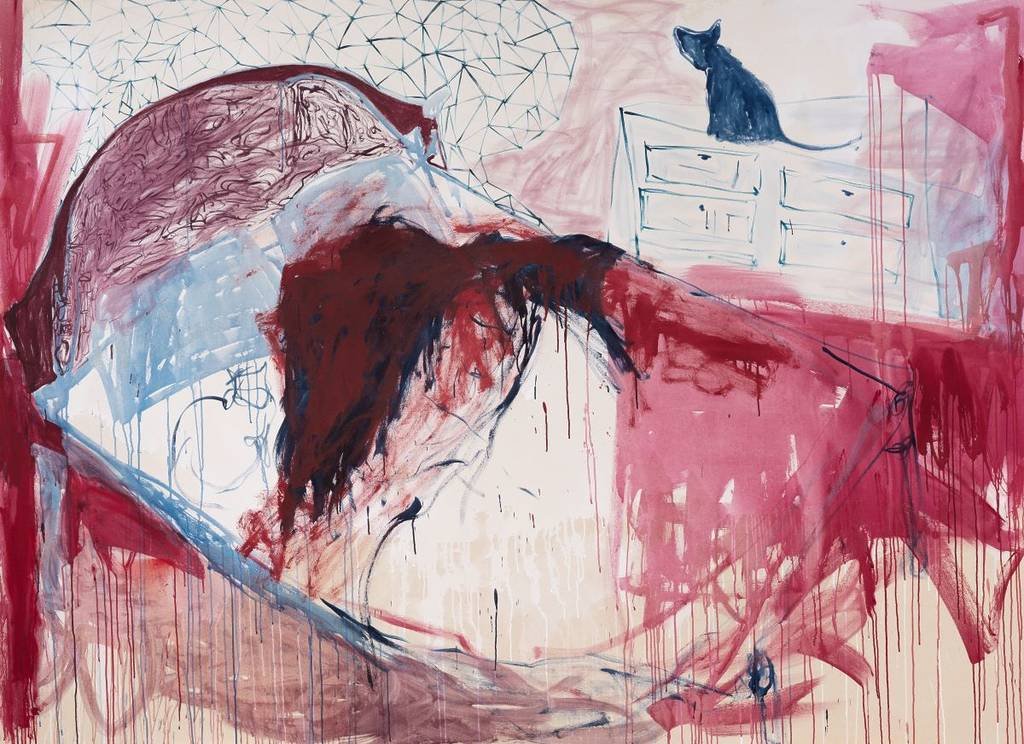
In recent years, Emin has spoken openly about illness and recovery. The title “A Second Life” is far from metaphorical, and this knowledge subtly alters the atmosphere of the show. The later works possess a gravity that differs from the earlier, more confrontational pieces – there is still no shortage of obsession and desire, but there is a mountain of reflection and meditation on show; a sense of someone whose physical body has stepped back from the brink, whose mind never strayed from the goal, and who is taking stock and measure in the best way she knows how.
One thing I absolutely adored about A Second Life is noticing how much the paradigm surrounding Emin has shifted. Thirty years ago, there was a deafening cultural noise surrounding her work – today, the notion that her creations were outrageous feels almost a little quaint and jarring. When you remove the scandal, the intrigue, the Loaded Magazine and Ladette nonsense that was hanging in the air like a dank smell at the time, her art more than stands on its own terms, and we can see that this has absolutely been the case all along. Indeed, when it comes to emotionally literate, unapologetically autobiographical, occasionally uncomfortable and often unexpectedly tender creativity, Tracey Emin is a national treasure we should all absolutely cherish.
And yes, I know she’d absolutely hate the fact I just typed those words.
Tracey Emin: A Second Life is on at Tate Modern from 26th February until late summer 2026
