
Patmos Travel Guide: One of Greece's Best-Kept Island Secrets
Patmos is one of the most beautiful and underrated Greek islands, combining pristine beaches, fascinating religious history, traditional villages and an authentic alternative to the Cyclades' busiest destinations.
We all think we know the Greek islands. Many of us have jostled our way to catch that view of the azure-domed rooftops of Santorini. Some of us have discovered that Mykonos simply isn’t worth the hype, and Zakynthos very much is. Islands such as Rhodes and Kos maintain their reputation as solid options for family holidays, complete with buckets, spades and bottles of Mythos drunk a little earlier than we might allow ourselves at home. Budget airline hotspots like Crete continue to sacrifice quality for quantity to the annoyance of the island’s long-suffering locals, and the list goes on and on.
However, the delightful thing about Greek islands is that there are a lot of them - over 6,000 in total, with an equally impressive 200 islands currently inhabited and welcoming visitors. As such, there’s something for everyone, and plenty that continue to exude a veritable hidden gem status. Patmos is most definitely of this latter category, and it’s almost to my shame that it took me until 2025 to step upon its shores.
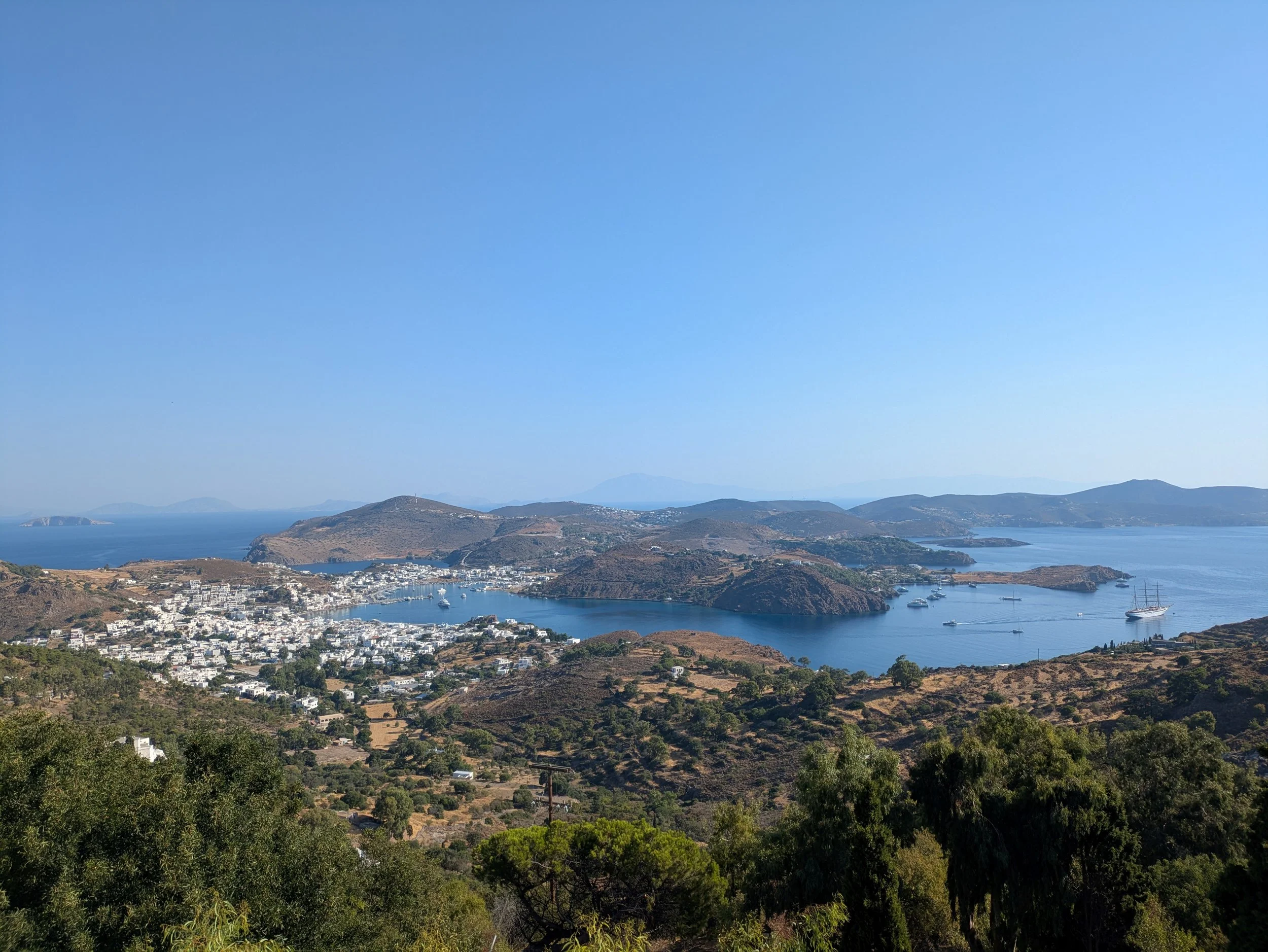
Patmos Bay with SeaCloud II (right)
I’d heard of Patmos before - for those of us with a fascination with mythology and the somewhat weirder side of religious history (yes, that’s very much me), it’s a place with a towering reputation. However, I must admit I’d always assumed it was in Turkey or elsewhere in the Middle East; it simply wasn’t on my mental map of places to visit whatsoever. As such, I was absolutely delighted to discover that it was to be the first stop on a recent tour of the beautiful Cyclades Islands I was undertaking as a guest of SeaCloud II - a cruise company based around a trio of tall sailing ships, committed to not only the uppermost echelons of excellence and hospitality, but also to pulling into lesser-known harbours for more immersive and authentic cruising experiences.
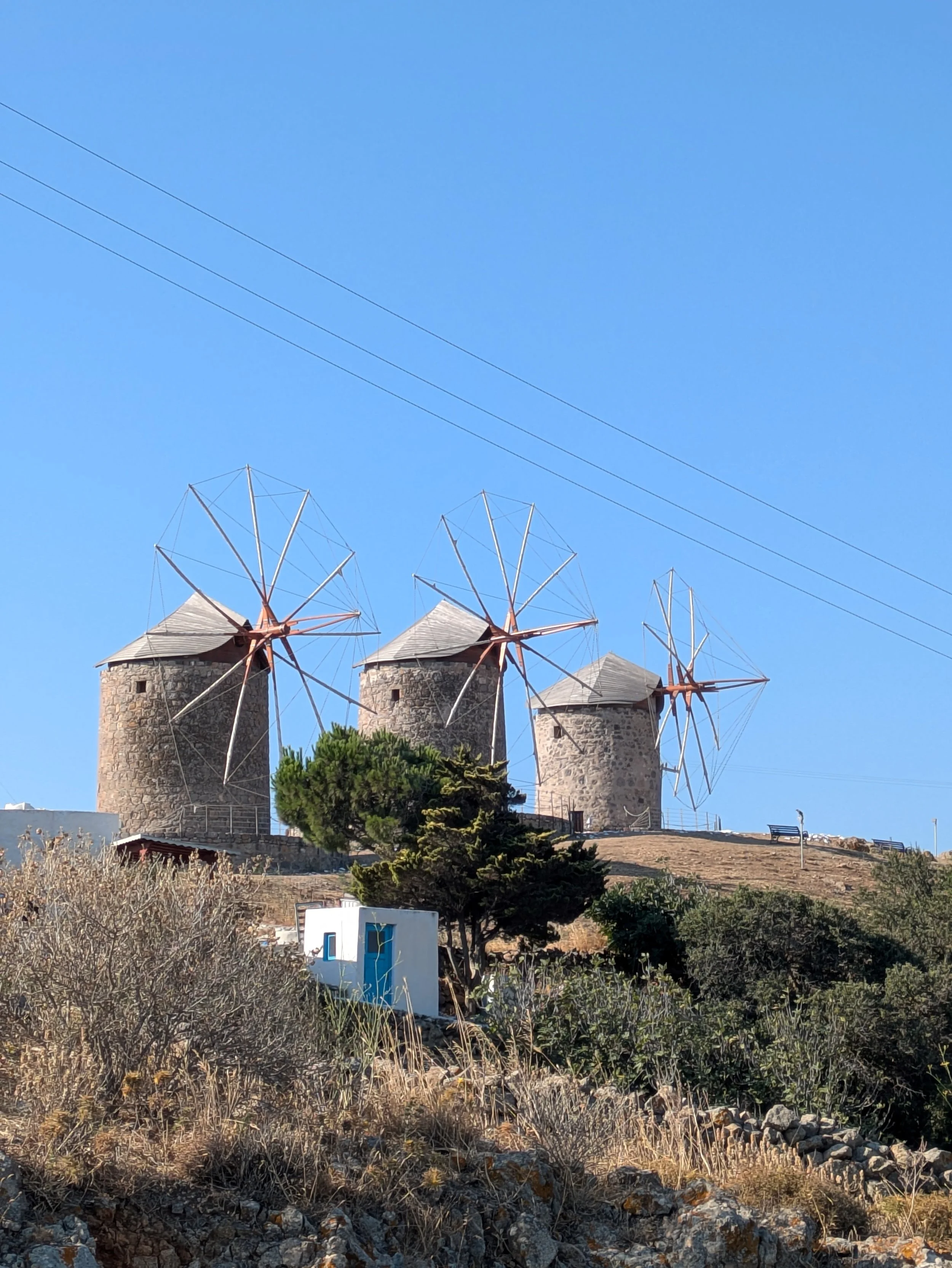
The iconic windmills of Patmos
The bay of Patmos is almost absurdly beautiful. A few millennia of volcanic activity and the rumblings of Poseidon ensured that a natural sweeping bay formed around the island, protecting ships from the notorious high winds of this part of the Mediterranean. On the day I arrived, the deities must have been sleeping - the sea was almost preternaturally calm, oil-like and of the most remarkable royal blue. The island of Ikaria loomed in the distance to provide a mythic backdrop to the adventures ahead; it’s the place where the fabled Icarus completed the world’s first skydive while showing off to his dad, and an equally stunning and underrated island well worthy of exploration.
In order to understand Patmos, we need to delve a little into the religious and spiritual history of the island. Unlike Ikaria, Patmos isn’t particularly associated with ancient Greek history but rather the holy rollers who came a few centuries later. Back when being a Christian was still considered an edgy thing to be and not the kind of thing British politicians awkwardly avoid talking about in interviews, the first followers of Jesus scattered around the Mediterranean to spread the word.
Some found their way as far as India, others - particularly the apostle John - irritated the ruling Romans so much that they were stuck on ships and sent to islands like Patmos as a kind of low-risk, lengthy death sentence - the island has no fresh water, no rivers or streams, and so wasn’t the best place to be held captive during the summer holidays. John did what Jesus’ original gang did best, and set about performing some miracles: he rescued a child from drowning, made a spring appear from some rocks, and - most significantly - sat down in a cave to write what would become The Book of Revelation, the final scene of the New Testament and a feverish account, in widescreen detail, of the end of the world.
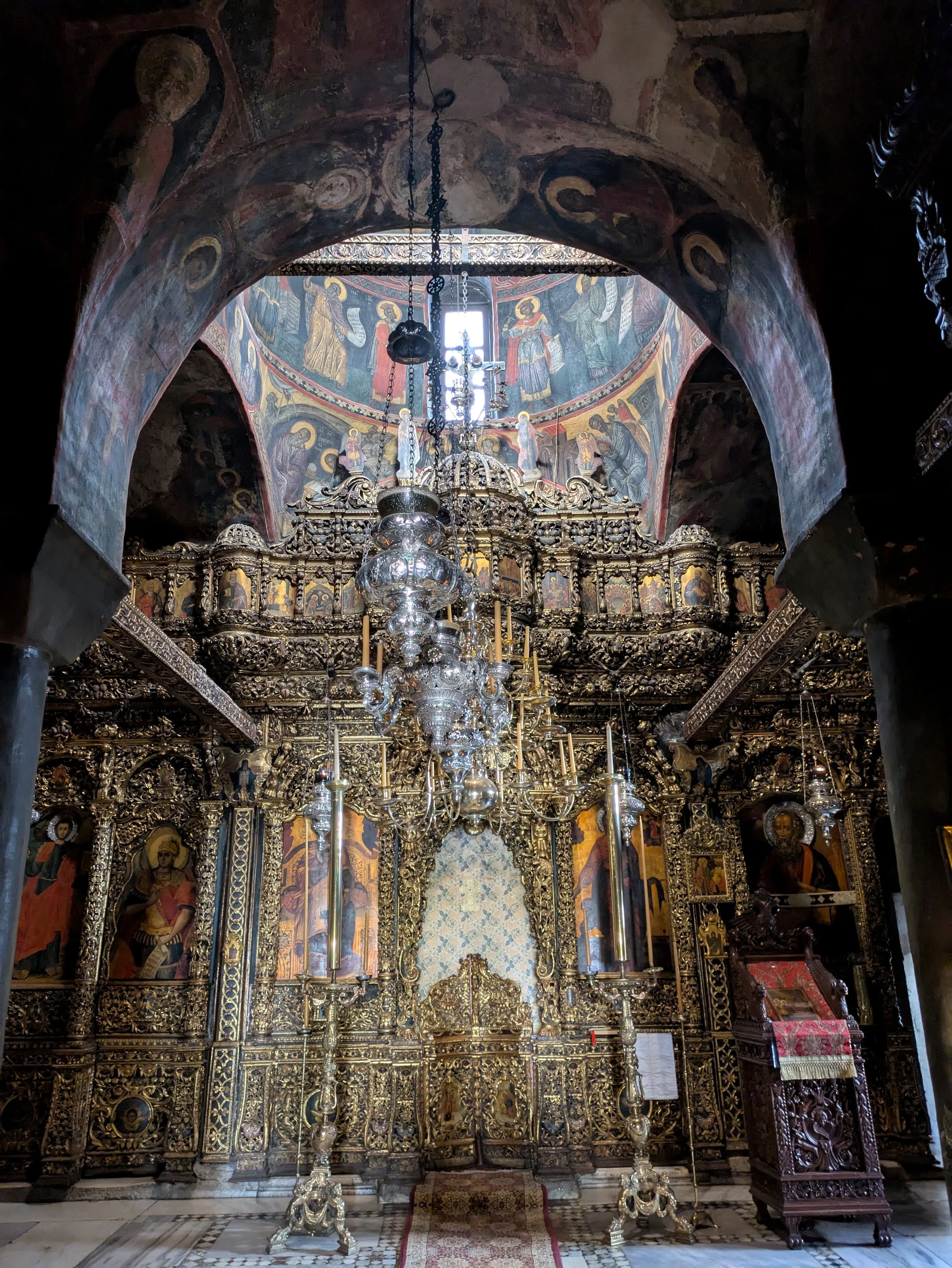
Full-on Orthodoxy
Whether you’re like me and can’t get enough of this kind of thing or you find it all a little silly, there’s no denying that visiting The Cave of the Apocalypse (the Greek Orthodox pilgrimage site where John wrote the ultimate dream diary) has all the ingredients of a fun day out, especially if you’re being shown around by the charismatic Jason Kefalas - local tour guide and fount of knowledge when it comes to the island. You’ll get to see dark caves, holy relics by the bucketload (including the skull of Doubting Thomas, another of JC’s nearest and dearest) and he’ll even point out the private homes of the almost bizarre number of A-list movie stars and film directors who call the island home. The cave itself is the natural apex of the tour - a place of quiet contemplation, overflowing with vibes and a special kind of ambience carefully curated over centuries of slightly spooky religious practices and devotion - and a fascinating insight into an island whose appeal as a tourist destination has spanned two thousand years.
Once you’ve made the obligatory visit to Patmos’ biggest claim to fame, the island’s other treasures are yours to uncover. This means some of the best beaches in the Cyclades - I’d especially recommend Kambos beach on the northern side of the island, where golden sands and crystal-clear waters make it a marvellous place for a leisurely swim - a smattering of sophisticated beach clubs including the brilliantly-named Atmos Patmos, and the town of Choria where you’ll be able to pick up the obligatory souvenirs.
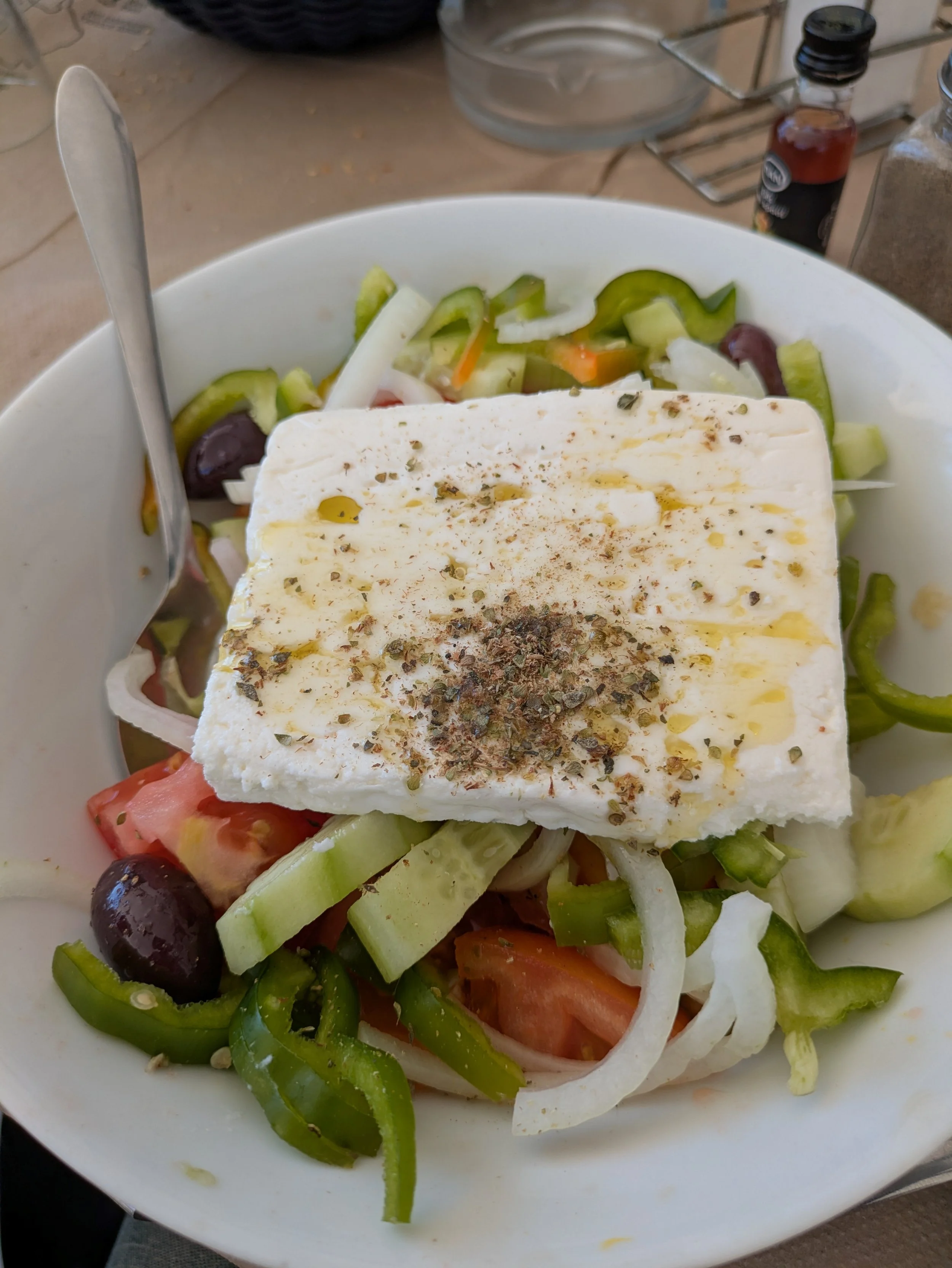
Feta the devil you know
As this is the Cyclades, you’re never far from some spectacular food. In the land of olive oil, seafood, grilled meats and pillowy pitta bread, you could eat very well indeed at pretty much any taverna on the island - even the rougher-looking eateries by the bay punch well above their weight with a simple gyros and chilled bottle of beer - but there are a couple of restaurants worth seeking out if you’re lucky enough to be in this part of the world.
Tarsanas Marine Club is arguably among the best albeit being somewhat eccentric; located in a working boatyard, part of the restaurant is contained within a repurposed boat. Here, you’ll find a stunning array of Greek classics cooked lovingly with quality local ingredients; those seeking to load up on carbs would do well to get a slab of the pastitsio and a few of the aforementioned pittas, the Greek salad is exactly as good as it damn well should be, and the kaitifi spinach balls are nothing less than a delight.
Patmos isn’t your typical Greek island getaway. There’s no waterpark, no all inclusive resorts, no donkey rides or cocktail bars thumping out europop and terrifying-looking concoctions served in a fishbowl. For those of us - like me - who have been left a little heartbroken by the disappointment of scene-stealing outcrops such as Mykonos, Patmos is the perfect solution. Whether you’re there for a day as part of an island-hopping cruise or want to luxuriate in peaceful reflection and hermitage like many before you, it’s an island that will steal your heart and - possibly - conjure up some rather potent dreams.
Book Seacloud cruises at www.seacloud.com/en
Want more reviews of the most underrated Greek islands? Check out our review of Amorgos island and Syros.
