
Madonna di Campiglio in Summer: A Luxury Dolomites Travel Guide
Madonna di Campiglio is one of the best summer destinations in the Dolomites, combining spectacular mountain scenery, hiking trails, alpine food, wine experiences and outdoor adventure beyond the ski season.
The Dolomites themselves need no real introduction. Looming over the Tyrolean landscape like a phalanx of cragged sentinels and within rock-hurling distance of the Austrian and Swiss borders, they’re a bonafide icon of Mitteleuropean geology beloved by those whose idea of good fun involves a pair of skis and the thrilling effect of gravity and inertia.
However, I’m not one of those people. Due to (sob story alert) a series of bizarre birth defects and their accompanying array of childhood surgical operations, my feet and legs have never been able to handle the boots, the balance or the need for flexibility inherent to winter sports. Simply put, while I’ve often tried to strap myself into skis or a snowboard, it’s always been too painful and too embarrassing to continue for more than a matter of minutes. Long story short, it’s been many a year since I decided skiing simply wasn’t for me.
Madonna di Campiglio, one of Brenta Dolomites’ most elegant and highly-regarded ski resorts which sits at a not-inconsiderable 1550 metres above sea level, hasn’t built its success on individuals like me. Since the gilded days of the Austria-Hungarian empire, when an imperial court of heavily moustached and brass-buttoned aristocrats caught the bug for winter amusement, it’s been a jewel in the crown of the Tyrol region and it continues to attract an impressive slew of ski tourists throughout the powdery seasons. However, times are a-changing. With the local glaciers retreating at an alarming rate, months on the slopes shortening and the local government and business owners aware that they can no longer sit on their thumbs for half the year, the decision was made to give Madonna di Campiglio a summer season. The township has managed to do so without even slightly compromising its allure, proving my long-held belief that sometimes, for some people, visiting ski resorts in the blazing midsummer sun is a very, very good idea indeed.
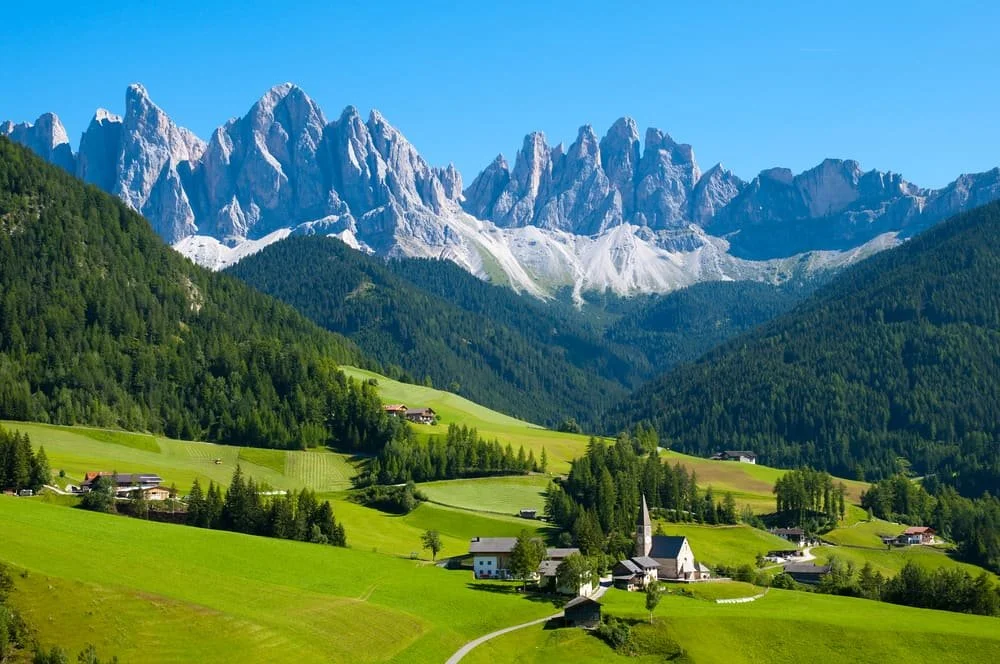
Pristine Dolomites vistas
Due to its position in a natural conch between the mountains, Madonna di Campiglio is a pitch-perfect spot from which to explore Brenta Dolomites, either on foot, via the now year-round trundling gondolas, or as part of a chauffeured tour group. With the crowds of skiers entirely absent and the blinding whiteness replaced by lush greens and the pinkish hue of the bare peaks displaying their full glory, the region exhibits a pastoral summery appeal - one which is hard to believe not central to its pulling power.
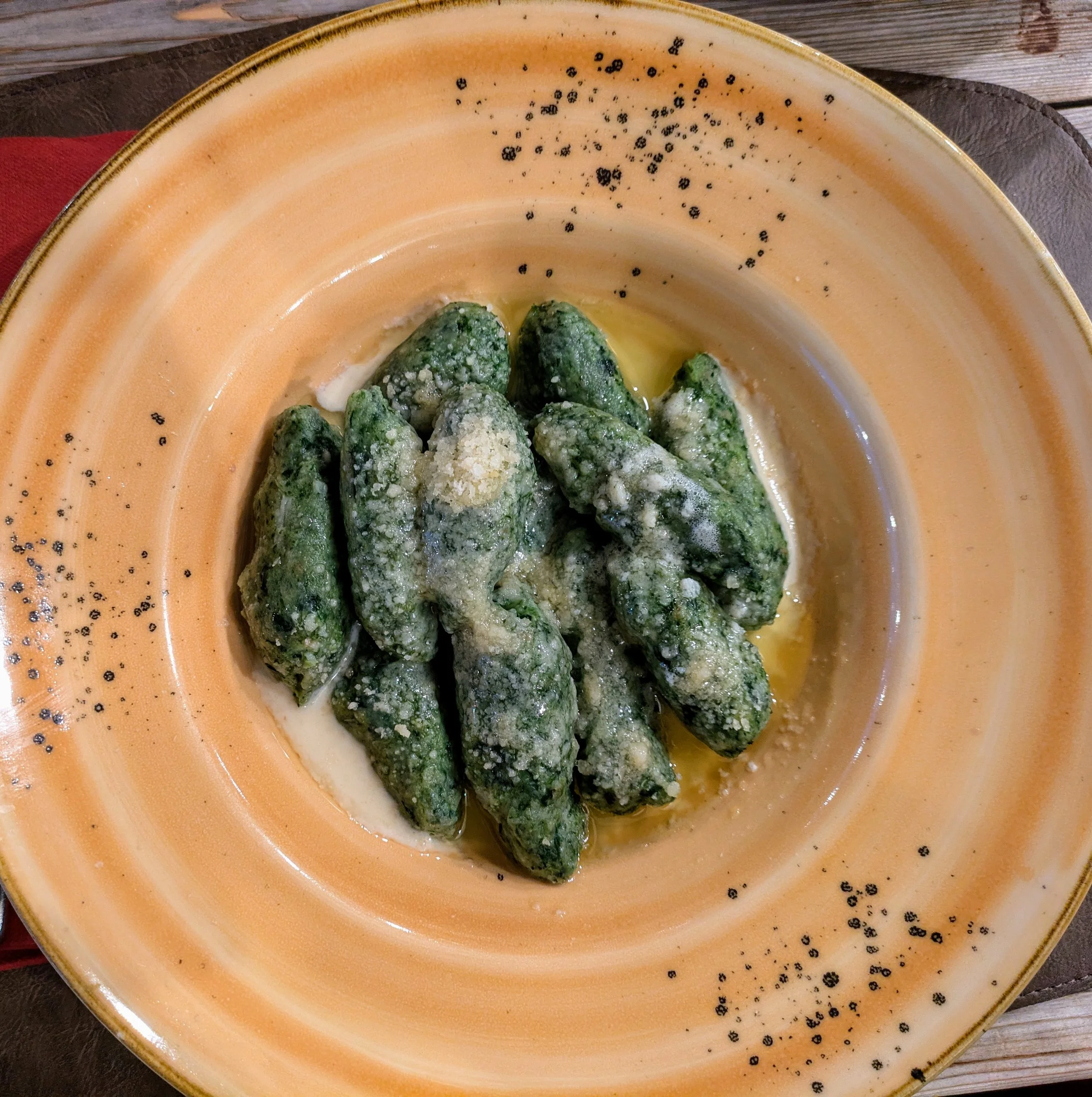
Strozzapreti verde, a new favourite
This non-peak seasonal allure comes across perhaps most potently via my personal favourite medium and reason to travel: the local gastronomy. This is Tyrol, so the Italian cuisine on offer owes more to the alpine kitchen tradition on its doorstep and less to the flourishes of pasta, pizza and other wonders dependent on durum wheat and semolina flour synonymous with the south. However, this is still very much Italy, so the impulse to feed - and to feed very well indeed - is absolutely present and correct. Up here in the summertime, the glut of mountain and valley herbs and quality of both dairy and pork farming reigns supreme; every menu features cured hams and cheeses of exceptional distinction, as well my personal favourite pasta-adjacent dish, strozzapreti verde, which binds abundant soft greens into buttery, pillowy dumplings. Paired with the crisp high altitude white wines of the region, it’s a dish that encapsulates the terroir with that oh-so-Tyrolean blend of verdant simplicity, comfort and panache.
Indeed, up here amid this most dramatic of alpine landscapes, terroir really matters. That essence of time and place, the expression of the land and the season brought forth in basic ingredients and lovingly-crafted wine, is something that often struggles to make its presence felt when under a blanket of snow (and cushioned by après-ski and the joys of melted cheese, hunks of bread and comically long forks).
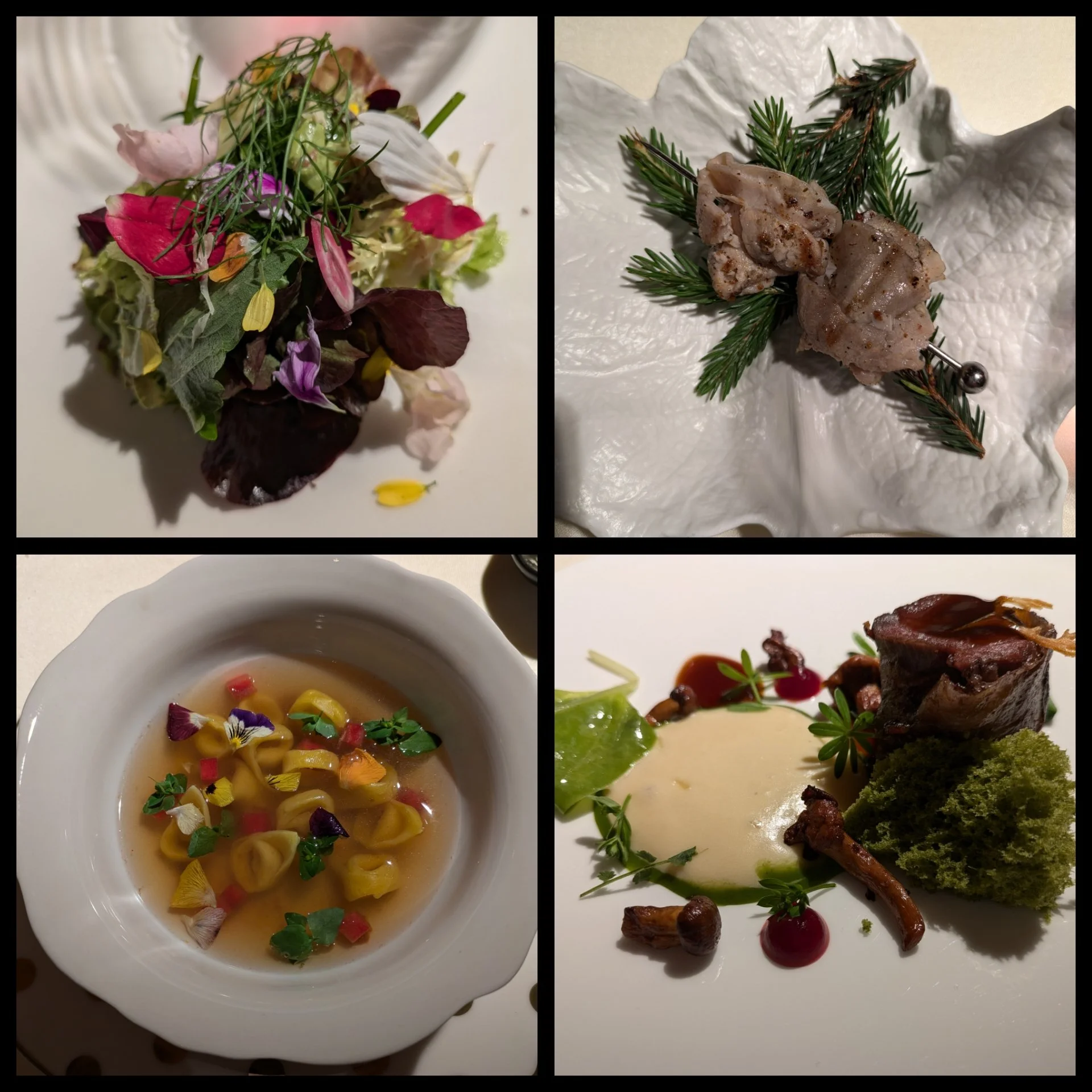
Alpine delights at Stube Hermitage
The summer months are the foraging season, so a-foraging we go. A meandering walk through the foothills of the Dolomites is never a bad idea, and I’ve long been a keen picker of berries, herbs and other edible fistfuls of greenery, even in and around the English city in which I call home. Accompanied by a remarkably knowledgeable guide, my small group set off, basket in hand, to see what we could find. There’s something joyful about realising that, in any expanse of woodland or meadow, you’re surrounded by plants and raw ingredients one is used to only seeing on the menus of higher-end eateries… and they’re completely free and taste exactly as nature intended. The citric tang of wood sorrel - literally everywhere underfoot - is always a delight to brighten the palate, as is the wild thyme that litters the forest floor with its purple haze. The ridiculously-named Good King Henry has stalks which taste like asparagus (in fact, even better than asparagus), silver birch sap brings sweetness, and a glut of wild strawberries hide beneath leaves like tiny, richly-flavoured jewels. Coupled with the crisp mountain air and jaw-dropping vistas, it’s an eye-opening stroll of delightful discoveries. I was delighted to find that my guide was adding almost everything we came across to a large bottle of water, essentially distilling the totality of the terroir - and the unique nature of our walk - to be sipped and appreciated later. Again, to hammer a point home, it’s an experience that simply wouldn’t be possible in the depths of winter, but it’s one I’d defy any gourmand to willingly miss out on.
The flavourful delights continued with a visit to Stube Hermitage, one of the quieter, more understated Michelin-starred restaurants of Madonna di Campiglio housed in a beautiful wooden biohotel deep in the valley. It’s everything you want from an alpine retreat - vast fireplaces, the scent of timber, all soft, rounded edges and even softer furnishings. The display of Michelin plaques above the reception, dating back years and years and years, shows just how long they’ve maintained their star status. Once the dishes of one of their signature tasting menus start coming, there’s no mystery behind their continued success.
The concept of Stube Hermitage’s tasting menu is one I can really get behind, despite usually shuddering every time I’m presented with a ‘concept’ by a waiter shortly after taking my seat. It’s built around the idea of returning home to the village after time spent away - essentially, food cooked by Nonna, complete with all the comfort and nostalgia an alpine-dweller holds in their heart. Now, my family is from a steel town in North Wales, and my grandmother’s method for cooking vegetables was based on the idea that both flavour and chewing were vastly overrated, so I can’t claim to share the Stube’s notion of nostalgia… but I’m a long way from Flintshire, both physically and spiritually, so I’m all in.

Ski lifts: not just for winter sports
A salad of wild foraged leaves, elevated with a selection of lightly pickled berries and accompanied by some astonishing bread and whipped butter fires the opening salvo. Cappelletti - tortellini’s petite and rather more refined cousin - reminds us which country we’re in, adding the promised depth, warmth and comfort with the addition of a mahogany-hued capon stock and the sticky-sweet surprise of seasonal plums. A fermented spaghetto dish with goat’s cheese takes us slightly out of our comfort zone in a decidedly satisfying manner, then the mountains make their presence felt with a stunning venison tenderloin with chanterelles and a boozy reduction. Various fanciful sweet dishes and buttery biscuity things round off the experience (after all, this is grandma’s house for the evening), joined by the kind of late harvest dessert wines I’ve long been championing as deserving a place in everyone’s personal cellar or cabinet. Stube Hermitage reminds us, brilliantly so, of three key truths: fine dining tasting menus don’t need to look or taste like a science experiment, there’s nothing wrong with using plates, and there’s a very, very pleasing middle ground between the novel and the familiar.
Another day, another beautifully-crafted strudel and glass of Souvignier Gris, and another walk - this time up among the peaks following winding pathways hidden for half the year by snowfall. Madonna di Campiglio has put considerable effort into presenting itself as a summer hiker’s paradise and has invested into a number of cycling centres, keen to attract those after another type of downhill thrill. Amid glacial lakes, azure skies and overlooking dense forests, and benefitting from a very comfortable 23 degrees sunshine, it’s nothing less than a joy. There is plenty to uncover for those interested in more ground-level and genteel pursuits, too - those Imperial counts and countesses from Vienna left a series of architectural and artistic wonders well worth visiting; the town hall boasts some seriously impressive frescoes reminiscent of the Secession movement, all Art Nouveau curlicues and arabesques, dripping with gold and classical symbolism for those willing to seek them out.
So, Madonna di Campiglio - yes, it’s a ski resort, and arguably among the best this part of Europe has to offer. If that’s your bag, fill your boots while the snow keeps falling. However, in a changing world, it’s had to do what so many have been jostled into - to rebrand, adapt and change with the times. With glamorous and renowned neighbours in the form of Italy’s nearby lake district, it has some hefty and worthy competitors for those on the lookout for a summer retreat. However, as a destination to watch outside of ski season, and with a food and wine culture entirely of its own, it’s more than punching above its weight.
