
IZZA Marrakech Review: A Luxury Riad in the Heart of the Medina
Set in the heart of Marrakech's historic Medina, IZZA blends contemporary art, exceptional dining and boutique luxury to create one of Morocco's most distinctive Michelin Key hotels.
Marrakech takes a mischievous delight in making the world of luxury a little nervous.
After all, for decades, many of the city’s most celebrated hotels have responded to the Medina at the heart of the metropolis in much the same way medieval rulers responded to invading armies: by building walls. Thick walls, impenetrable walls, walls designed to keep the noise, crowds, unpredictability and glorious disorder of the city at a comfortable distance. On the short taxi ride from the airport to the blaze and glory at the heart of Marrakech, you can see these hotel walls, shielding tourists within compounds that might as well be anywhere else on Earth.
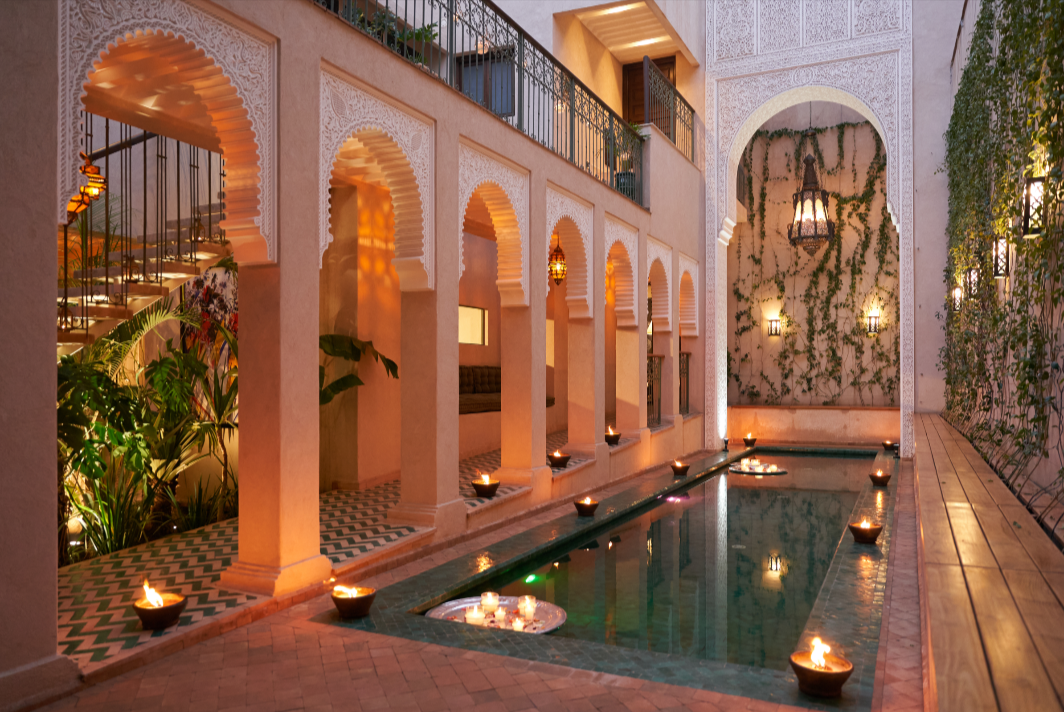
IZZA: House of friends, house of wonders
To be fair, the instinct is understandable. The Medina can be overwhelming; it’s a literal labyrinth where motorbikes thread through alleyways as if the laws of physics are mere guidelines to be considered, then swerved altogether. Merchants negotiate with a theatrical stamina, the air hangs heavy with the inescapable sultriness of orange blossom, charcoal smoke and roasting meat, and lazy cats eye you with suspicion from every doorstep. The city doesn’t even attempt to settle on a single sensory register, and it invites you to embrace the maelstrom with open arms.
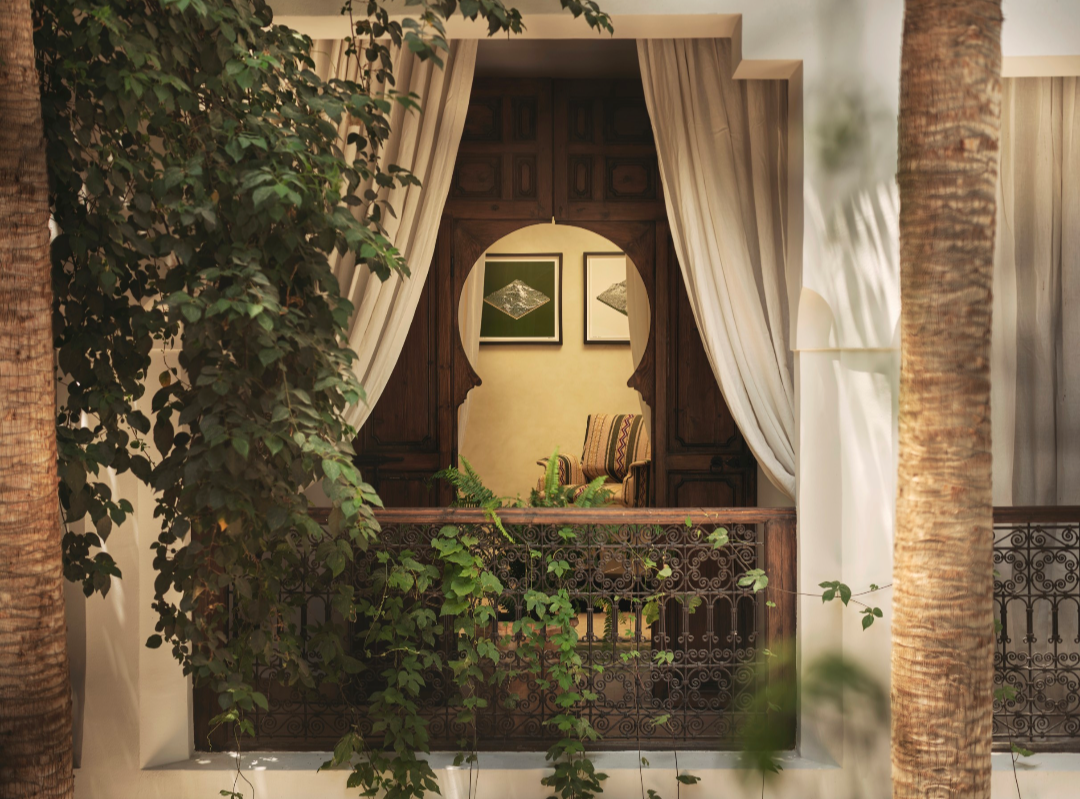
Breathless romance and irresistible vibes
IZZA, a Michelin Key-awarded riad and ‘house of friends’ which launched in 2023, gleefully refuses to keep the Medina at bay, and is all the better for it.
Indeed, rather than positioning itself against Marrakech, IZZA sits in its beating, rhythmic heart. The Medina isn’t waiting beyond the threshold or reduced to a romanticised backdrop; it seeps through the doors and into the corridors, courtyards and kitchen. It influences the way time behaves once you arrive, and it’s impossible not to notice its influence once you step outside to be absorbed further into the city’s dizzying geometry. It’s there in the morning call to prayer that ricochets across the rooftops, it’s there when night falls and the breeze blows inwards from the hulking Atlas mountains.
IZZA doesn’t frame Marrakech as something to be observed from a safe distance – it presents it simply and proudly as the place you’ve chosen to spend your time.
A Riad With a Rebel Heart
To stay at IZZA is to acknowledge an aspect of Marrakech which is often overlooked by travel guides and brochures: it’s a city with a pulsing art and long-established countercultural scene, which throughout the 1960s, 70s and 80s in particular drew no shortage of visionary movers and shakers into its orbit.
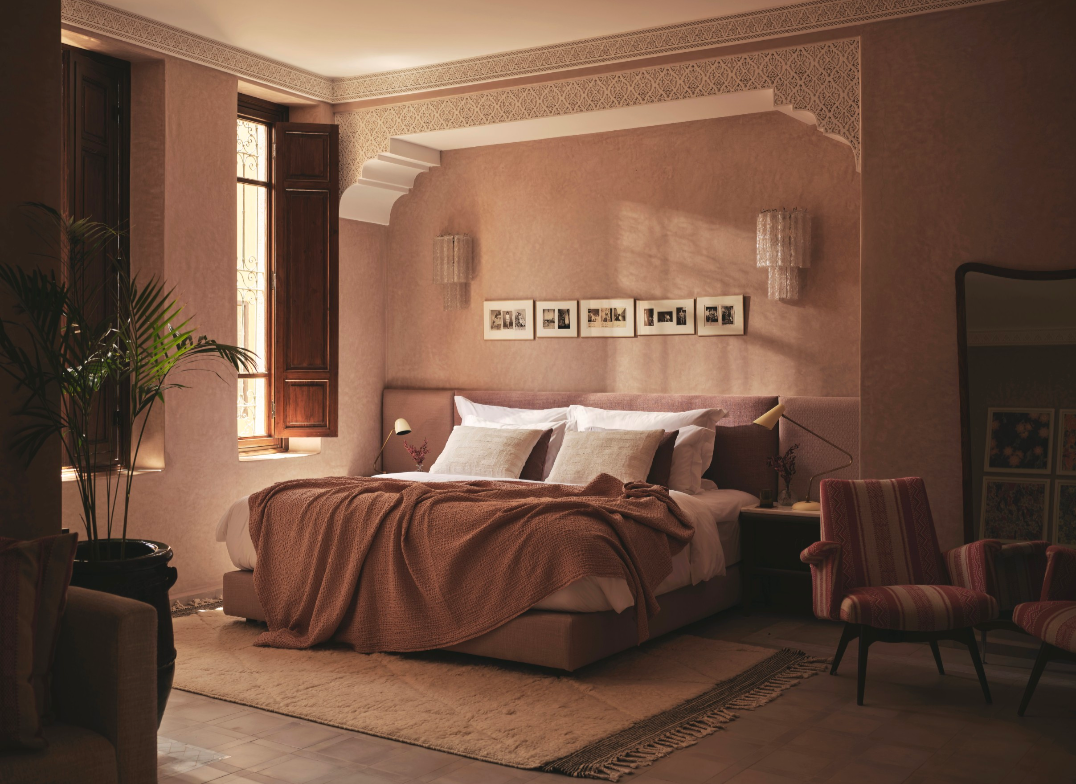
Each bedroom takes its name from Marrakech’s most inspirational guests
Across the dozen or so rooms and suites at IZZA – which is made up of a collection of seven historic riads, stitched together via courtyards, staircases and passages which actively resist immediate interpretation – you’ll feel the echoes of such luminary figures and their ongoing influence on the city.
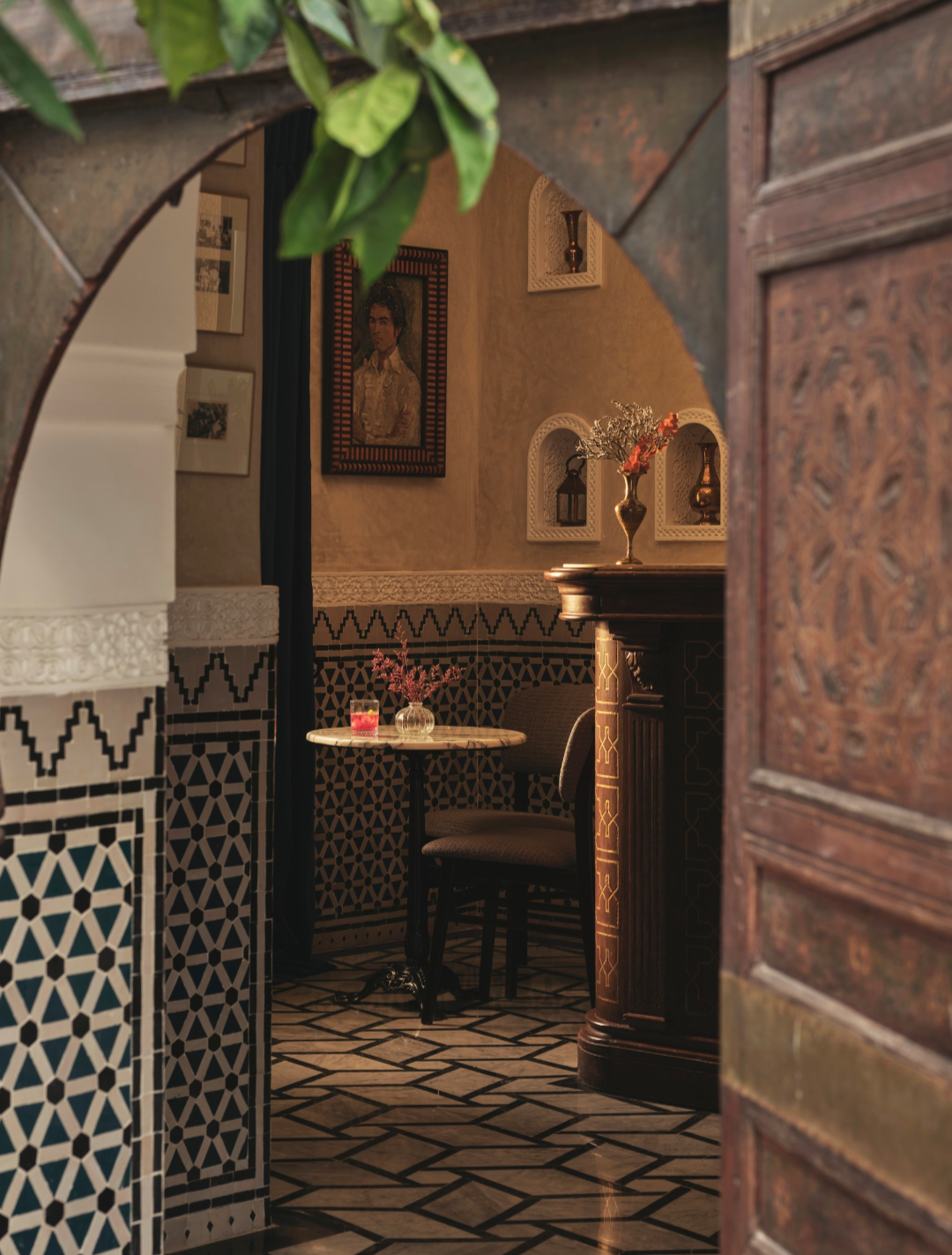
Hidden doors, endless possibilities
Each bedroom is named after such individuals; mine was named Marianne, after Marianne Faithfull. Now, I’m a big fan of Marianne Faithfull (Broken English is a regular fixture on my turntable) and there’s a particular quality to her glamorous, fractured and slightly unguarded presence that feels fitting in a hotel that resists being reduced to a singular, stable impression. Other rooms took on the names and personas of Yves Saint Laurent, Allen Ginsberg, Grace Jones. At IZZA, you’re in good company.
My room itself – featuring a large double bed, a generous private balcony, a spacious shower and a plethora of artworks, books and hidden treats from the exceptional in-house pastry chef – was exactly the kind of place I look forward to retreating to after meandering through the giddying maze outside, but the real joy of IZZA is the fact that nothing here is given to you all at once. It’s not a vast hotel, but you’ll get slightly lost regardless; corridors turn where you expect them to continue. A secret library reveals itself at the top of a staircase. Courtyards with narrow pools and floral displays arrive as though they have been waiting for your discovery.
Even after three days, I felt as though the riad hadn’t quite finished its own introduction, and I mean that in the most praiseworthy way possible.
Beyond the Surface of the Souk
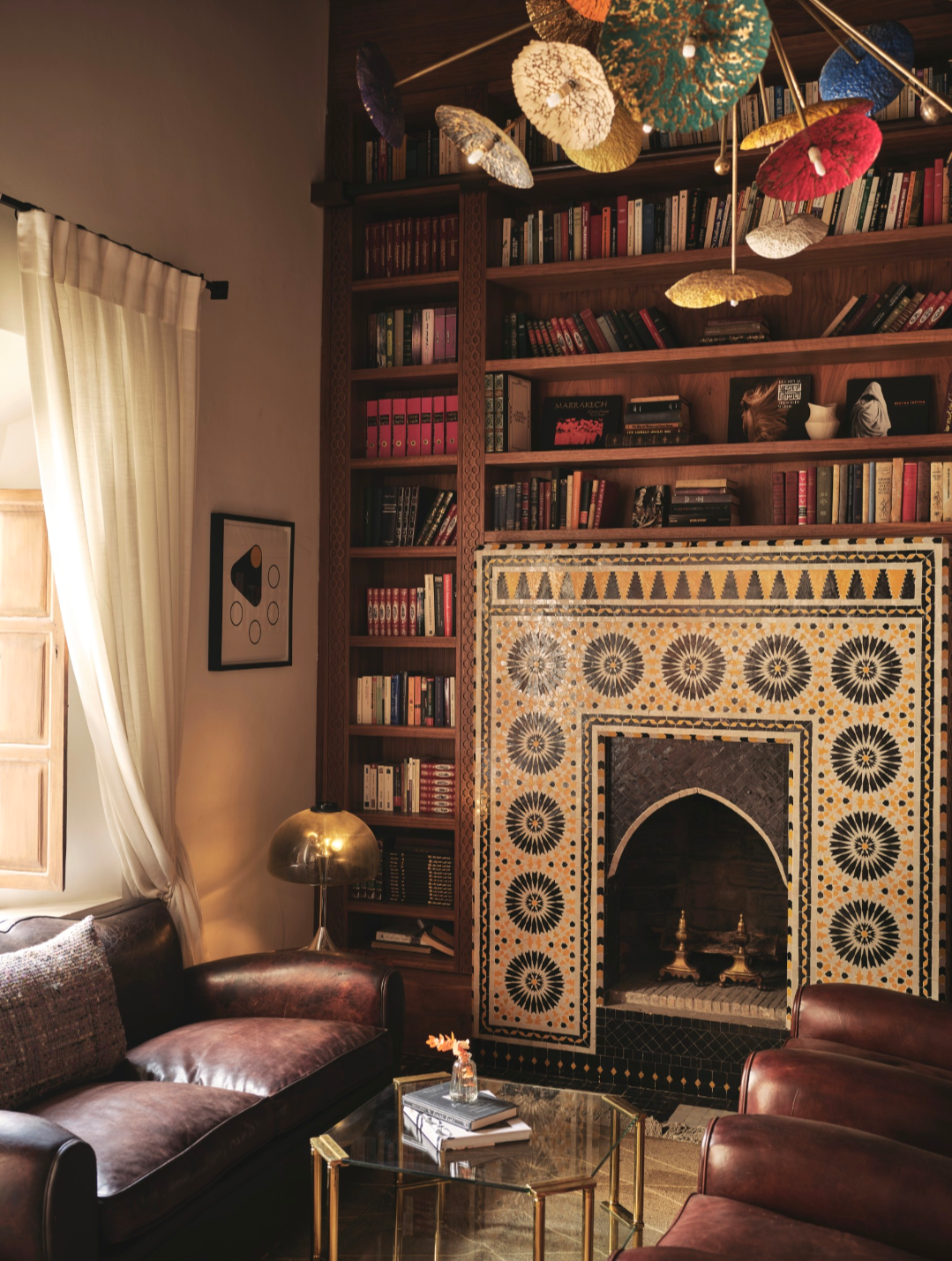
The secret library
I slept well at IZZA. Really, really well – as if my eyes had been overwrought by everything to see at the riad hotel, which boasts a genuinely impressive contemporary art collection ranging from fascinating Afro-Futurist photography to amorphous AI-driven explorations of 18th century portraiture. I’ve been to plenty of so-called ‘art hotels’ and, it’s fair to say, most leave me pretty cold. IZZA’s regularly-changing collection is curated by somebody who clearly knows their stuff, and every room, corridor, staircase and communal area features something to gaze at, ponder upon or admire.
Breakfast was served (as were all the meals) on the large roof terrace of the riad, and hit an impressive number of high notes. Homemade breads were accompanied by rich, sticky almond paste and dense fig and plum jams, and stylishly-arranged fruit platters were followed by an excellent a la carte option. We’re a long way from breakfast buffet territory up here above the chimneys of Marrakech, and that’s by no means a bad thing – I dived into a bubbling, sizzling bowl of loubia, an intense, rich and heavily aromatic bean stew in which a pair of eggs had been gently baked. Rustic, punchy and earthy, it’s impossible not to dredge the sides of the terracotta bowl with a scrap of flatbread, ensuring every last trace of sauce found its way to my mouth.
The fortification was needed, for today, I was to explore the souk. Often, when I’m travelling, I do all I can to avoid being taken anywhere by a guide, far preferring to amble down alleyways and through marketplaces – usually getting hopelessly lost, but doing so in style and in my own good time. Honestly, I wouldn’t recommend this in the Medina; the labyrinthine streets are not only mercilessly confusing, but you’d genuinely miss out on a vast number of hidden gems well worth your time. As mentioned, Marrakech is a city of doors. Knowing which doors to peer behind is half the trick to making the most of the wonders on offer.
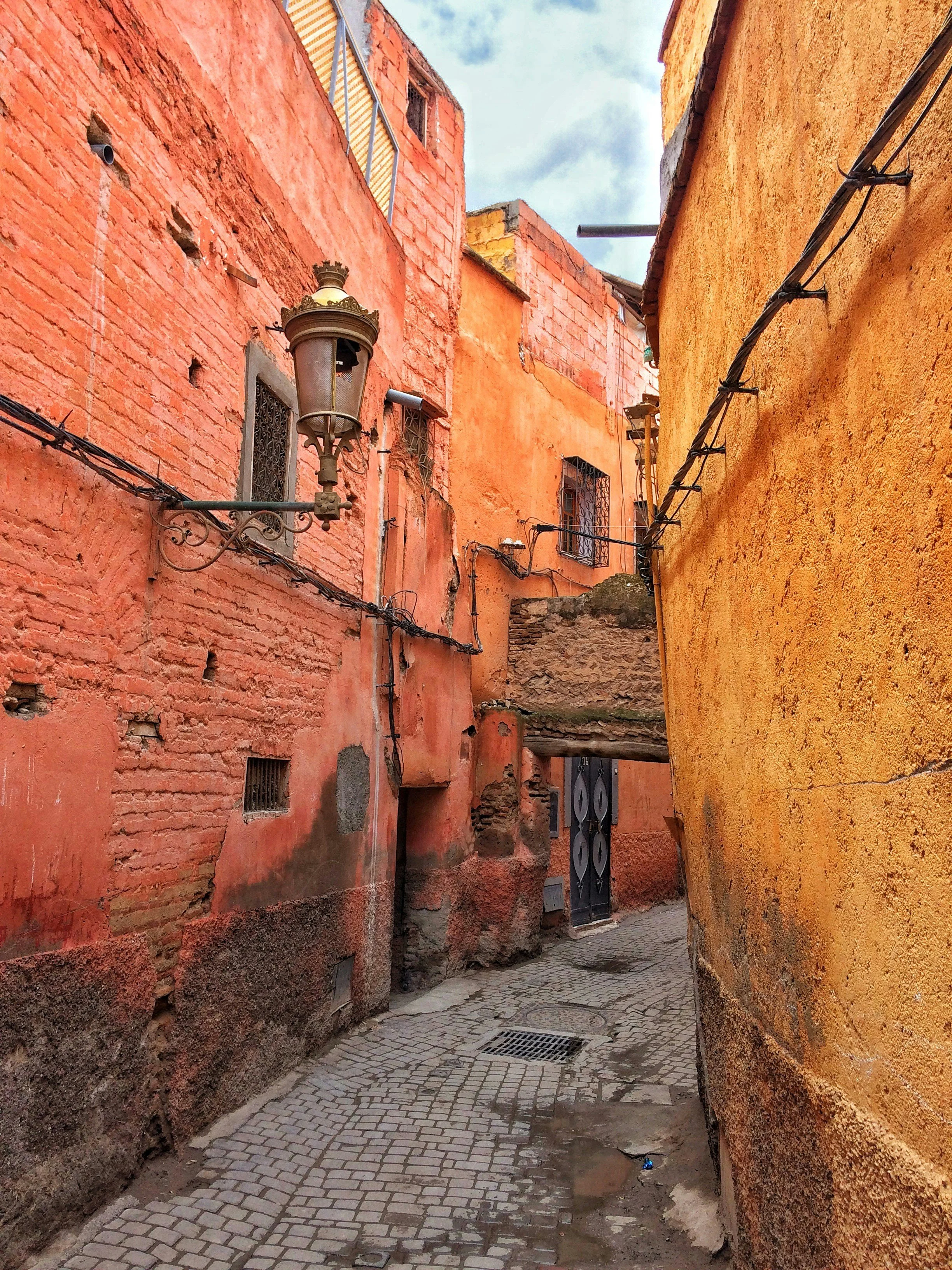
Into the labyrinth of the medina
IZZA is only too happy to showcase its immediate environs by booking guided tours through the souk, allowing guests to enjoy the experience of the thrumming marketplace while also deepening their understanding of the hotel’s broader context. Our guide for the day, Mustafa, was a gem – he showed me mausoleums of Marrakech’s holy men, he introduced me to the streetside merchant who churned out thousands of piping hot treats a day with the nonchalance of a man flipping a coin. We peered into communal bakeries where local women bring their dough each morning, ancient hostelries for Berbers and their camels, and cutting-edge fine dining restaurants carved out of historic prisons.
Once deep into the belly of the souk, Mustafa led me through workshops where craft is not curated as heritage or elevated into performance; it is simply ongoing work, without explanation or framing. Here, metal is shaped in open doorways, wood is carved into geometric systems, and textiles are woven with a concentration that belongs to a different understanding of time. Without him a few paces in front of me, I’d have missed almost all we uncovered.
Feasting in the House of Friends
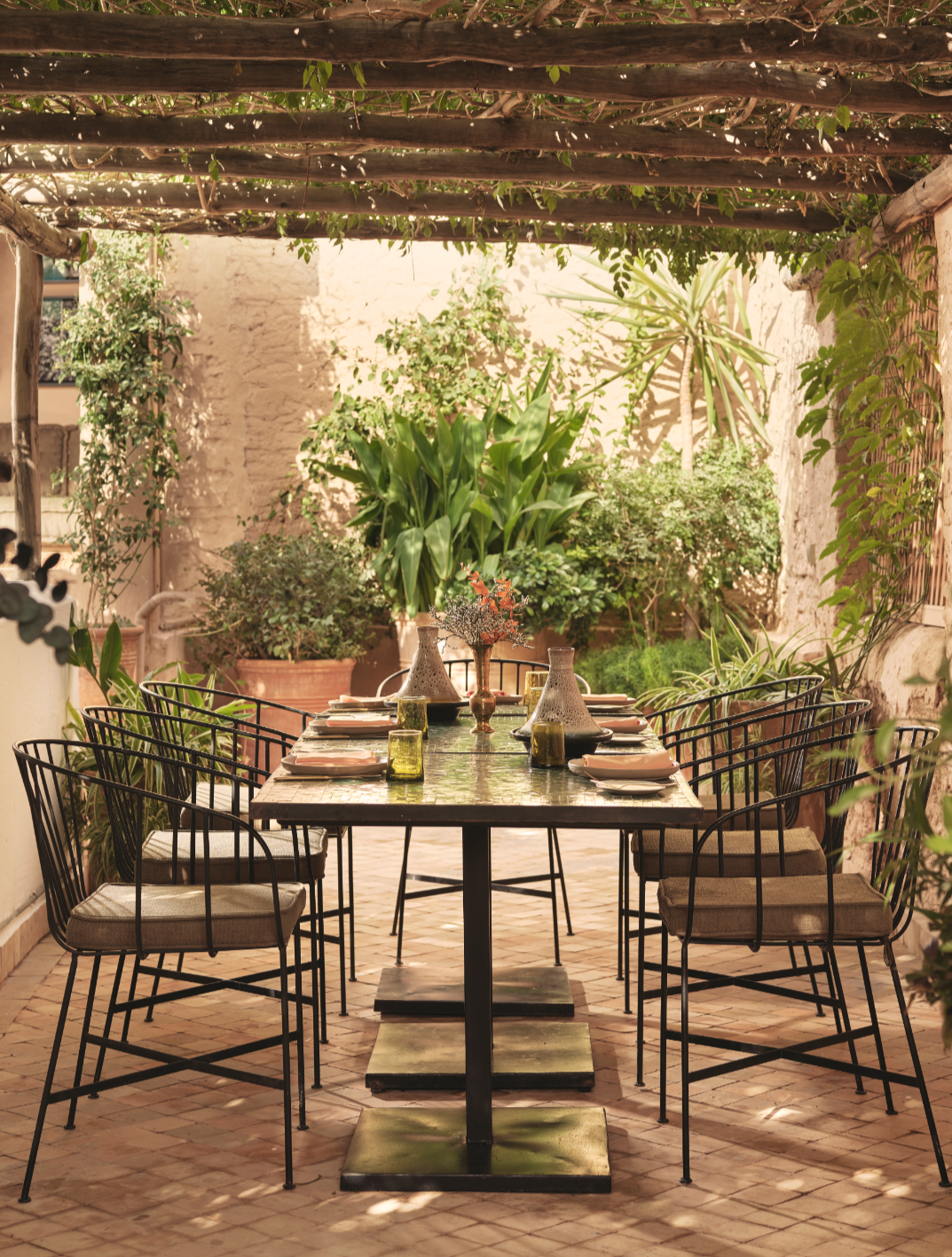
Noujoum — Marrakech’s finest rooftop restaurant
Moroccan cuisine has a towering reputation, coupled with a national character which correctly sees dining as a celebratory, communal opportunity for pleasure, drawn out across several satisfying hours. After being bombarded by the aroma of countless simmering tagines in the souk, guests at IZZA invariably find themselves at the hotel’s pretty, relaxed and beautifully appointed Noujoum restaurant as evening falls, eager to explore the nation’s kitchen through a uniquely flavourful lens.
Hospitality in Morocco, and fittingly also at Noujoum, is all about abundance. In this ‘house of friends’, dinner isn’t a structured, formal affair – it’s an excuse for the culinary team to flex its muscles, explore new takes on time-honoured classics and make sure you leave very, very well-fed.
I sat down for dinner at around eight o’clock, and I staggered to my room after midnight. In the four hours that had passed, I’d piled my plate with butter-soft roasted octopus massaged with a melange of local spices, translucent slivers of seabass carpaccio and a small mountain of earthy-sweet beetroot and sheep’s cheese salad. There was a spider crab pate that brought together the sweetness of the white meat and the briny funk of the brown, and hunks of homemade bread for dragging through various sauces. There were calamari rings sitting in a slick of sunshine-yellow aioli, and tomatoes that had been dried in the sun just a few metres from where I was sitting.
There was a bottle of Moroccan white wine that had me wondering where it had been my whole life, and a rosé that was, if anything, even more frustratingly delicious.
And that was just the first course.
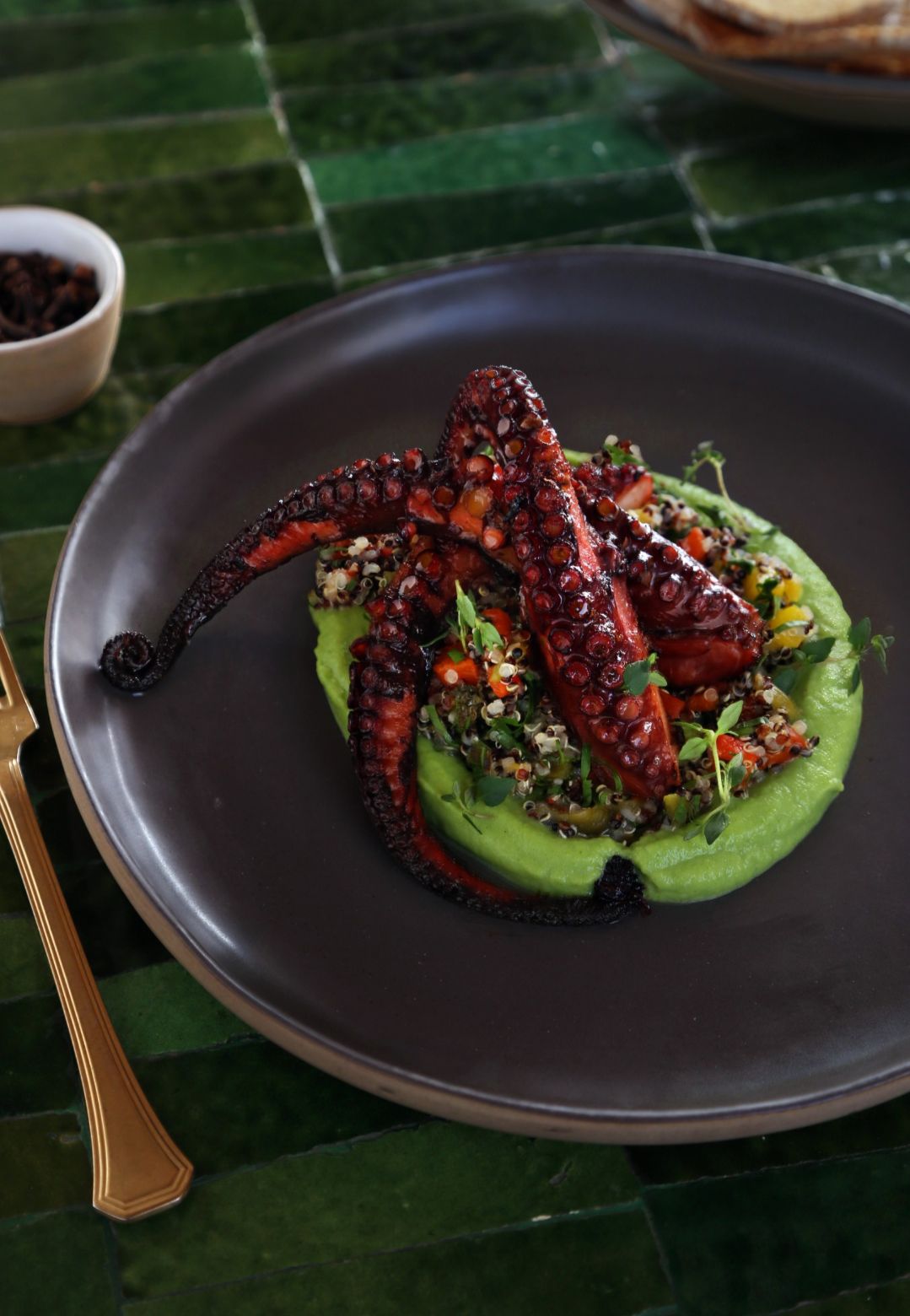
Roast octopus at Noujoum
After the mezze had been polished off, the feast continued with a showcase of Morocco’s often-overlooked love affair with all things aquatic. The monkfish tagine was a particular highlight, with the firm, succulent hunks of tail meat given ample time to become best friends with a broth boasting the depth and heft only saffron, cumin and coriander can provide. A whole roast seabass was stuffed with pillowy, gently-spiced couscous, the skin and flesh lightly charred from time spent over open coals. Pull the pearlescent meat from the skeleton, run your fork through the flavoured oils left on the plate and you’ve got a taste of the Mediterranean that owes nothing to faraway Italy and Spain, and everything to a culinary culture more than capable of flying its own flag high.
Because this is Marrakech, there were chicken and lamb tagines on the table, the former brightened by the gastronomic wonder that is the preserved lemon and the latter a melt-in-the-mouth taste sensation, perfected across generations of old-fashioned slow cooking. Because this is IZZA, both were treading the fine line between rustic authenticity and slightly cheffy flourishes – and doing so with the self-assured swagger of a kitchen that knows it absolutely nailed the brief.
IZZA: The Luxury of Letting Go
What distinguishes IZZA most clearly isn’t what it adds to a stay, but what it deliberately chooses not to fill. Luxury hotels – perhaps most notably in this part of the world – treat unstructured time as a problem to be solved. IZZA considers it part of the architecture, inviting their guests to wander at will through not only its higgledy-piggledy array of corridors, hidden rooms, staircases and art displays. The medina, forever on the doorstep and forever with its arms open wide, supplies enough intensity on its own terms, and the hotel simply refuses to compete with it or pretend it isn’t there.
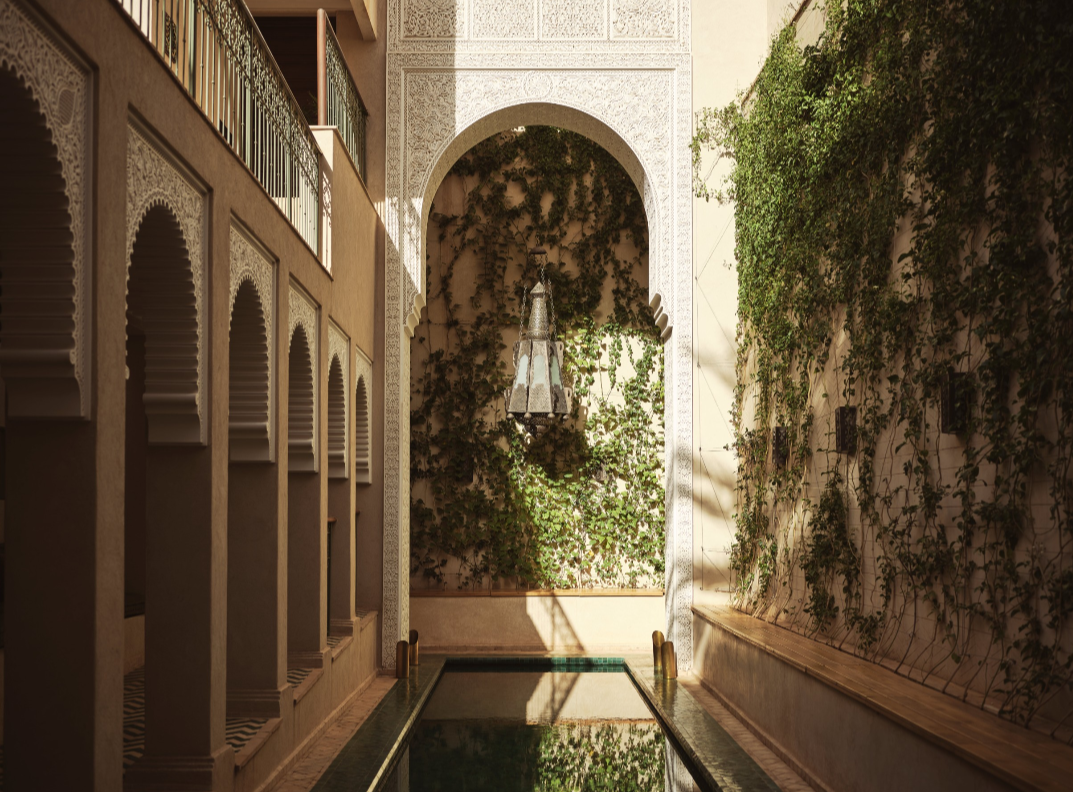
An immersive, artistic and blissful encounter with excellence
Spend more than a couple of days at IZZA, and you’ll ease into the rhythm of the location. Each late afternoon, the city begins to soften. The heat loosens its grip, the noise of the medina loses its direction, and Marrakech becomes less a collection of chaotic events and more a continuous, terracotta surface. From the rooftop, it stretches outward in layers broken by minarets and the distant suggestion of the Atlas Mountains. The call to prayer moves across the rooftops without urgency, and swallows interrupt the sky in brief, unpredictable lines.
While most luxury hotels are built around removal from the world beyond the driveway, IZZA is built around absorption – not as a concept but as a condition. In a city like Marrakech, that immersion not only makes perfect sense, it remains the rarest luxury of all.
Rooms at IZZA begin at £190 per night, including airport transfer on arrival and a la carte breakfast. You can book your unforgettable escape to the Marrakech medina here.
