
Why Amorgos Is Greece's Most Beautiful Underrated Island
Planning a trip to the Greek Islands? Hidden among the Cyclades, Amorgos offers dramatic landscapes, secluded beaches, authentic Greek villages and a slower alternative to Santorini, Mykonos and the Aegean's busiest islands.
This is the last in a short, unplanned series of articles about trying to find the Greek islands I actually liked enough to return to. Not just to admire or review for these pages, but properly return to and immerse myself in as a rather personal and complicated process of atonement and understanding. Indeed, my relationship with this part of Europe isn’t a particularly straightforward one.
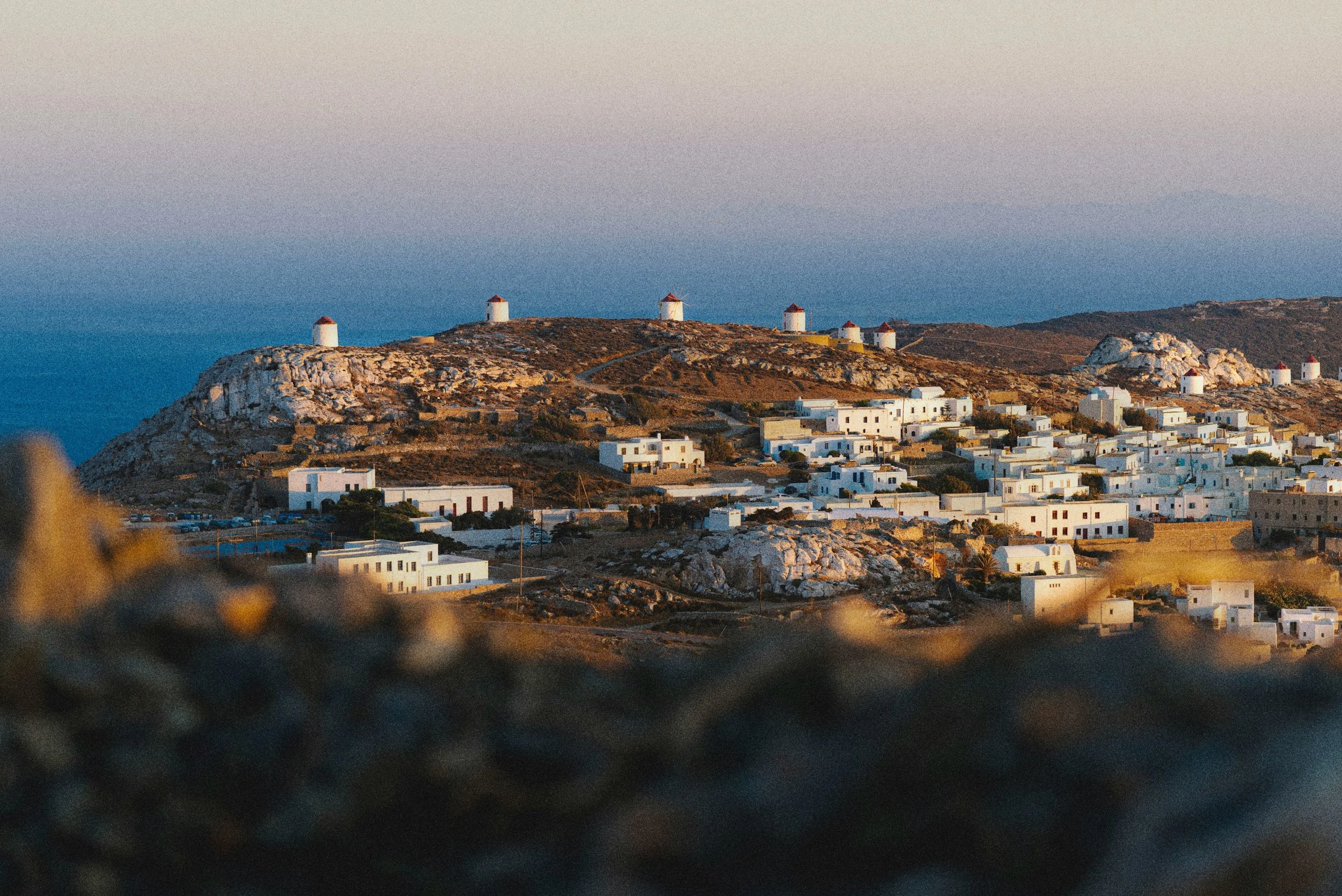
Amorgos from above
As I’ve mentioned before, I’ve visited several of the more famous Greek islands over the years. Yes, many are undeniably beautiful, but time after time, I often left feeling as though I’d experienced something perilously overhyped; islands that are carefully constructed and forced through a million Instagram filters, rather than something really worth the effort.
Travelling through the Cyclades aboard Sea Cloud II gave me the chance to test a theory — that the islands I was looking for were probably never going to be the obvious ones. Earlier in the journey there was Patmos, which I loved for its austere, spiritual atmosphere. There was also my beloved Syros, which felt elegant, lived-in and entirely unforced. Amorgos was the final stop, and by then I had a suspicion that I’d saved the most interesting for last.
Why Visit Amorgos?
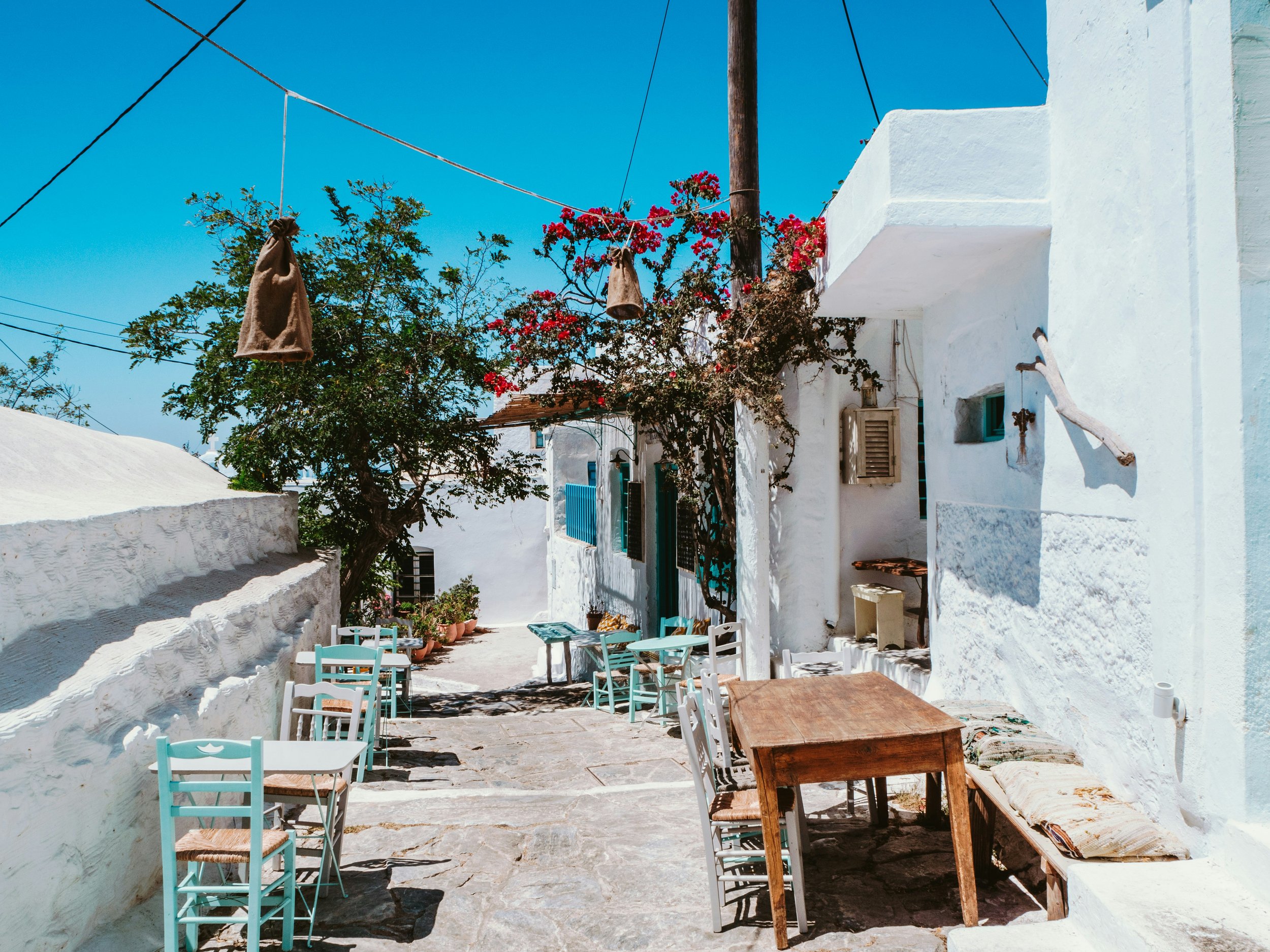
A fantastic place to unwind with a bottle of Mythos
Pulling into Amorgos is something really rather special. The island reveals itself slowly, yet with no shortage of bombast as it rises out of the Aegean as a long, mountainous spine, all steep rock and deep folds rather than soft beaches and resort towns. From the deck of a sailing ship like SeaCloud II, it feels dramatic and slightly remote – the sort of place that hasn’t been overly explained, and which has benefited enormously from being off the tourist trails and island-hopping itineraries championing the crushingly boring Mykonos, Santorini and Paros.
We came ashore near Katapola, where the harbour curves around a wide, calm bay lined with a handful of cafés and tavernas. Fishing boats rocked gently a few metres from the tables, and the hills behind the village rose in quiet layers.
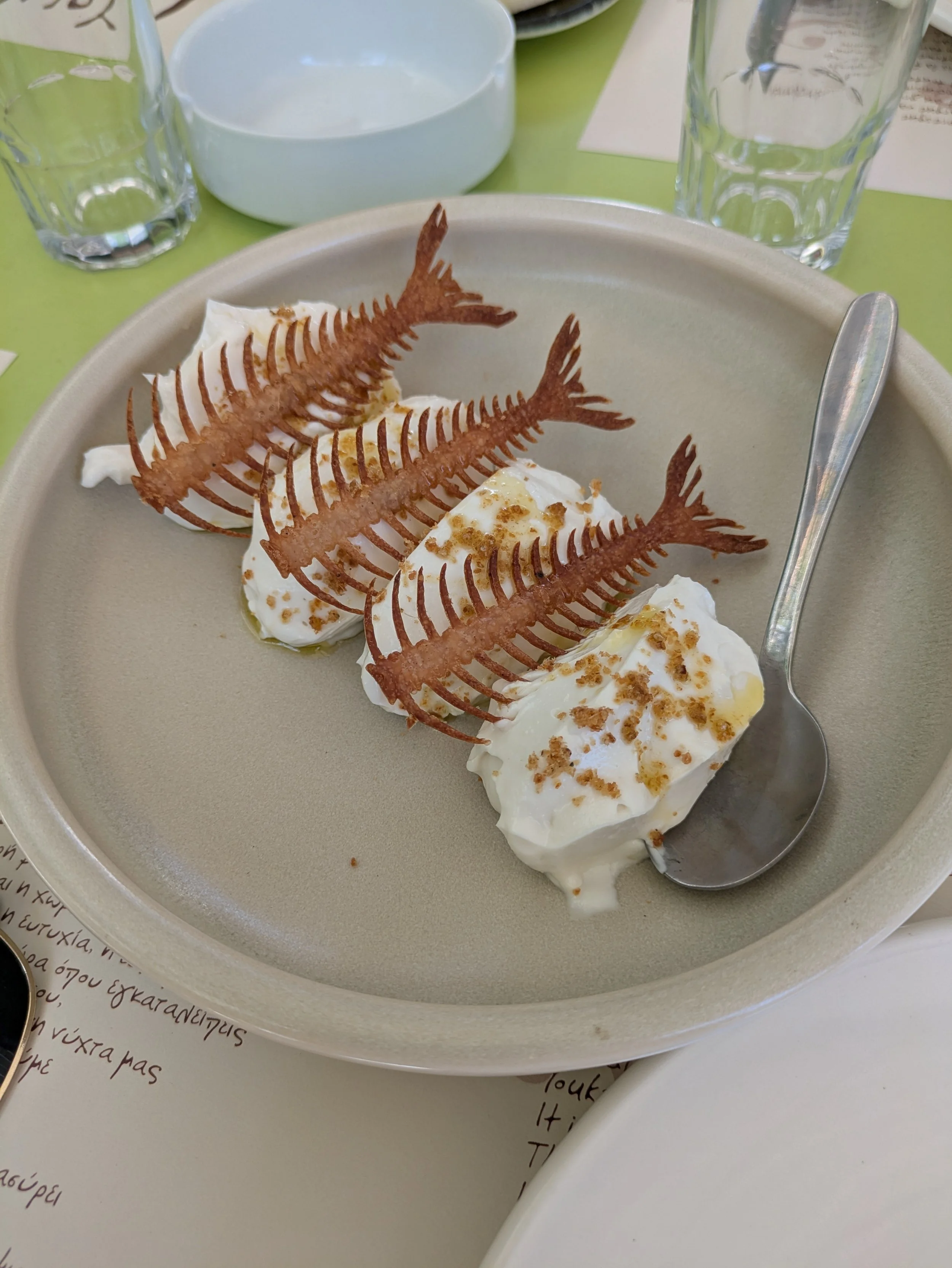
Silky smooth taramasalata
It was here, incidentally, that I had what might have been the best taramasalata I’ve ever eaten at Bastet Amorgos — impossibly smooth, properly savoury, and served without ceremony. It came with warm crackers and a cold bottle of Mythos, and I sat there longer than I’d planned, looking out across the bay and realising that this, more than anything elaborate, was what I’d been missing.
Perhaps most importantly, there was no sense of performance to the place. The harbour felt like it existed for the boats first and visitors second, which tends to be a reliable indicator that you’re somewhere worth paying attention to.
The Monastery and the Big Blue
If Amorgos has a defining image, it is the Monastery of Panagia Hozoviotissa. Built directly into a sheer cliff face, it appears from a distance as a thin white line against rust-coloured rock, as though it has been drawn there rather than constructed.
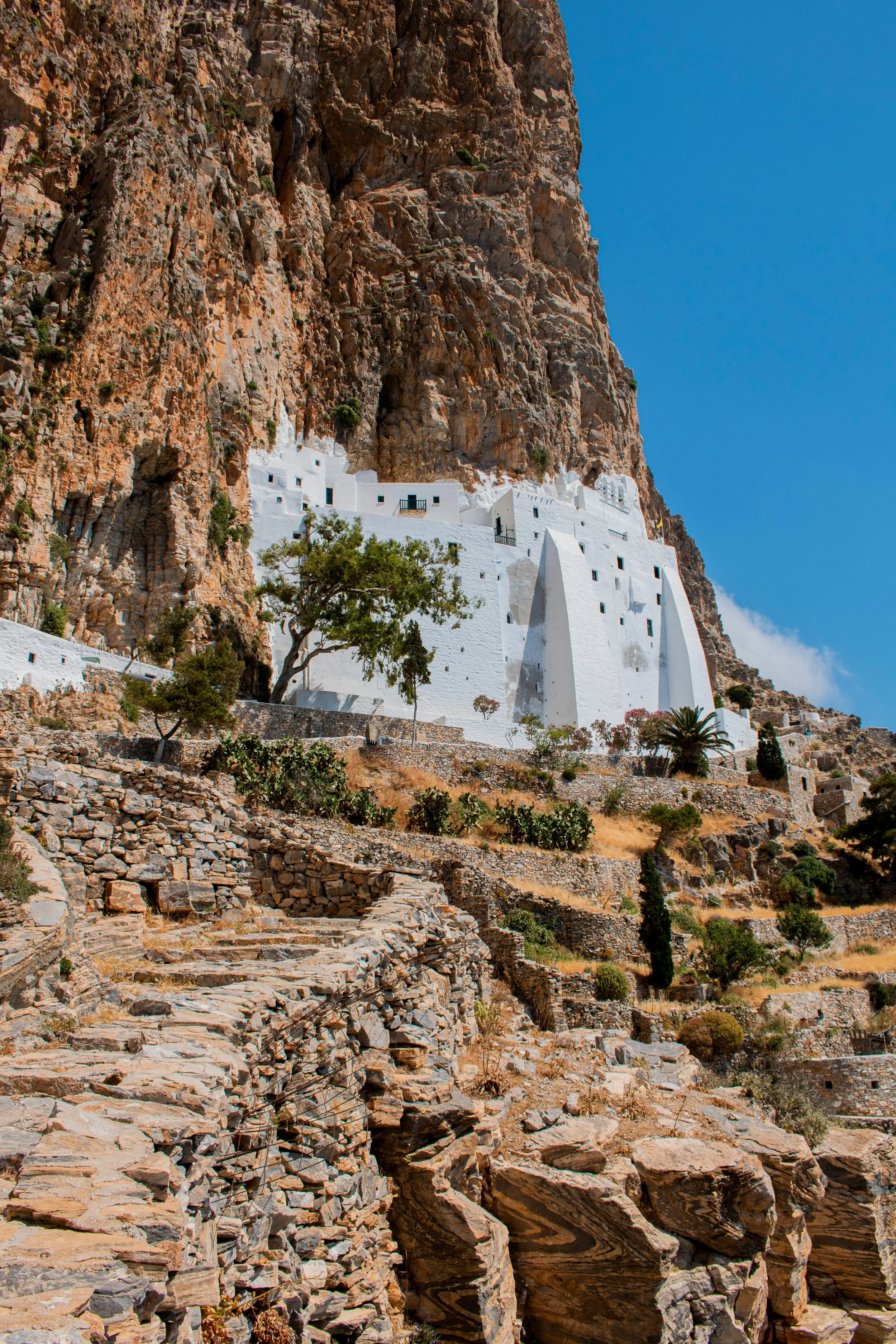
The Monastery of Panagia Hozoviotissa
Even if you haven’t been to Amorgos before, there’s a good chance you’ve seen it. Luc Besson filmed much of The Big Blue here, and standing on this side of the island you immediately understand the appeal. The landscape has a truly cinematic scale – the vast panoramic seascapes stretch endlessly into the horizon, and the cliffs drop sharply into water so intensely blue it almost looks artificial. It’s a place of awe-inspiring horizons, and there’s little doubt the location inspired profoundly spiritual stirrings long before a trio of exiled Palestinians first decided to chip a monastic hermitage into the cliffside.
First, there’s a meandering walk to be completed. The climb to the monastery is part of the experience – a zigzagging path leads up the cliff, each turn widening the view until the island begins to recede behind you and the Aegean takes over completely. At the top, the perspective shifts. You’re no longer looking at the island so much as out from it, across an enormous expanse of sea and sky. I’m not much of a believer, but I’d challenge even the most po-faced sceptic to not feel the presence of something overworldly when faced with that view.
Inside, the monastery remains active and is still home to a cluster of rather bemused-looking monks, each hiding behind enormous beards and gruffly introducing various icons and relics to the visitors who cross their threshold.
The welcome is simple and genuine, however – you’ll be offered a small glass of raki, a piece of loukoumi, and a seat on a narrow terrace where the scale of the landscape does most of the talking. It’s one of those places that feels quietly extraordinary rather than overtly impressive, and I took enormous pleasure in sitting in silence surrounded by over a millennia of unbroken prayers, in front of a calm sea that seemed to stretch onto eternity.
An Island That Feels Like It Belongs to Itself
Chora, the island’s main town, sits high in the hills rather than on the coast, which immediately sets it apart. It’s a maze of narrow streets, whitewashed houses, small squares and windmills, but it feels less curated than the better-known Cycladic towns. It’s more atmospheric than picturesque, a little wind-battered and dusty but no less charming as a result.
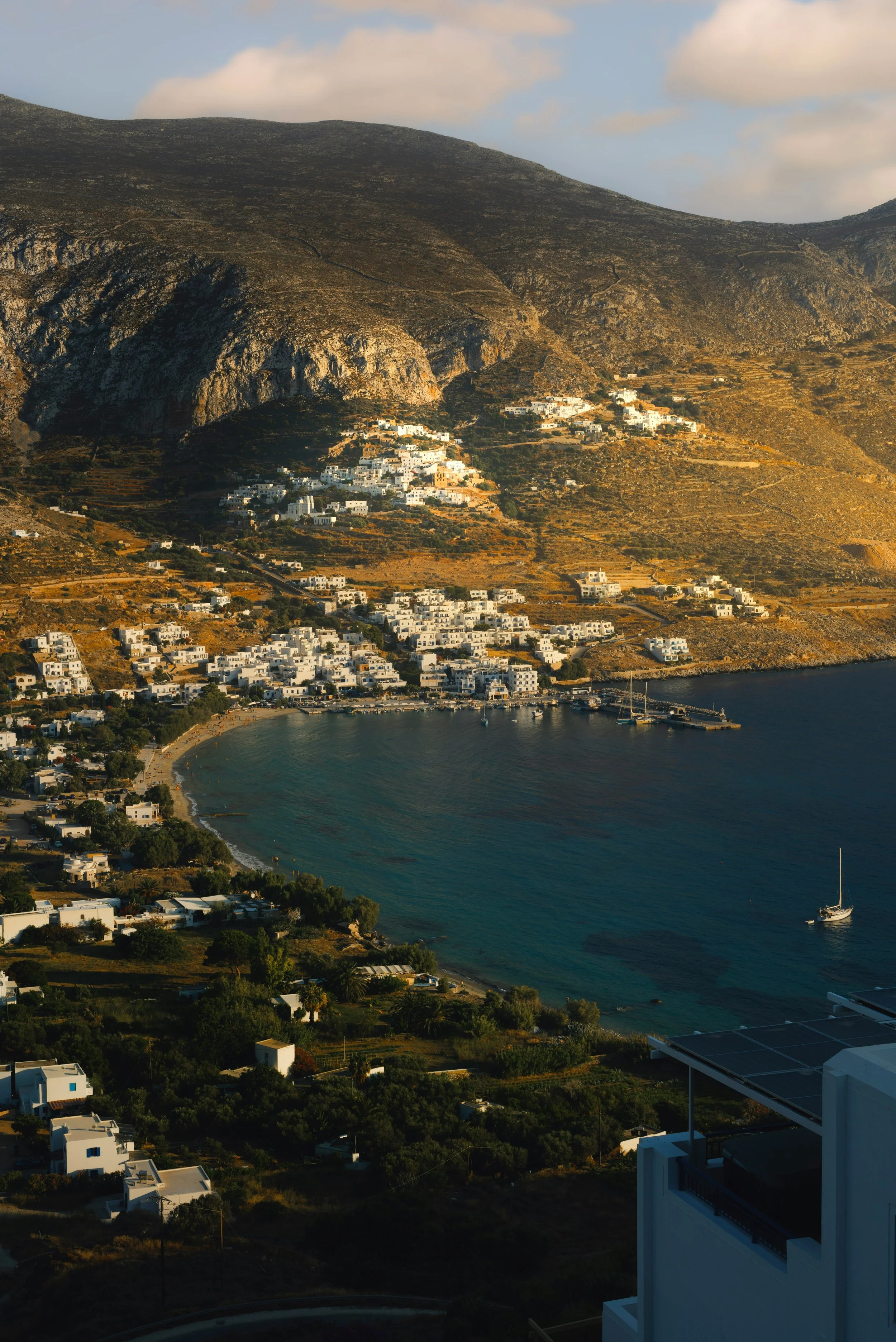
Eye-wateringly beautiful land and seascapes
What really stands out, both in Chora and across the island, is what isn’t present. There are no oversized beach clubs pumping out the same tunes heard from plastic sunloungers across the Mediterranean. There are no rows of identical boutique hotels, and no sense that the island has been reshaped to fit a particular idea of what Greece should look like. Amorgos feels self-contained; there’s the pervasive sense that the island would happily continue much as it has always done whether the visitors arrived or not. The tide would go out, and it would come in again with the fishing boats. The prayers would continue on the cliffside. The good life would roll onward.
The beaches, to my delight, follow the same pattern. Many are small coves reached by winding roads or old walking paths, with deep, clear water, long stretches of shallows, and very little else. Swimming here feels slightly wilder; it’s just you and the elements, a winning combination of soft sands, ancient rock, salt, light, and time, all stretching out into long, uninterrupted afternoons that fade to night. I’m not the most enthusiastic beach-goer, but the cove I found an hour’s walk from the harbour ticked all the right boxes, and I happily splashed about and floated on my back in a state of bliss for far longer than I usually choose to.
I suspect I’ll never be thoroughly enamoured by the kind of holidays that involve day after day lazing on beaches and pottering through craft stalls – it’s just not the way I’m wired, if I’m completely honest. I will always feel the pull of urbane living, of labyrinthine museums, quirky bars and the kind of nightlife only found in the world’s great cities. However, by the time we sailed away that evening, Amorgos had settled into place as one of the few Greek islands I could see myself returning to, and doing so with real happiness. Not because there’s an endless list of things to do, but because of the way the island feels when you’re there: it’s unforced, spacious and entirely itself, and it boasts the kind of views that even my cynical eyes couldn’t get tired of.
It took a few attempts to find the Greek islands that worked for me. Patmos was one, Syros another. Amorgos was the one that made the pattern clear. I’m thrilled to have been proven wrong, and I’ve little doubt my wandering feet will take me back before too long.
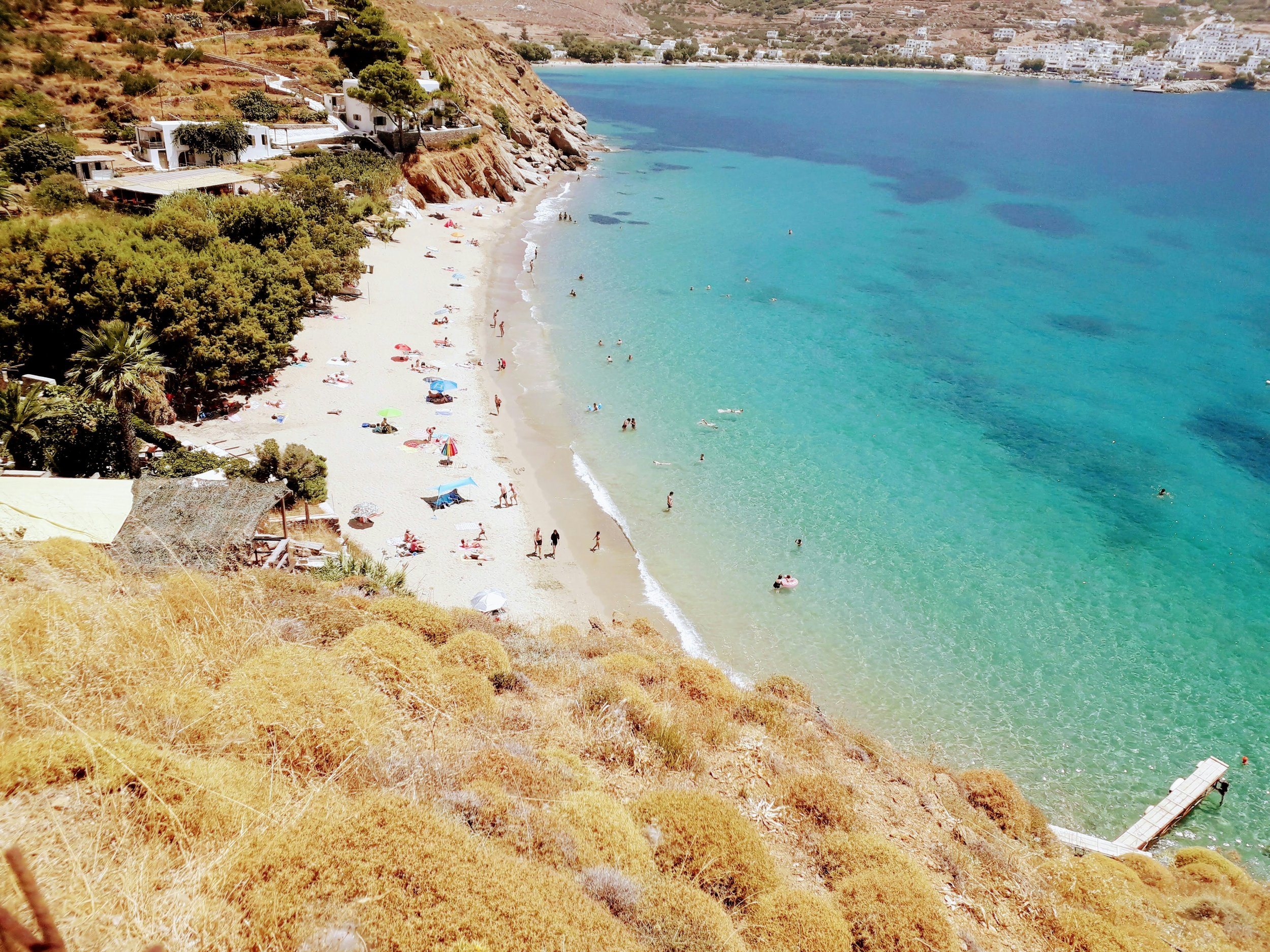
Time well spent in the shallows, Amorgos
Practical Notes: Visiting Amorgos
How to get there
Amorgos has no airport, which is part of its appeal. You’ll need to take a ferry, usually from Athens (Piraeus) or from nearby islands such as Naxos or Santorini. Ferries arrive into Katapola or Aegiali.
Where to stay
Katapola is the most convenient for arrivals and has a relaxed waterfront feel. Aegiali offers a good beach and a slightly quieter pace, and Aegialis Hotel and Spa is highly recommended for a romantic getaway.
Getting around
A hire car makes the biggest difference here, although I loved traversing it by foot. The island is spread out, and many of the best spots (beaches, walking routes, viewpoints) are connected by winding mountain roads
When to go
Late spring and early autumn are ideal. You get warm weather without the intensity of high summer, and the island feels alive without ever tipping into busy.
Want more reviews of the most underrated Greek islands? Check out our review of Patmos and Syros.
