
Château de la Treyne Review: Peerless Dordogne Hospitality
For me, the Dordogne and neighbouring Limousin have long occupied a kind of gastronomic, whimsical mythos – the kind of place where food becomes a religion of sorts, where wine flows through verdant valleys of chestnut trees, or where holy grottos and towering castles sit side by side with pretty markets, meandering rivers and the glorious flotsam of millennia of history.
If I’m completely honest, I didn’t expect this rather charming and naive vision to be true. However, some serious time spent in the region – admittedly while on a Michelin-starred food tour that, somehow, however impossible it sounds, might have featured marginally too much cheese – I uncovered no shortage of compelling evidence that the ideal may be far more accurate that my rather cynical mind was ready to admit.
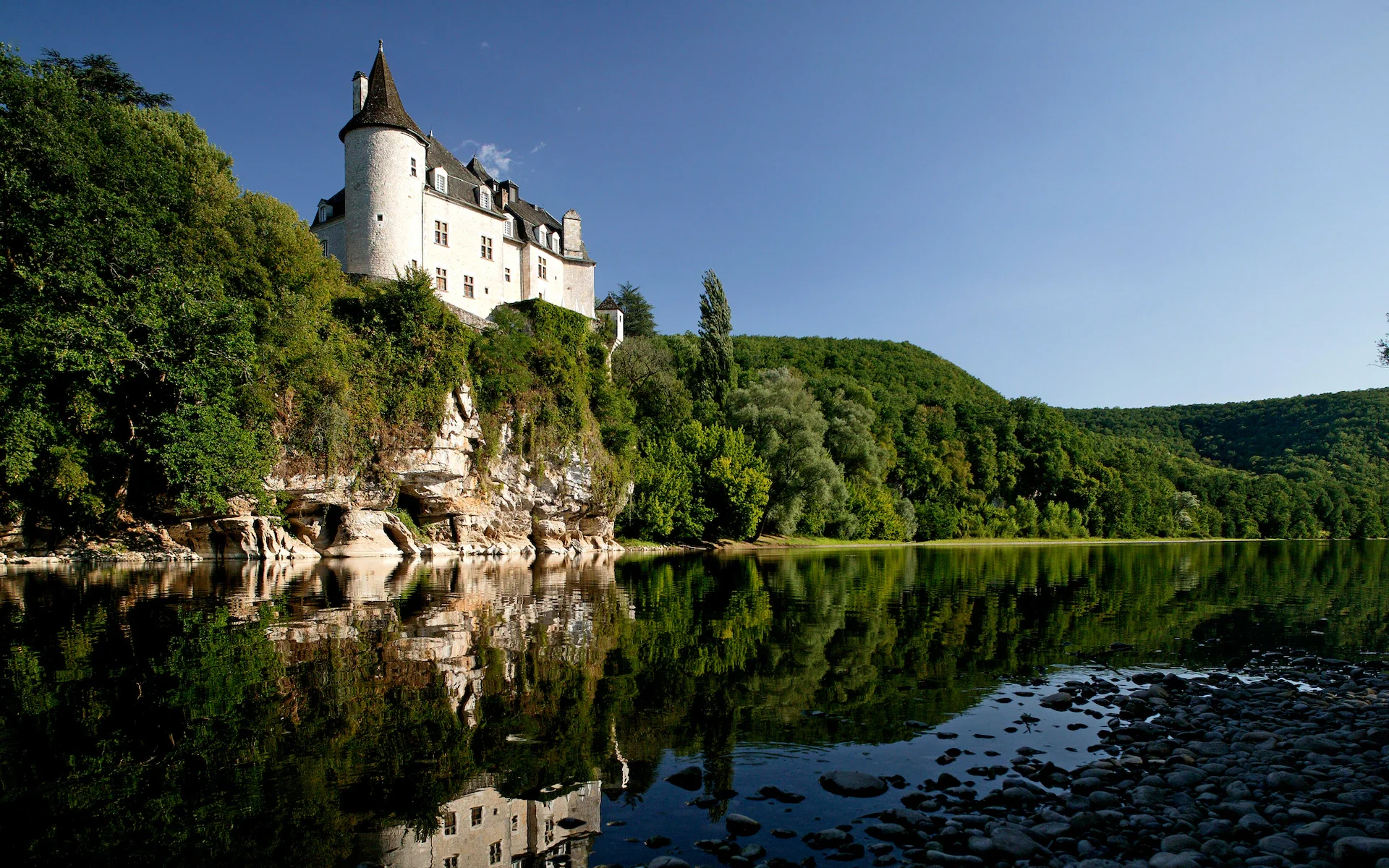
Welcome to Fairyland, Dordogne. Château de la Treyne.
By day four of my stay, and following the dizzying high of checking out Limoges’ frankly unbelievable dining scene, days had blurred into a happy rhythm of market mornings, languid lunches and multi-course dinners that required both stamina and strategic pacing. Somewhere between a third helping of Cabécou and a particularly persuasive wedge of Salers, I found myself pulling up at a riverside château that seemed to distill the entire region into one impossibly romantic address: Château de la Treyne.
A Fairytale Fortress Above the Dordogne River
If there is such a thing as the archetypal Dordogne reverie, then Château de la Treyne might just be it… and I don’t say that lightly. I’m not immune to the florid overuse of superlatives and faintly allergic to hyperbole; yet here, perched high above a slow, looping bend in the river, turrets puncturing the sky and honeyed stone glowing in the late afternoon light, restraint feels faintly ridiculous. The place does not so much introduce itself as unfurl with no shortage of bombast, and it makes its presence felt with the confidence of somewhere that knows it has nothing to prove.
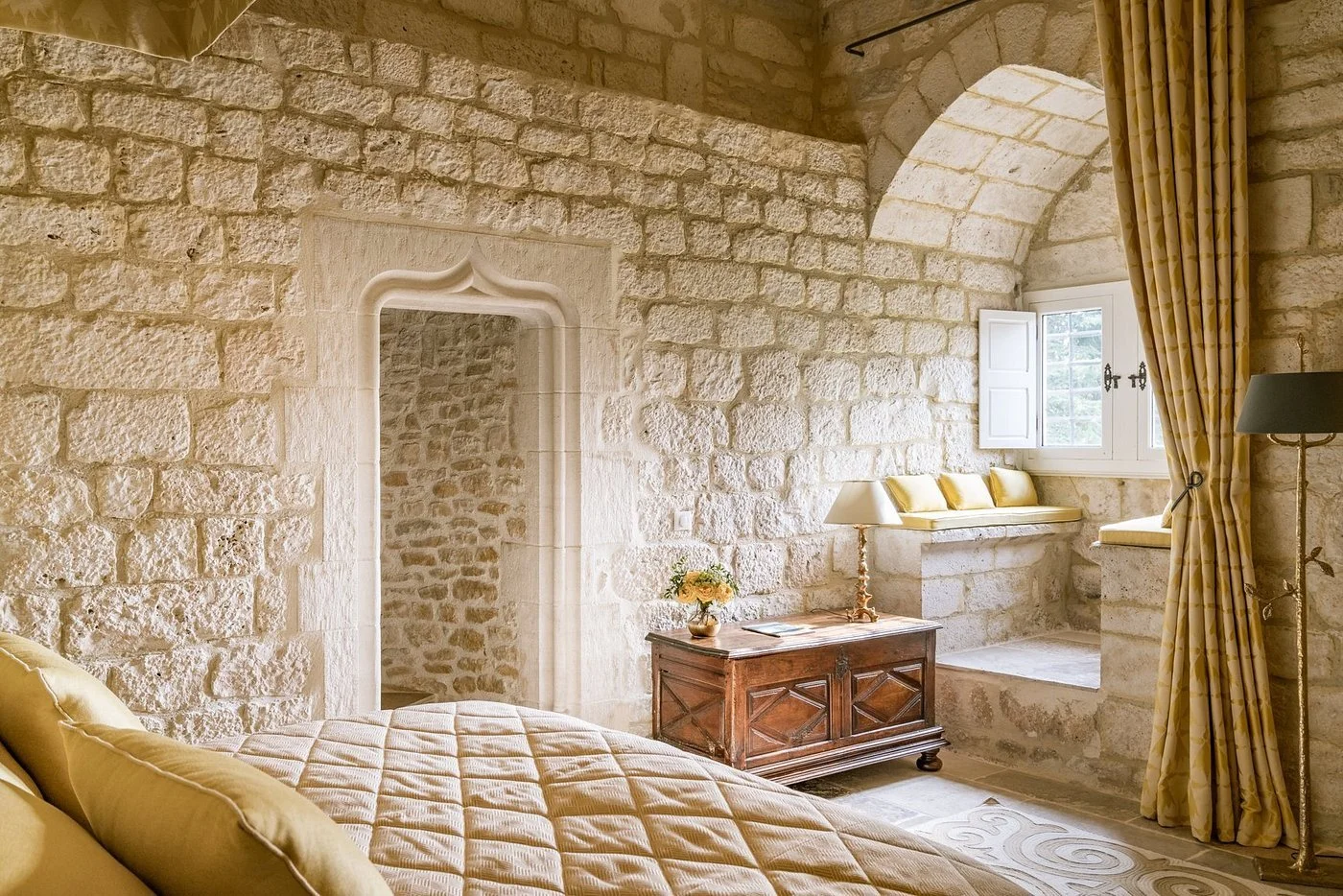
The bedrooms burst with unique charm
Set within the Lot, yet emotionally and gastronomically tied to the wider Dordogne story, the château occupies a particularly cinematic stretch of countryside. The river below traces a languid arc through thick woodland and limestone cliffs, while beyond the gates, the roads wind towards villages whose very names seem to carry a whisper of truffle markets and medieval intrigue. You arrive along a tree-lined drive that reveals the château in stages, each glimpse more persuasive than the last; step inside and the tempo shifts almost imperceptibly. Conversation lowers, shoulders drop, and whatever minor urgencies you arrived with begin to feel faintly irrelevant — which, on reflection, is rather the point.
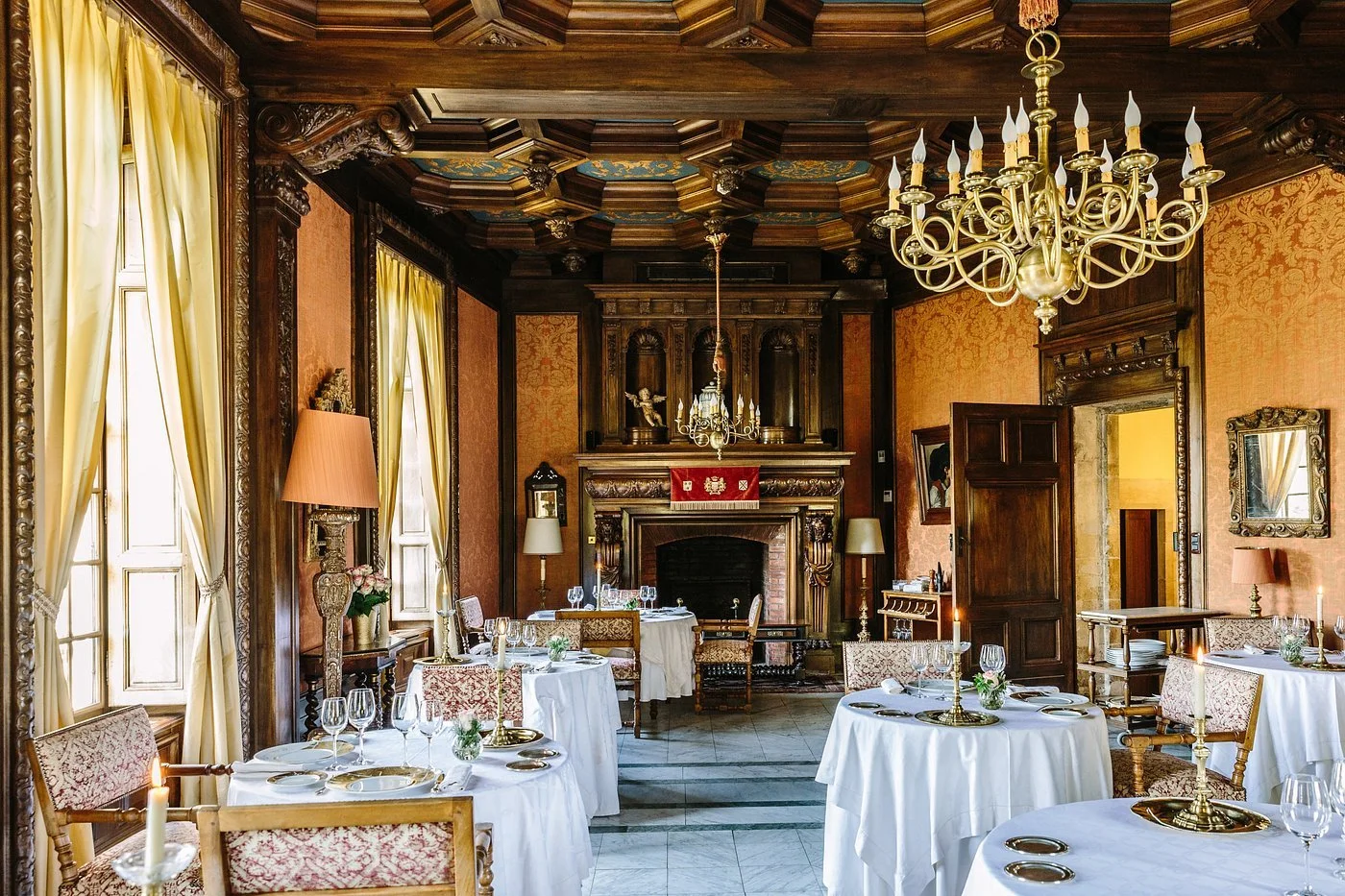
The building itself is the real thing: a 14th-century fortress reimagined as a five-star hideaway, complete with spiral staircases that narrow just enough to make you slow your pace (and perhaps reconsider that second helping of cheese), and salons that feel as though they have hosted a century of whispered confidences. Inside, there is a careful choreography at play. Vaulted ceilings, antique tapestries, oil portraits with unreadable expressions abound. The main dining rooms, backlit in the golden hour and boasting an aura of genuinely breathtaking romance, are a bonafide show-stopping moment. Somehow, and despite all the above, nothing tips into parody. The French, when they choose to, possess an unteachable instinct for elegance without fuss. Here, that instinct is on full display.
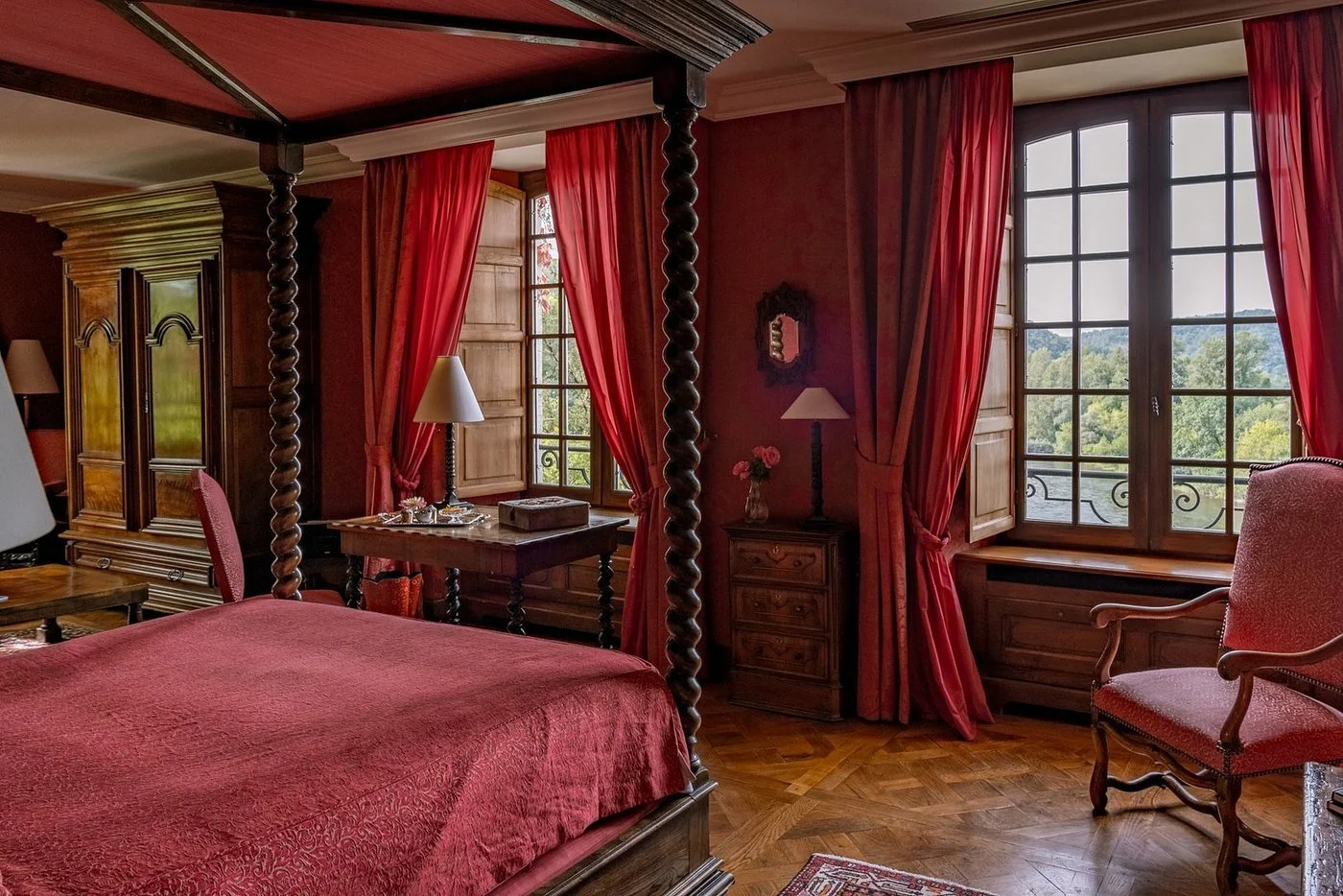
Period features for heart-stopping luxury
Rooms at the Château are few in number and generous in spirit. Mine overlooked the valley, where a winding, spectral morning mist gathered like taffeta at the base of the cliffs before dissolving into blue. Fabrics are rich, the palette is restrained, and the bathrooms gleam with polished marble and deep tubs that invite unhurried indulgence – and yes, I made full use of that particular invitation, dousing myself in the array of perfumed toiletries like some spoilt dauphin in a period drama.
It is a rare trick to create spaces that feel historically grounded yet entirely comfortable by modern standards, and yet Château de la Treyne manages it with an ease that suggests centuries of practice and no small amount of discernment.
Exploring the Dordogne: Medieval Villages, Markets and Prehistoric Wonders
Of course, a château in this corner of France cannot be divorced from its setting. This is a region that rewards both curiosity and a healthy appetite. A short drive brings you to Rocamadour, that vertiginous pilgrimage site clinging to the rock face with improbable conviction. Anyone who knows me understands I can’t resist a place with the kind of bizarre religious fervour that has maintained a draw for dozens of generations. The climb through its medieval streets is steep but bracing, culminating in panoramic views that recalibrate one’s sense of scale (and more than justify a restorative pastry at the summit).
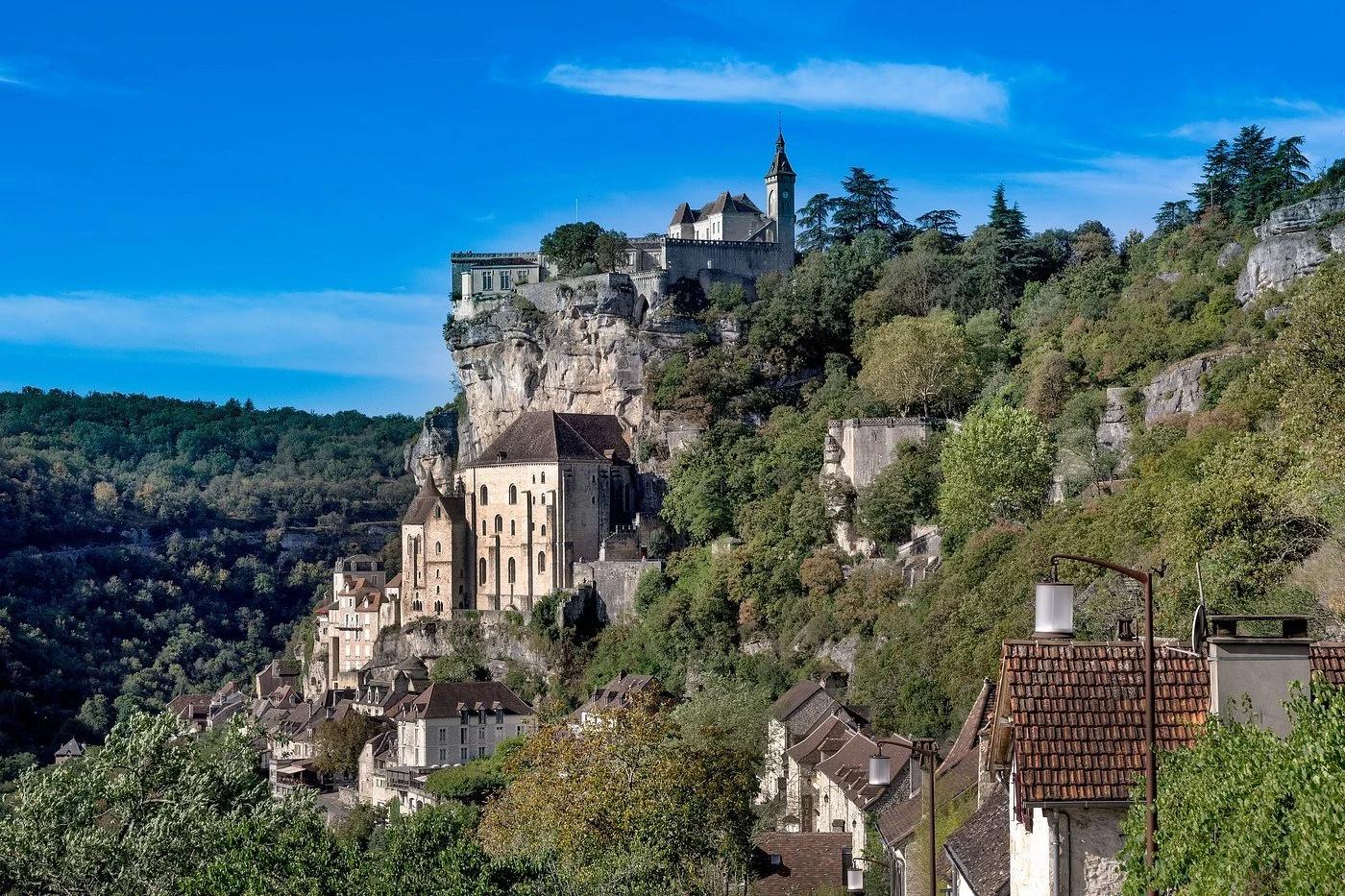
Rocamadour (and then some more)
Elsewhere, the prehistoric art of the Lascoux Caves offers a more ancient kind of awe; the ochre horses, towering prehistoric buffalo and ghostly handprints remind visitors that human creativity has long flourished in these valleys, and that the artistic urge isn’t some more modern frippery.
We are, in the grand scheme, merely passing through the modern era with better luggage and far too many things to do.
Then there are the markets. Sarlat-la-Canéda, a hotbed of golden façades and languid squares, stages a weekly theatre of produce: black truffles, foie gras, walnuts and fat, juicy strawberries so fragrant they seem almost perfumed. It is impossible to wander without acquiring something indulgent, even if you solemnly swore over breakfast that you would show restraint. The broader Dordogne has always been a pantry first and a postcard second, and that ethos underpins the experience back at the château.
Michelin-Starred Dining at Château de la Treyne
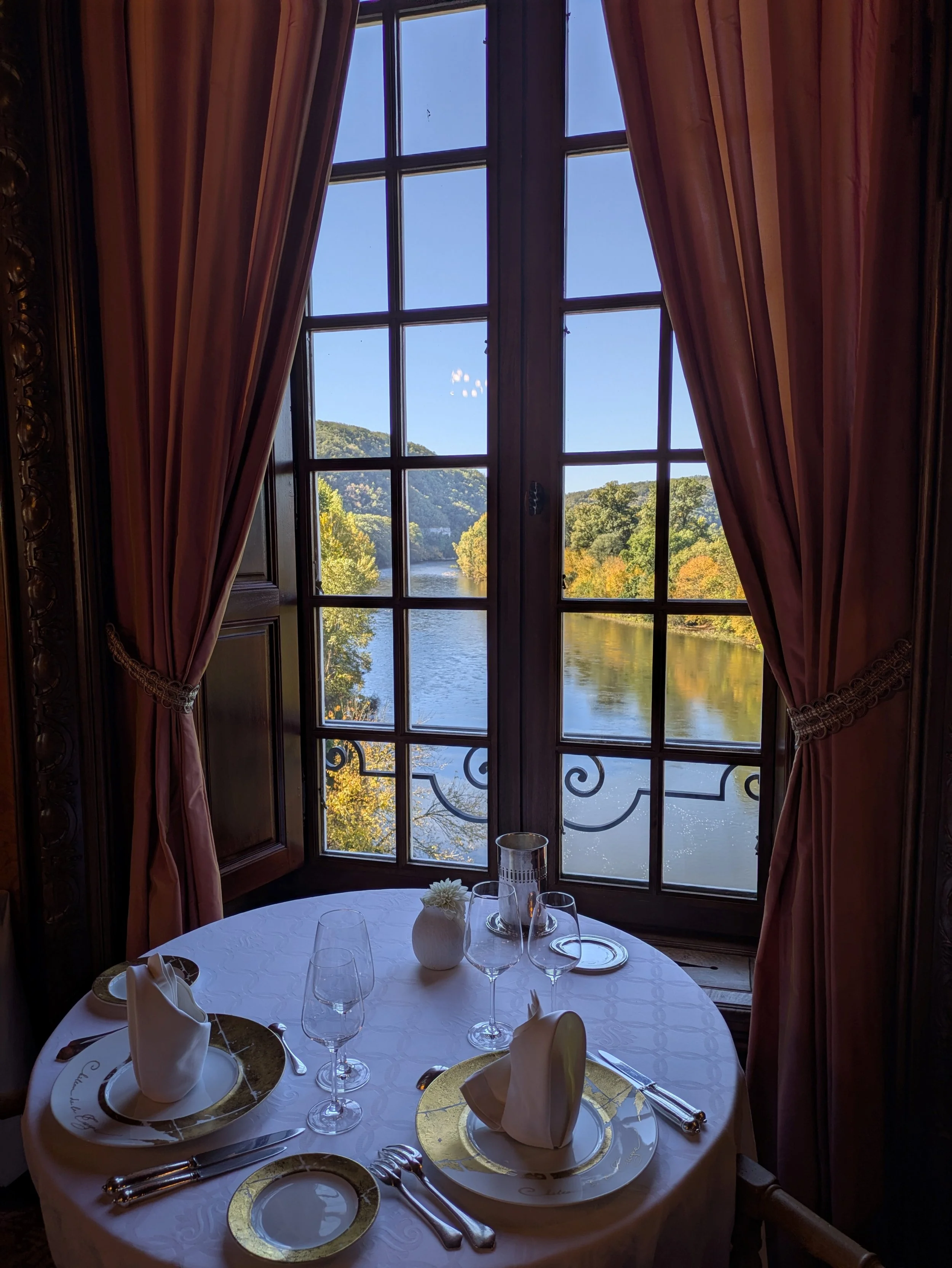
The prettiest dining room in the Western Hemisphere
As the evening approaches, the terrace on the south side of the château becomes the natural locus of attention. The stone still holds the day’s warmth, swallows arc theatrically overhead, and the river glints below as it rushes onwards towards the Atlantic. On my first evening, a glass of Pineau des Charentes (a criminally underrated member of the fortified wine clan, and all the better for it) appeared at precisely the right moment. There is a rhythm here, an understanding that luxury need not announce itself loudly, but rather arrive with perfect timing and at precisely the right cellar temperature.
Dinner is the crescendo to an already impressive prelude. Under the stewardship of Stéphane Andrieux, a Périgord native whose tenure in the kitchen stretches comfortably into its third decade, the restaurant has earned a reputation that extends far beyond these rural confines.
Guests arrive from across Europe and beyond (there’s a sizable but manageable American presence on this evening, lured to the region by its renowned cycling paths and fairytale romance), all here to encounter regional produce handled with precision and imagination. Judging by the hushed tones in the dining room, none in attendance were remotely disappointed.
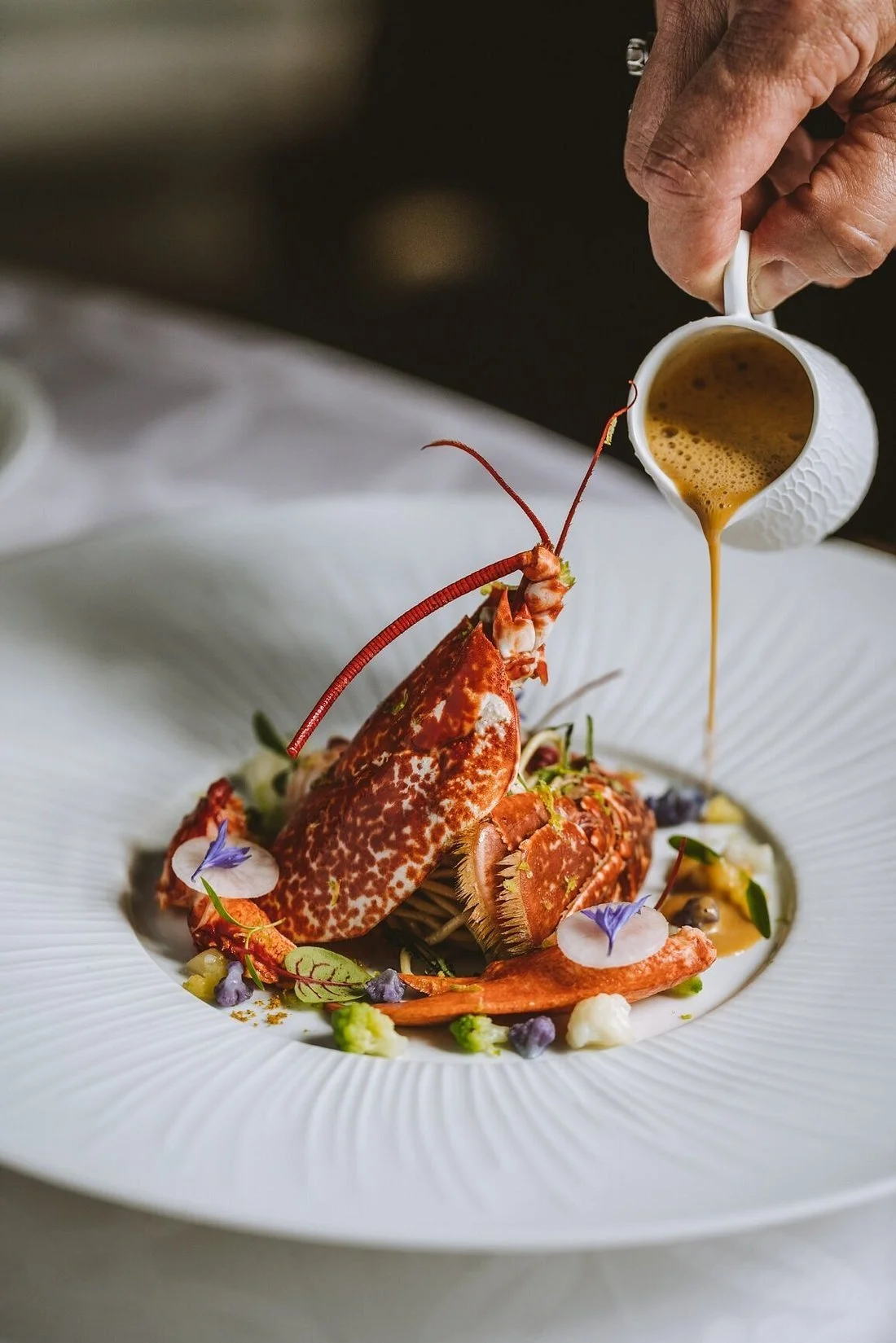
Pitch-perfect langoustines
The menu reads like a love letter to the southwest. Scallops and langoustines, sweet and impeccably fresh, nod towards the Atlantic. Lamb, blushing pink and almost impossibly aromatic, reflects the richness of the surrounding pastures. There’s Blagour trout plucked from chalky waters so close they might as well be an extension of the château’s gardens, and that proximity to the plate comes across with remarkable impact. A farci of chicken, accompanied by its confit leg, achieves that rare balance between rustic soulfulness and technical finesse, and each serving feels considered rather than constructed, indulgent yet never heavy.
It’s no small achievement in a region that treats duck fat as a food group.
What impressed me most, however, was not the choreography of the tasting menu but the elasticity of the kitchen’s imagination. One of my companions, heavily pregnant and navigating the unpredictable tides of appetite that accompany it, confessed to an urgent craving for tomatoes. Within twenty minutes, an entirely bespoke dish materialised: tomatoes in myriad expressions, from slow-roasted intensity to a freshly churned quenelle of tomato sorbet balanced on top. I couldn’t decide whether it was the kind of request that would exasperate or excite the kitchen team, but either way it signposted an incredible commitment to service, and acted as a reminder that true hospitality lies in the details.
Breakfast, taken in a light-flooded room overlooking the valley, continues the theme after a much needed deep sleep in the confines of my tower. Local cheeses (yes, more), pastries whose lamination shatters obligingly beneath the teeth and preserves that taste unmistakably of the orchards beyond the walls abound. Château de la Treyne clearly revels in giving guests not only exceptional produce handled with care, but time to unwind, to linger over coffee, to trace the river’s progress and to consider whether the day calls for a canoe excursion along the Dordogne or a meander through neighbouring villages.
Each is not only a viable option, it’s the manifestation of the best possible dilemmas to face during a well-deserved break from reality.
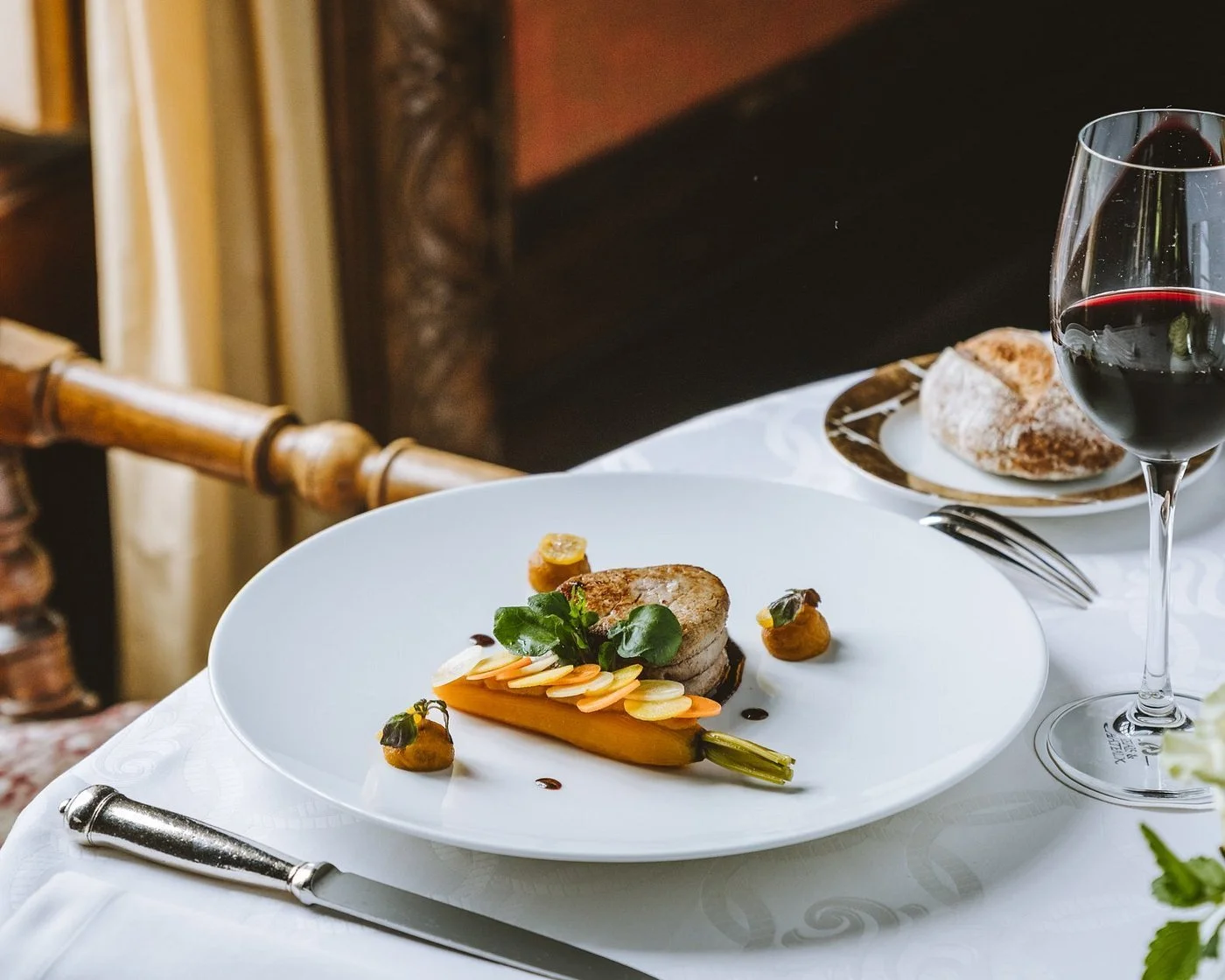
Attention to detail abounds in gastronomic flights of fancy
Why Château de la Treyne Is the Ultimate Dordogne Luxury Hotel
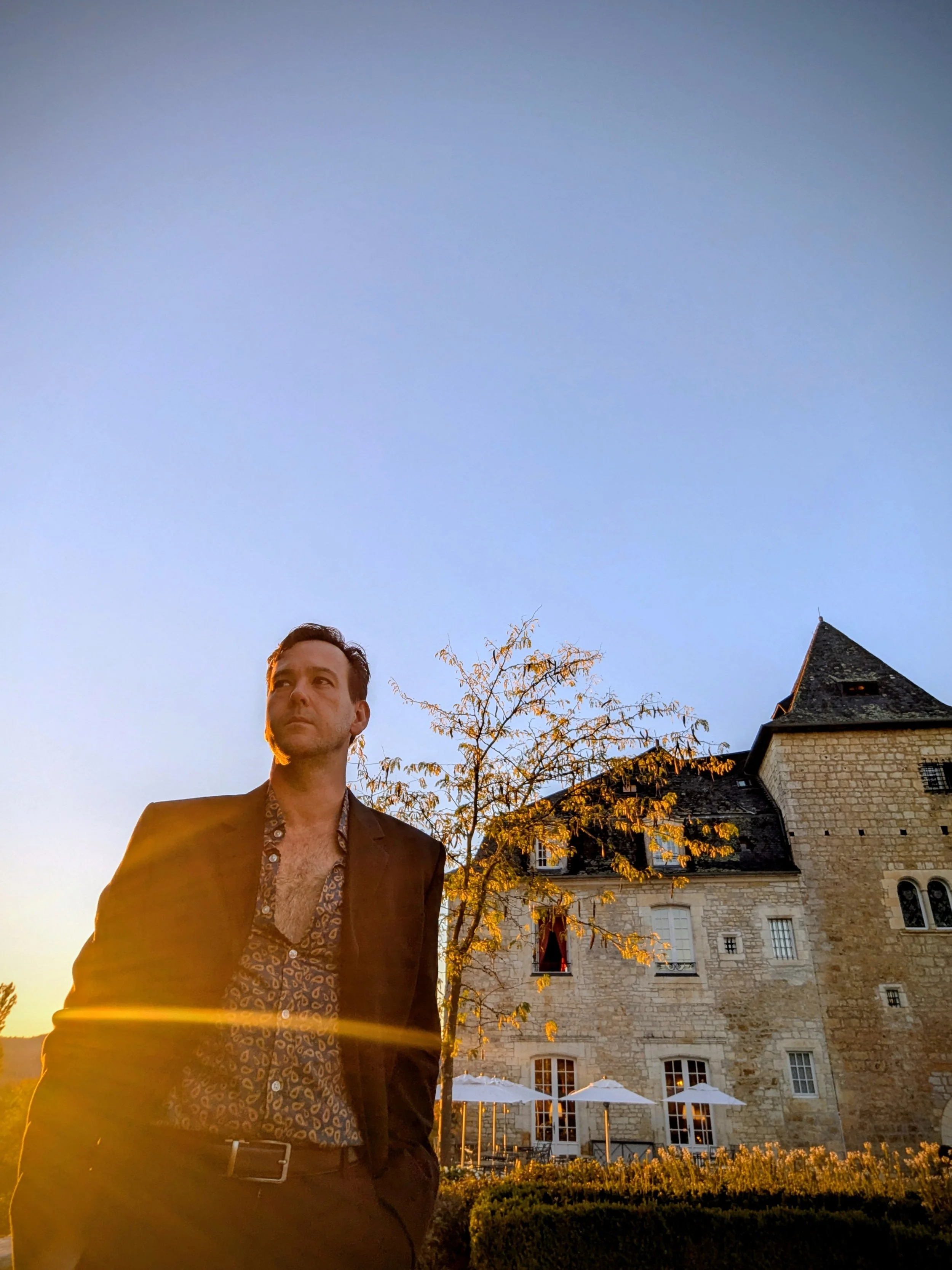
This’ll do nicely
For all the surrounding diversions, there is a hell of a persuasive argument for staying put. The gardens cascade gently towards the cliff edge, punctuated by discreet seating areas designed for contemplation (or a discreet afternoon digestif, which again, is a difficult proposition to resist). There are forests to uncover along the riverside, but even a simple stroll along the estate’s pathways feels restorative; the scent of wild herbs rises from underfoot and birdsong bounces off the rock face opposite.
I mean, you could sit on the front step of the Château with nothing to do at all, and still encounter the vague but pleasant sense that you have made an excellent life choice.
Luxury, at its most persuasive, is not about accumulation but about curation. Château de la Treyne understands this implicitly. It does not overwhelm with options or overstate its virtues. Instead, it offers a coherent, immersive vision of place that draws equally on history, landscape and gastronomy.
Spectacular in charm and content
As I departed, winding back through the countryside towards the broader arteries of modern France, there was a fleeting sense of having stepped out of a parallel narrative. The emails and obligations would resume, inevitably. But the image that lingered was of that terrace at dusk: the river slipping quietly past, the stone walls catching the last of the light and the distinct impression that some destinations do not simply host you but change you, however briefly. That, right there, is perhaps the greatest luxury of all.
Book your stay at Château de la Treyne here.
Need more luxury French hotel reviews in your life? Check out our reviews of Le Vieux Logis in Dordogne and La Chapelle Saint Martin in Limoges.
