
Zadar, Croatia: Sunsets, Seafood and Falkensteiner Resorts
Croatia remains one of Europe's great success stories. Blessed with almost every natural advantage imaginable, it has spent the last three decades capitalising upon those gifts with remarkable confidence. Endless pristine coastlines, exceptional food, increasingly impressive wines and some of the warmest hospitality anywhere in the Mediterranean – all this and more has transformed the former Yugoslav republic into a destination that rivals long-established European heavyweights.
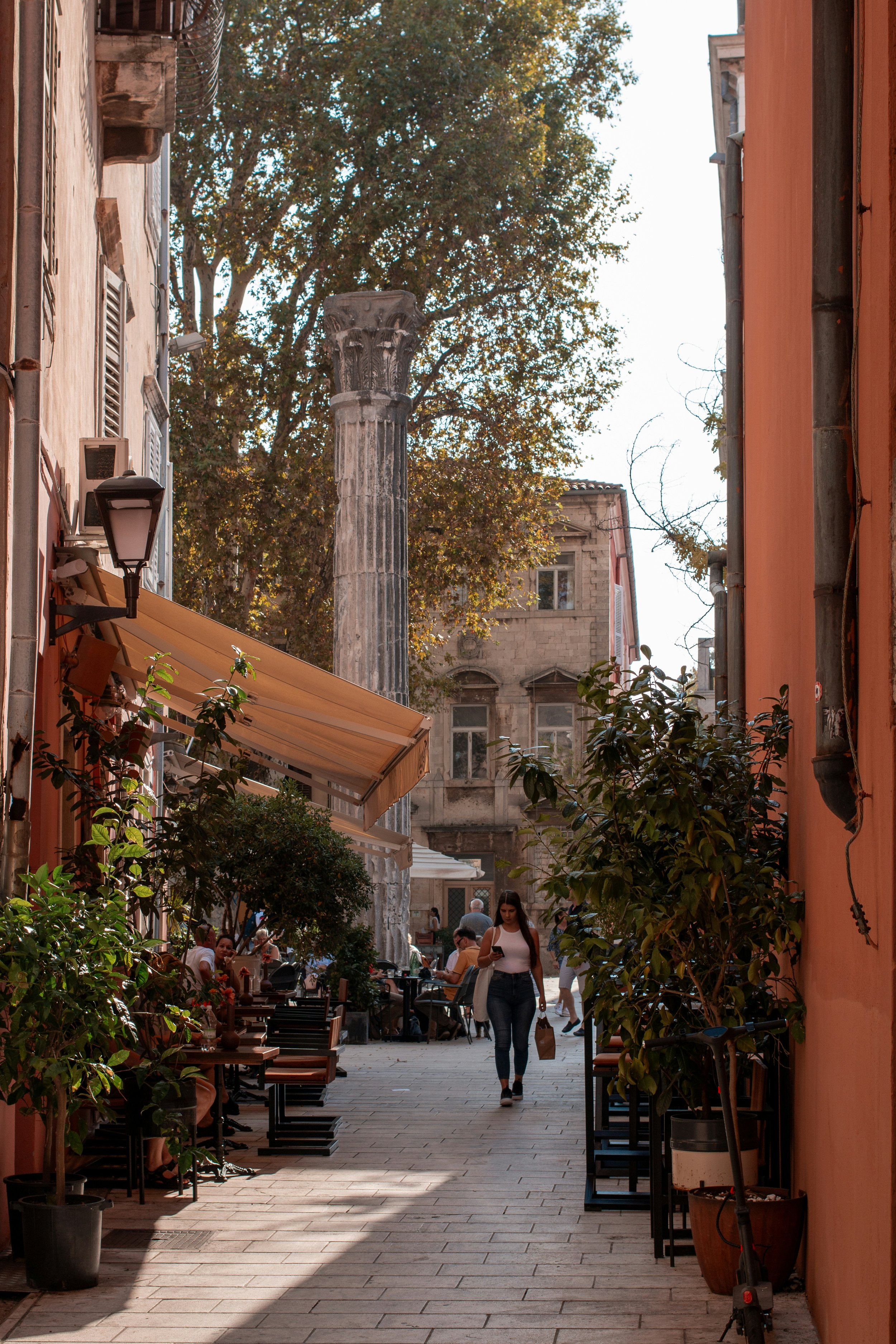
Wandering the ancient streets of Zadar
The achievement feels all the more remarkable when viewed through the lens of recent history. That a country so profoundly scarred by war could emerge with such optimism, ambition and self-belief is impressive enough, and to do so while retaining a genuine warmth towards visitors feels almost extraordinary.
I first visited Zadar in 2014 while travelling to a conference in Šibenik. Thanks to a combination of a certain hotel booking website's incompetence and my own youthful recklessness, I ended up spending my first night sleeping on a bench along the city's historic waterfront promenade.
This sounds considerably less enjoyable than it actually was, as the air remained warm and sultry long after darkness fell. Music drifted from bars hidden within the old town's labyrinthine streets, and waves lapped gently against the stone sea wall. Looking back, it remains one of the most unexpectedly enjoyable travel experiences I've ever had. No rose-tinted nostalgia required.
Returning more than a decade later, there was something reassuring about finding the same atmosphere intact. The sun still beats down upon this most picturesque corner of the Balkan Peninsula and the sea remains that unmistakable royal blue. Dalmatia as a whole still possesses the laid-back confidence of a place that knows exactly how lucky it is, and its hospitality scene is flexing the kind of muscles that continue to drive its fortunes forward.
Camping, But Not As You Know It
My stay began at Falkensteiner Premium Camping Zadar, a five-star campsite that operates year-round on the outskirts of the city. Yes, I know; the description initially feels like something of a contradiction, as five-star campsites have always struck me as belonging to the same category as luxury survival training or gourmet ration packs. However, Falkensteiner – the luxury hotel group that has become a dominant force across what was once the Austro-Hungarian empire – has created something rather more compelling on the outskirts of Zadar than the phrase suggests.
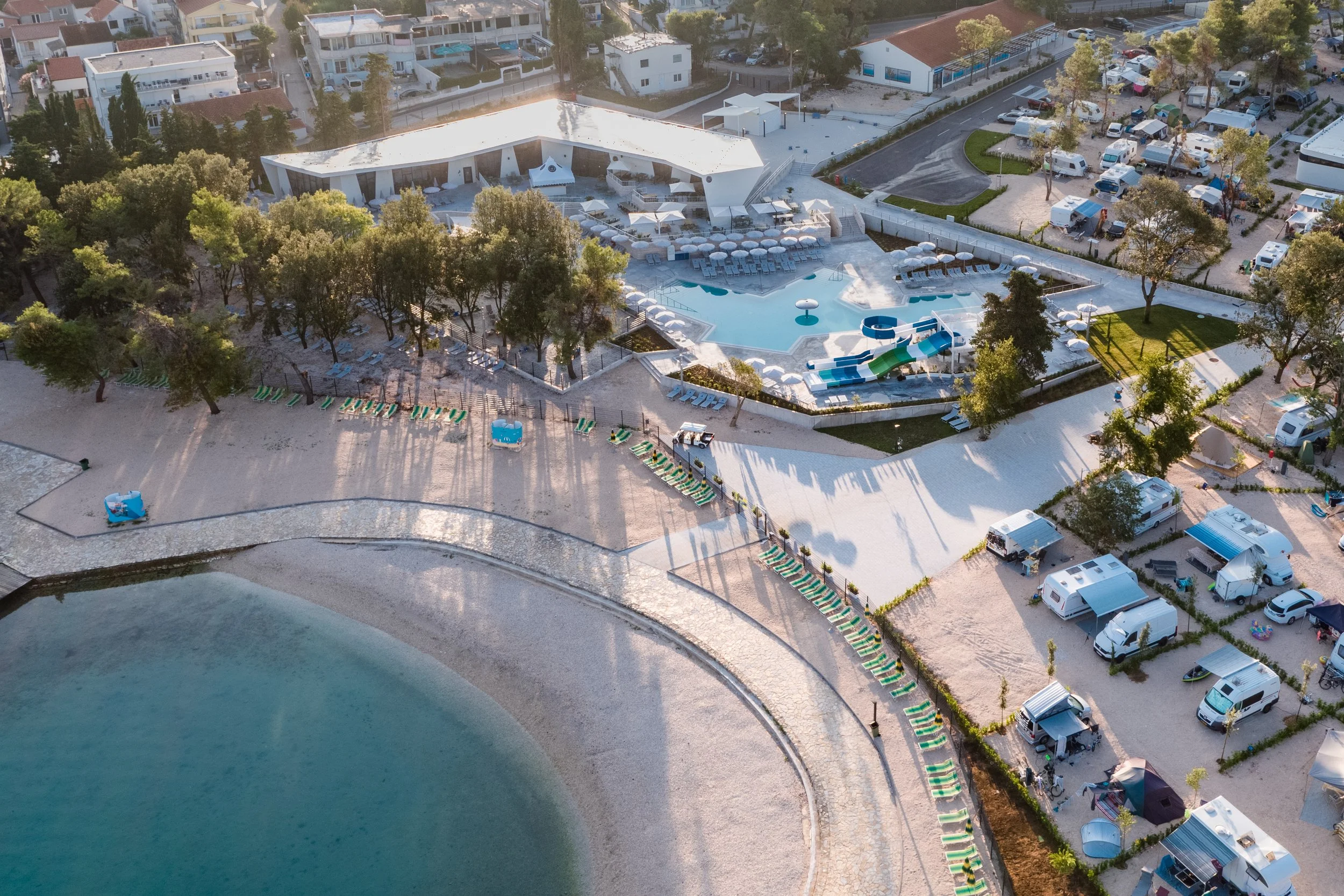
Camping Zadar, Falkensteiner’s five star camping resort
The resort attracts a loyal following of German and Austrian visitors who arrive with caravans, motorhomes and tent set-ups that appear to have involved months of planning and several engineering degrees. Seriously, some of the caravans are better appointed than most London flats. Families congregate around the pools, cyclists map routes through the surrounding countryside and retired couples settle into lengthy Adriatic sojourns, soundtracked by the reassuring (but never too loud) thump of Mitteleuropean pop music.
Rather than attempting to pitch a tent and embarrass myself in front of seasoned campers, I was installed in one of the resort's chalets. Compact rather than lavish, but perfectly comfortable, it sat just a minute or two from the beach, spa, swimming pool and CAMPO restaurant.
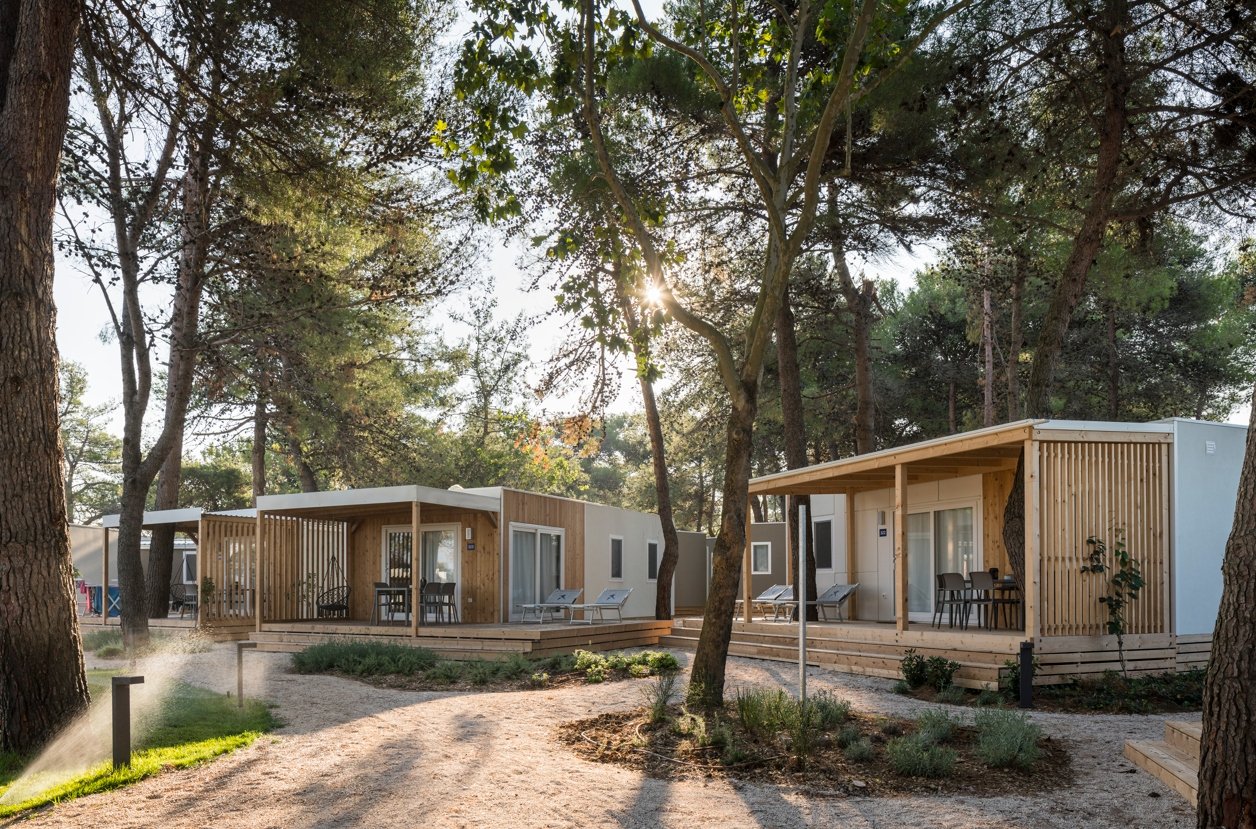
Camping Zadar’s chalets
The site itself is impressive, although not entirely without compromise. During the height of summer I suspect it can feel busy, particularly around the central facilities. Unlike a traditional luxury resort, there is always a degree of movement and activity; people arrive, depart, cycle past and head for the beach. Those seeking complete seclusion may find themselves wishing for a little more breathing space. That said, Falkensteiner's achievement lies in making the whole concept feel entirely normal. After a day or two, the idea of returning to an ordinary campsite begins to seem faintly absurd.
The site’s signature restaurant CAMPO is excellent, and would stand comfortably alongside many standalone hotel restaurants, serving beautifully prepared seafood alongside an impressive selection of Croatian wines. It doesn’t need to work as hard as it does – there’s a fairly captive audience, after all, who I imagine would be perfectly happy with some grilled weisswurst and rather too much mustard. I was served enough mussels – sweet, pillowy flesh in a delicate white wine broth – to make the sea lion trainers at Bristol Zoo blush, and enjoyed a perfectly-poured local beer. Thoroughly refreshed and safe in the knowledge I’ll be well looked after in such environs, I wandered down towards a small jetty and slipped into the Adriatic.
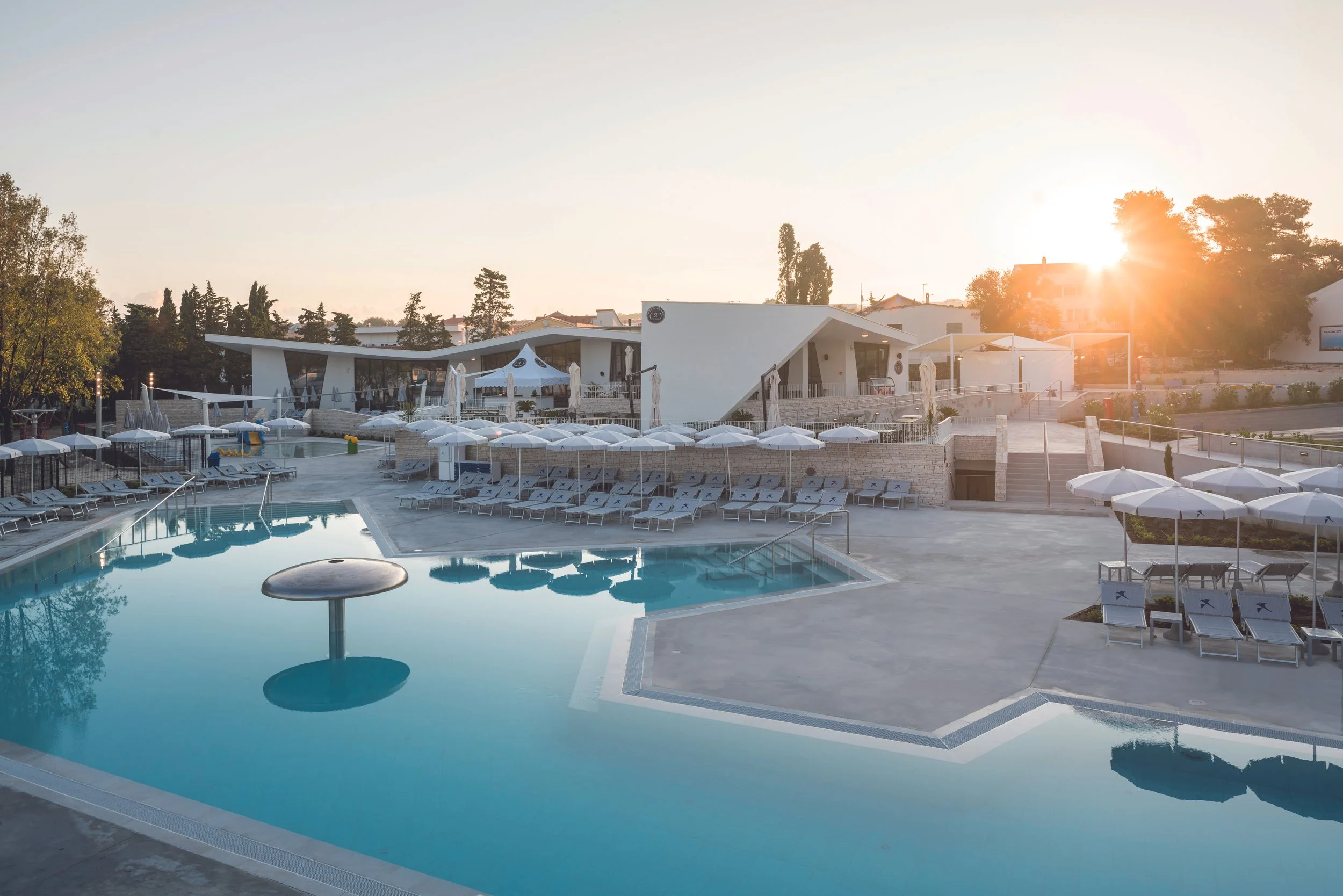
CAMPO restaurant and Aquapura spa, Camping Zadar
It was one of those swims that reminds you why people become obsessed with the Mediterranean, and this corner of that celebrated sea in particular. The water was relatively warm, crystal clear and astonishingly calm. Yes, the beach is rocky – sometimes painfully so – but there are enough boardwalks and swimming platforms to ensure injuries are avoided and one’s ego remains intact. Small fish darted around beneath the surface while the afternoon sun danced across the seabed, and for a while, there seemed little purpose in doing anything beyond floating gently and watching the coastline shimmer in the distance.
While luxury travel often concerns itself with ever-greater levels of exclusivity, Croatia’s Dalmatian coast – and Falkensteiner’s flagship campsite – reminds you of the pleasures and importance of relative simplicity.
Watching the Sky Catch Fire
Alfred Hitchcock supposedly claimed that Zadar had the most beautiful sunsets in the world. The great director made the observation while visiting the city during his halcyon days in the 1960s and, like many oft-repeated travel quotations, it risks sounding suspiciously like marketing copy. It turns out that reality remains entirely on his side.
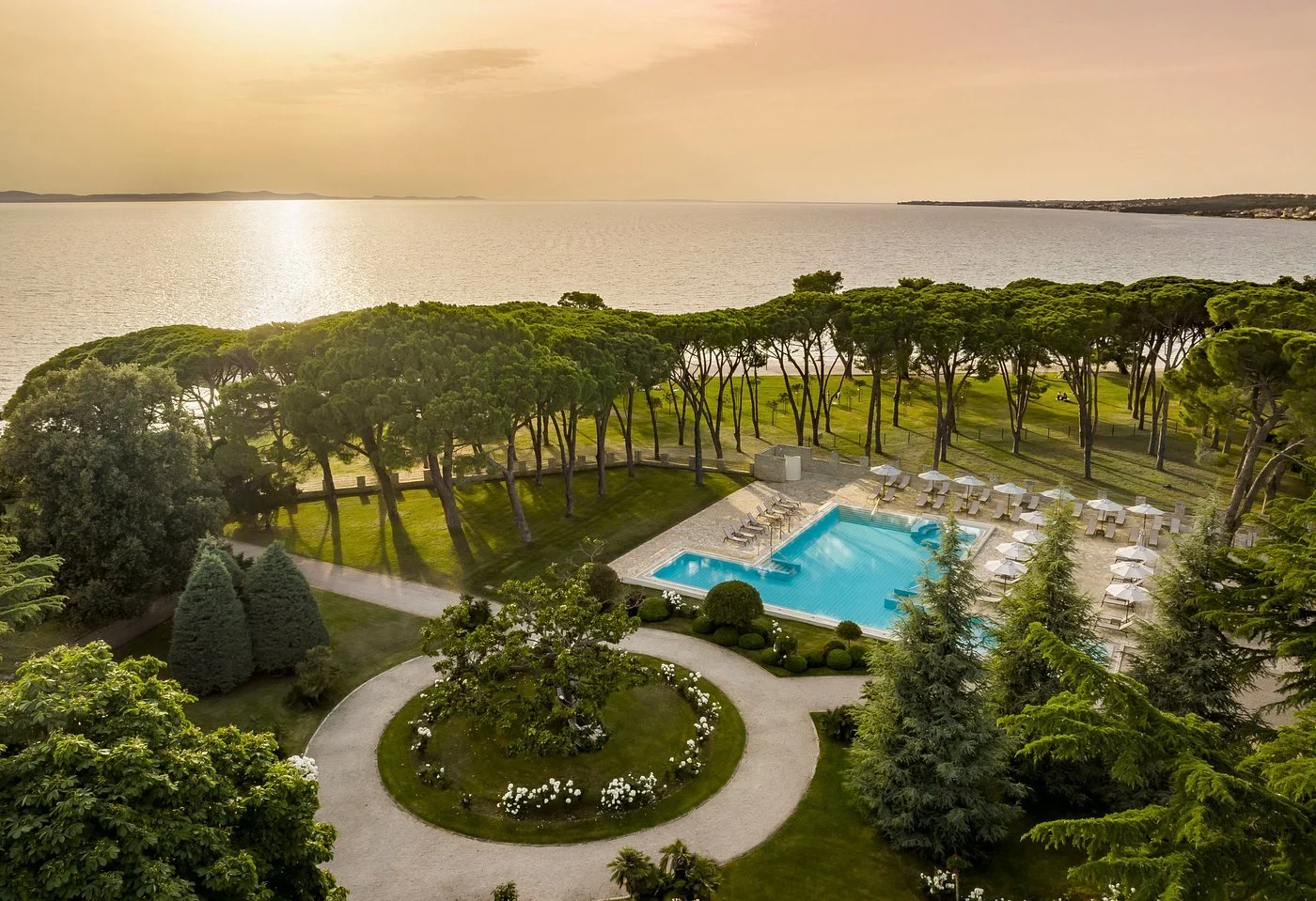
Quintessentially Dalmatian views from Hotel Adriana’s extensive grounds
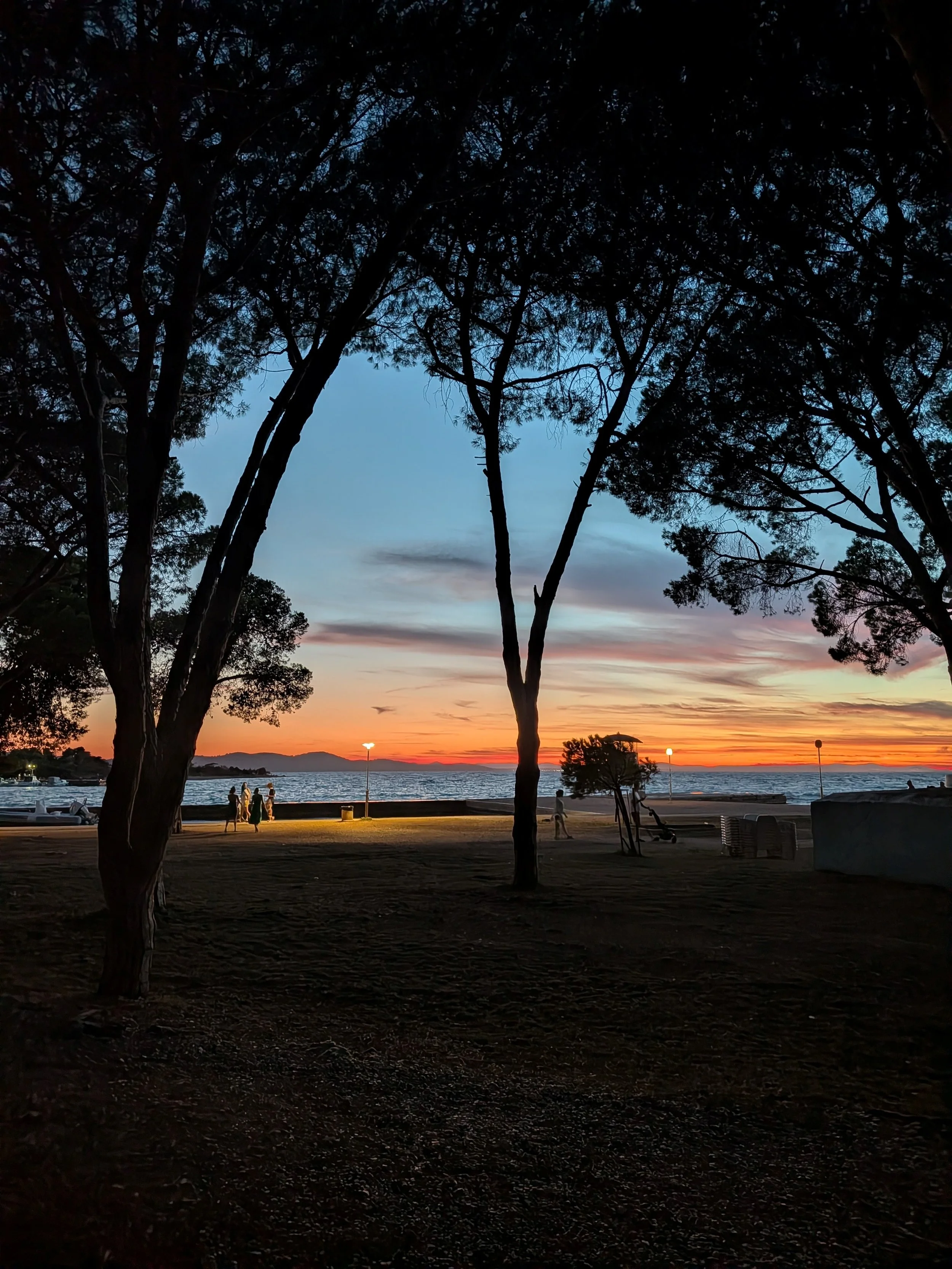
Chasing sunsets at Falkensteiner Hotel Adriana
That evening we crossed the resort to Hotel Adriana, another Falkensteiner property housed within a charming late nineteenth-century Venetian villa. As the sun made its daily slow dive into the sea, the sky began performing the sort of tricks that make amateur photographers believe they are professionals. Brilliant oranges gave way to deep reds, and streaks of pink appeared almost painted across the horizon. The colours reflected across the water while the mountains beyond gradually dissolved into dark silhouettes. For a few moments, the entire Adriatic seemed to catch fire, and Hitchcock, it turns out, knew exactly what he was talking about. You could almost sense him, huffing on some ridiculous cigar while dreaming up some horrendous cinematic scenario, nodding in approval in the shadow of the magnolia trees.
Dinner followed in suitably indulgent fashion. A particularly Germanic-style salad buffet provided a gentle reminder of Falkensteiner's Austrian heritage, although this being Croatia, truffles appeared before long to restore a sense of decadence. A rich pumpkin and parmesan risotto nodded towards neighbouring Italy, while a succession of seafood dishes reinforced my long-suspected notion that this side of the Adriatic might be one of Europe's most underrated culinary destinations. More local wines appeared with admirable frequency, and all felt very, very well with the world.
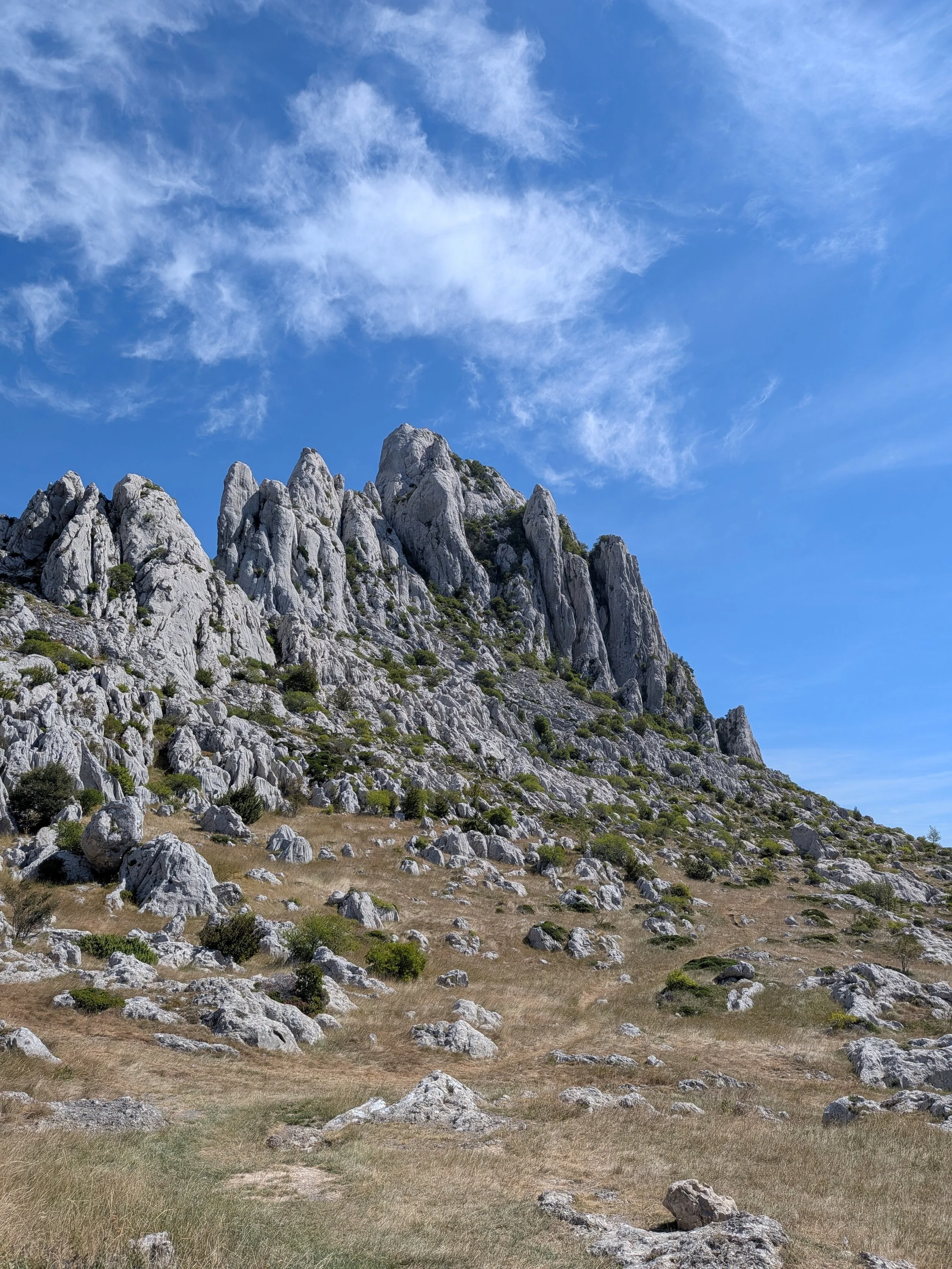
High in the hills above the Dalmatian coast
Following the Mountains
The following morning offered an entirely different side of Croatia, and one I’m grateful to have had the chance to encounter. After all, most visitors to this part of the Balkans arrive for the beaches, and yet the mountains – ever present, hulking on the horizons – deserve equal billing.
A day with Rajna Outdoor's Velebit Photo Safari carried us inland towards landscapes more commonly associated with Arizona than the Adriatic. We wound our way through limestone crags and across sun-blasted peaks, stopping at viewpoints that revealed seemingly endless panoramas of valleys, peaks and distant sea. Standing above one turquoise creek framed by stark white rock and vast open skies, it was extraordinarily easy to believe you had somehow wandered into New Mexico, and perhaps unsurprisingly, certain filmmakers had already noticed.
Many of these locations featured prominently in the celebrated Winnetou films, a series of technicolour western adventures that transformed this corner of Croatia into a widescreen version of the American frontier. Even today, there remains something distinctly cinematic about the landscape, as every turn of the road seems to reveal another impossible view.
Along the way we stopped at churches and hermitages that have watched over these mountains for centuries, while our guide recounted stories of the region's ancient past and turbulent recent history that reminded us that Dalmatia remains a place marked by memory. The conflicts and brutality of the 1990s still linger in conversation and in the lives of those who experienced them, yet what strikes visitors is not tragedy but resilience. Amid the crevasses still littered with shrapnel and bullet holes, communities have rebuilt and tourism has flourished. There is a determination here to move forward without forgetting, and as backdrops go, few places are more beautiful and few human stories are more impressive.
Punta Skala and the Art of Slowing Down
Returning to the coast, I squeezed in an impressively authentic Thai massage before continuing to the jewel in Falkensteiner's Croatian crown: Punta Skala. Occupying its own spectacular peninsula north of Zadar, the resort feels less like a hotel complex and more like a small, self-contained Mediterranean town. Luxury residences line the shoreline, families with young children gravitate towards the excellent Diadora hotel, and those seeking a quieter experience naturally find themselves at Hotel & Spa Iadera – the resort’s adult-focused destination.
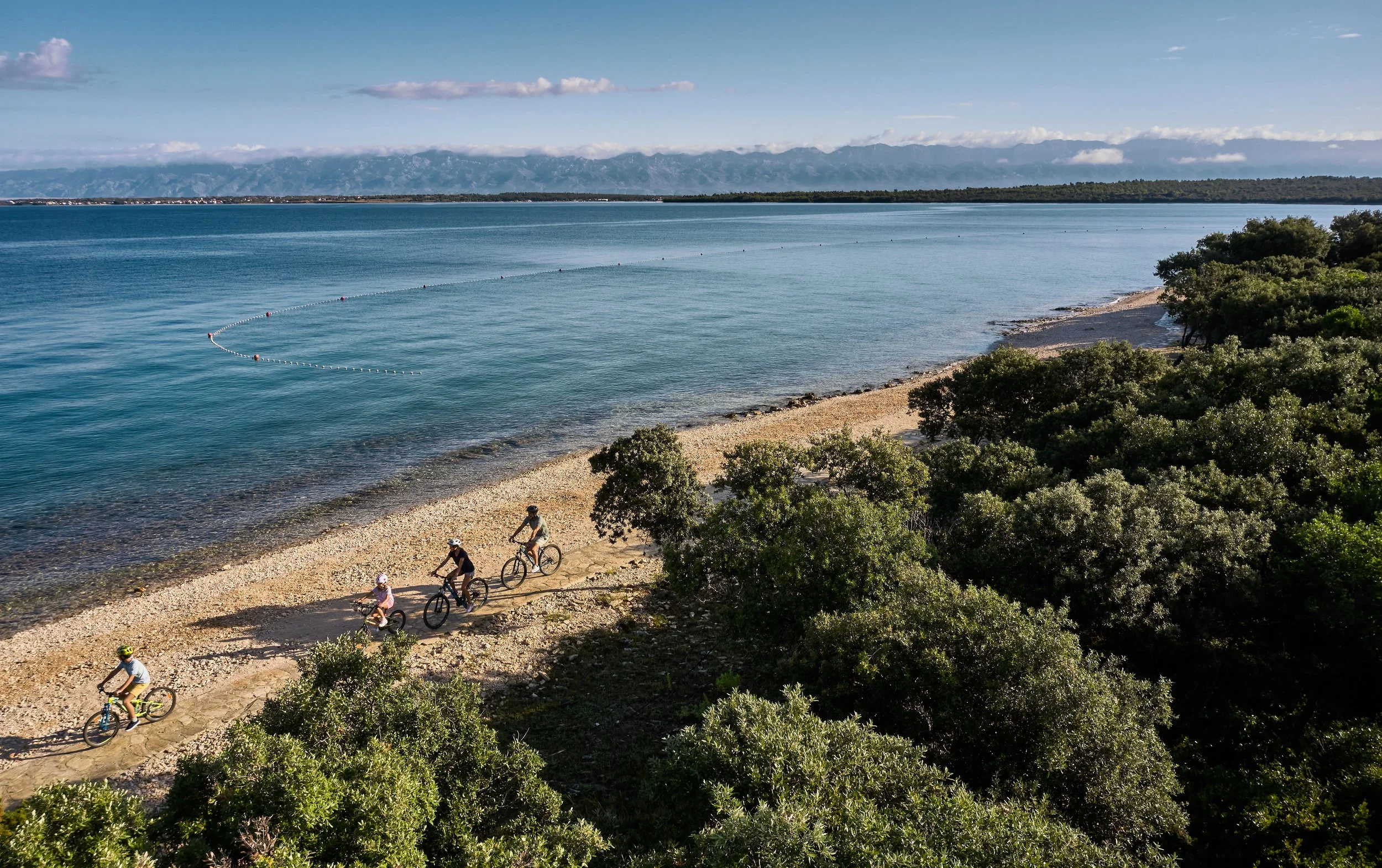
Expansive, tree-lined beaches at Punta Skala, Falkensteiner Resort
My suite at the latter became home for the next two nights. The room opened onto an expansive balcony overlooking the Adriatic, where distant mountains hovered beyond an ever-changing expanse of blue.
Many resorts attempt to offer something for everyone, and the result is all too often a compromise. Iadera somehow manages the opposite. Infinity pools give way to manicured gardens, which in turn lead towards private beaches. Running trails disappear along the coastline towards neighbouring villages, and a vast spa and state-of-the-art gym cater to guests who remain impressively committed to exercise while on holiday. There are aufguss sauna rituals for those comfortable with intense heat and the oh-so-Germanic approach to full public nudity, and there are massage treatments awaiting hard-working journalists who need those knots in the back and neck deftly unravelling.
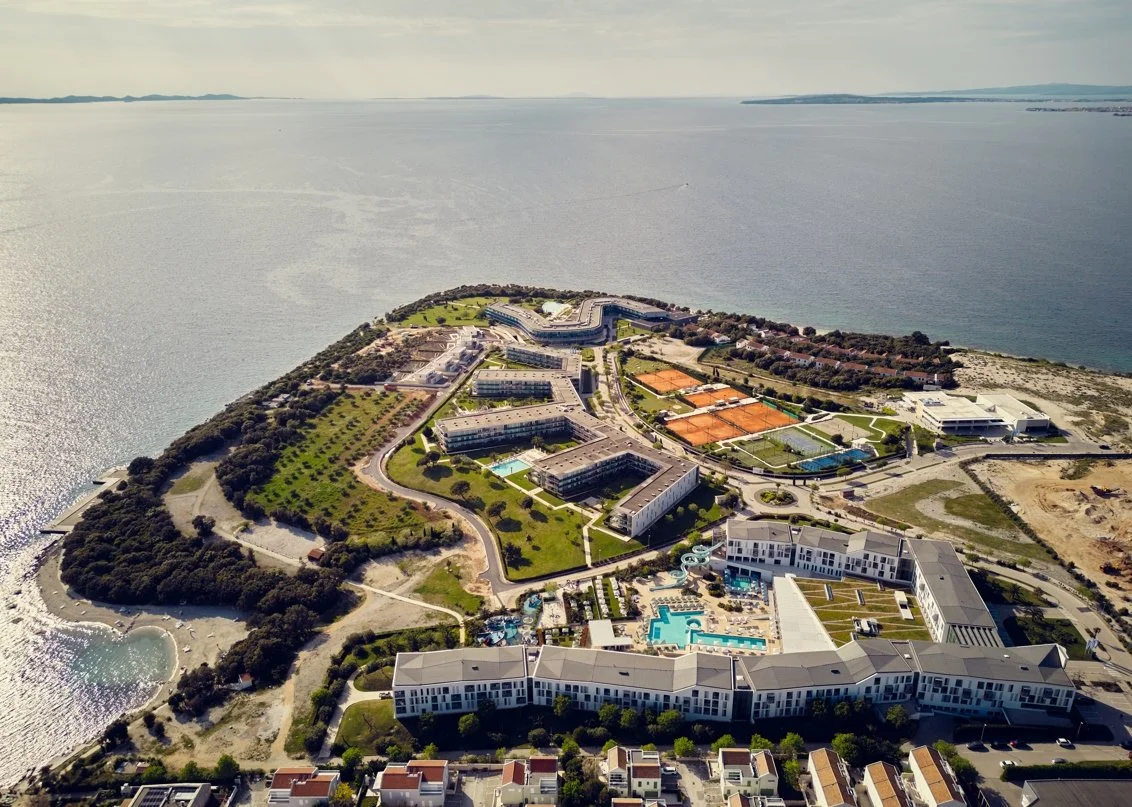
Punta Skala and The Adriatic
For all the facilities, the resort's greatest achievement is creating an atmosphere that encourages guests to slow down. There is ample time given to linger over Iadera’s superb breakfast – complete with plenty of Balkan flourishes including lacy pancakes served with fig jam, burek stuffed with cheese and spinach, and dollops of fiery paprika ajvar. There’s always an opportunity to linger by the water, and to order another glass of wine from the vineyards a ten-minute walk from the hotel gates.
Who could reasonably ask for more?
Beneath the Olive Trees at Bracera
The finest meal of the trip arrived beneath a canopy of ancient olive trees. Bracera, Punta Skala’s seafood restaurant, sits slightly removed from the main hotel, creating the feeling of discovering somewhere rather special and then being embraced by those imbued with the Balkan impulse to feed you very, very well indeed.
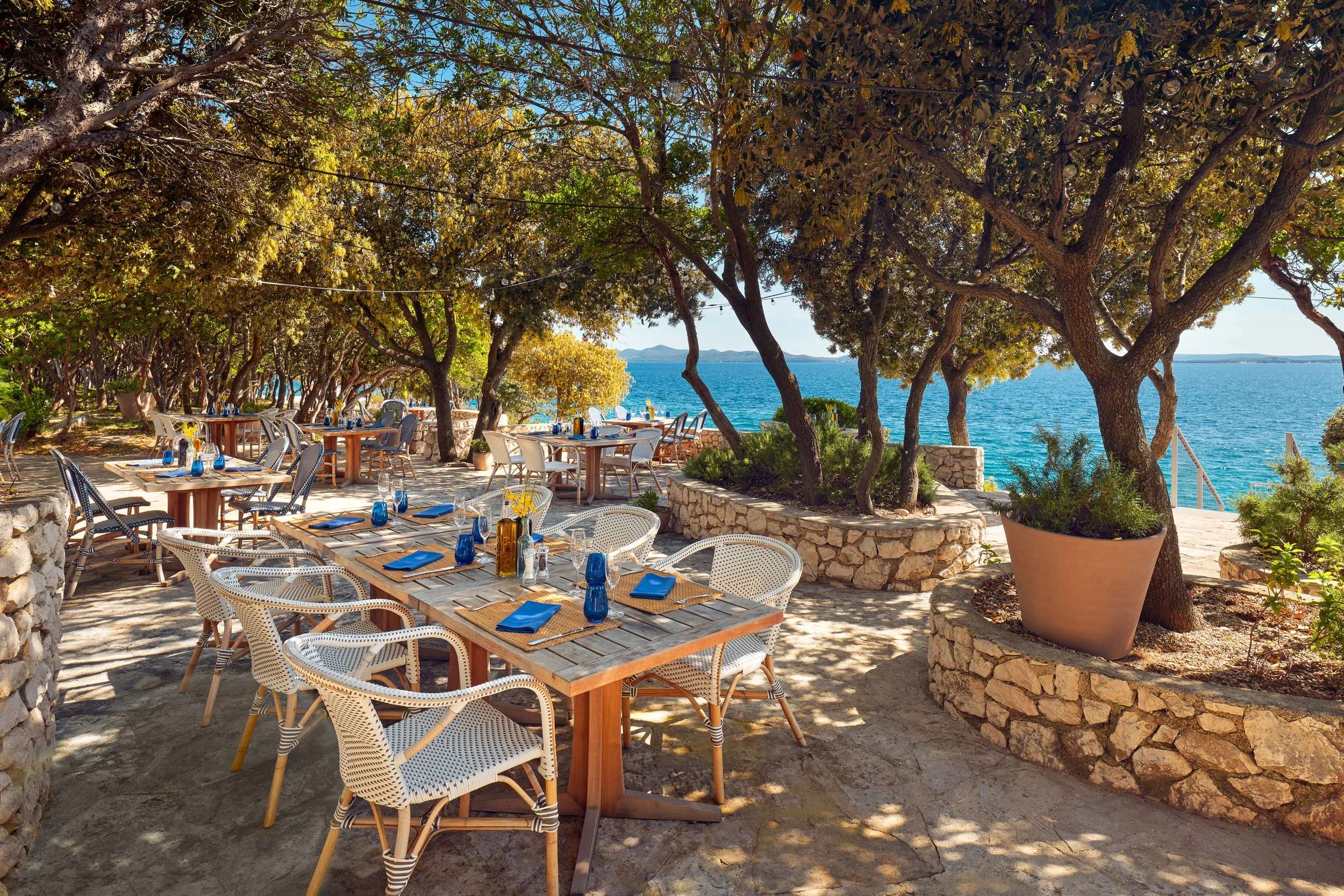
Dining at Punta Skala, a blissfully unhurried affair
The approach of the restaurant is refreshingly straightforward. Exceptional ingredients, treated with confidence and restraint, and delivered without flourish because there’s never a need to gild the lily. A procession of seafood dishes arrived throughout the evening. Tuna tartare and carpaccio showcased remarkable freshness, and simple ceviche of bream delivered delicate flavours that told tales of the waves lapping just beyond our table. A pasta primo brought together hulking prawns with a funky sauce made from the shells, heads and wherever else a crustacean hides its best flavours.
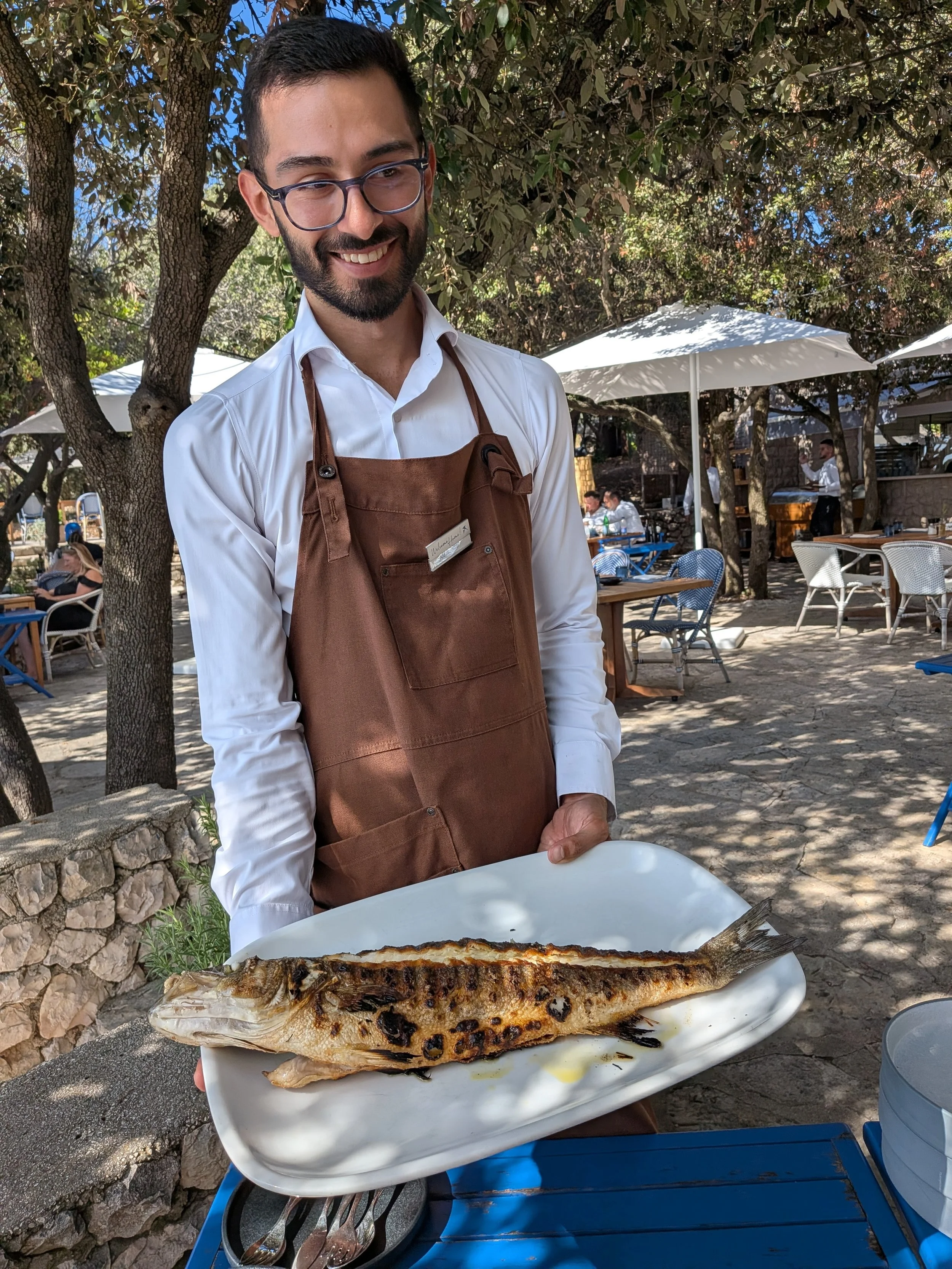
Dalmatian sea bass at Bracera
The showstopper of the lunch serving came in the form of an enormous whole sea bass, grilled until the skin blistered and blackened while the flesh beneath remained moist, pearlescent and delicate. As it was carved and shared, great hunks of marble-white fish fell away from the bone – sweet, slightly briny and impossibly fresh, it was Adriatic seafood at its absolute best.
The wines were equally memorable. A local sparkling wine made yet another compelling argument that Champagne's days of unchallenged dominance may be numbered, while the Croatian whites demonstrated just how much the country's wine industry has developed over the past decade. Few countries have a winemaking pedigree like Croatia – the ancestral home of a staggering ten percent of the world’s wine grape varieties – and yet the West is still only just waking up to its oenological wonders. I’ll continue flying the flag for this part of Europe’s winemaking output, although I may keep a select few of its secrets along the way.
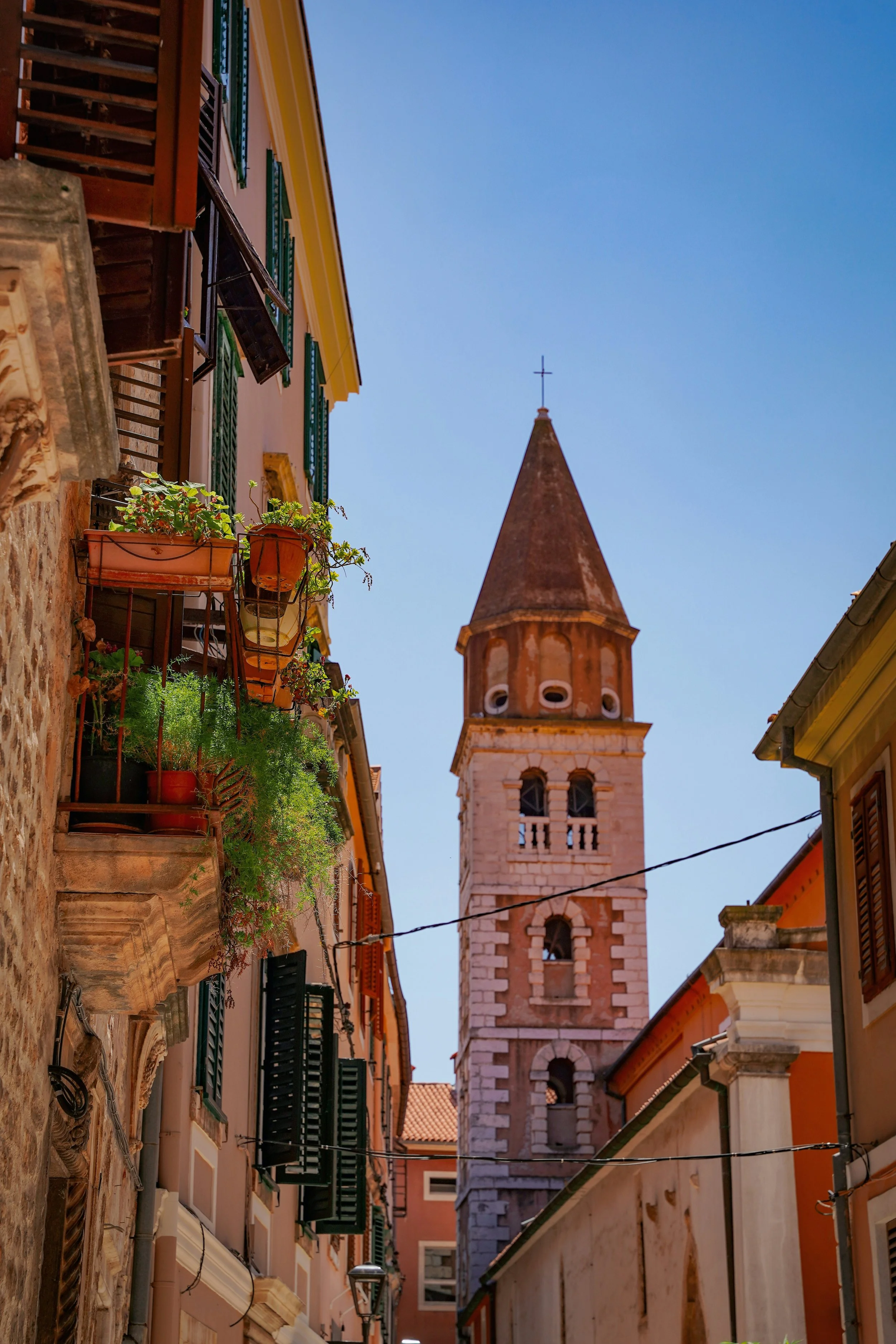
Ancient wonders, Zadar
Zadar: A City Where the Sea Sings
On the final evening, a beautiful speedboat, all polished wood and white leather fittings, zipped us across the bay to the ancient port of Zadar. It’s where my profound love affair with Croatia began over a decade ago, and my opinion hasn’t changed with age. There are arguably far prettier cities in Europe, boasting far grander historical centres. However, few feel quite so layered or capable of communicating their own story within a few minutes of arrival.
Passing beneath the imposing Venetian gates, our guide Lara led us through streets where Roman ruins, medieval churches and Austro-Hungarian architecture seem to tumble into one another. The city has spent centuries – millennia, even – at the crossroads of Europe's competing powers, and the evidence lies everywhere you look in thrillingly higgledy-piggedly fashion.
Proudly ancient and multi-faceted, Zadar manages to never feel overly precious in the way all too many of its Italian neighbours do. It feels real, lived in and loved as a place where people work, meet and fall in love, and wandering through its streets reveal this via bars established amidst classical ruins and new independent businesses in communist blocks.
As the sun began its descent, the crowds naturally gravitated towards architect Nikola Bašić's celebrated Sea Organ, one of Zadar’s more contemporary wonders. Hidden beneath the waterfront promenade, the installation uses the movement of the waves to create music through a series of submerged pipes. The resulting sounds are strange, haunting and oddly human – a reminder that we’re made of the very same stuff as the natural world we’ve tried to tame. People stood listening in near silence while the sea composed its own soundtrack, and another Hitchcockian sunset once again set the sky and sea ablaze.
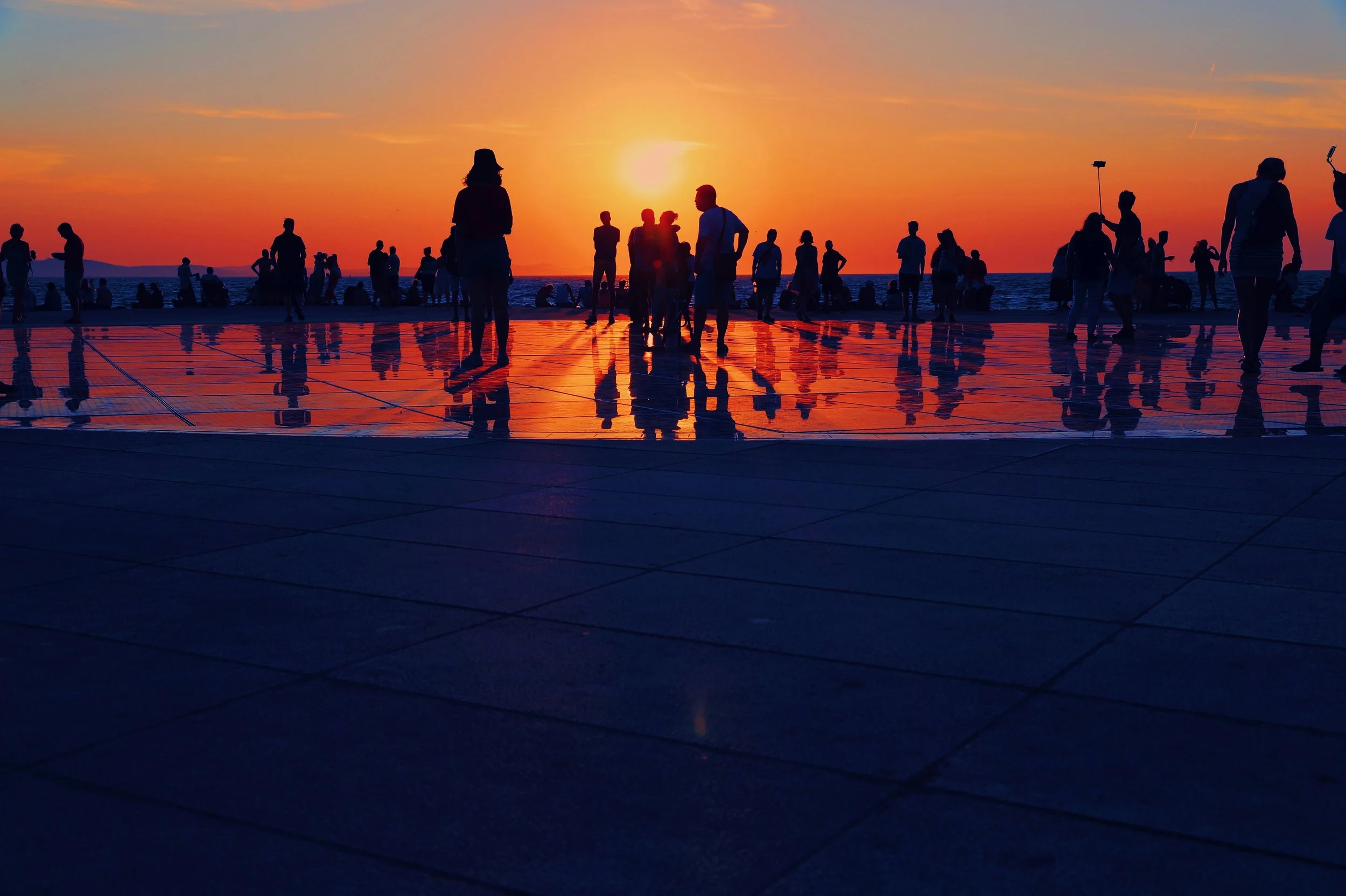
Sunset at The Sea Organ, Zadar
The Dalmatian Effect
What makes Croatia so compelling isn't simply its beauty, although there is certainly no shortage of that. It is the way the country engages every sense at once, with the scent of pine forests carried on warm sea air and the taste of seafood hauled from the water hours earlier. It’s there in the sound of waves passing through the Sea Organ, the buskers reimagining folk songs for new ears, the stories that remain of hard times and how they’ve inspired the better times now underway. These are the things that linger, and these are what sets the nation apart.
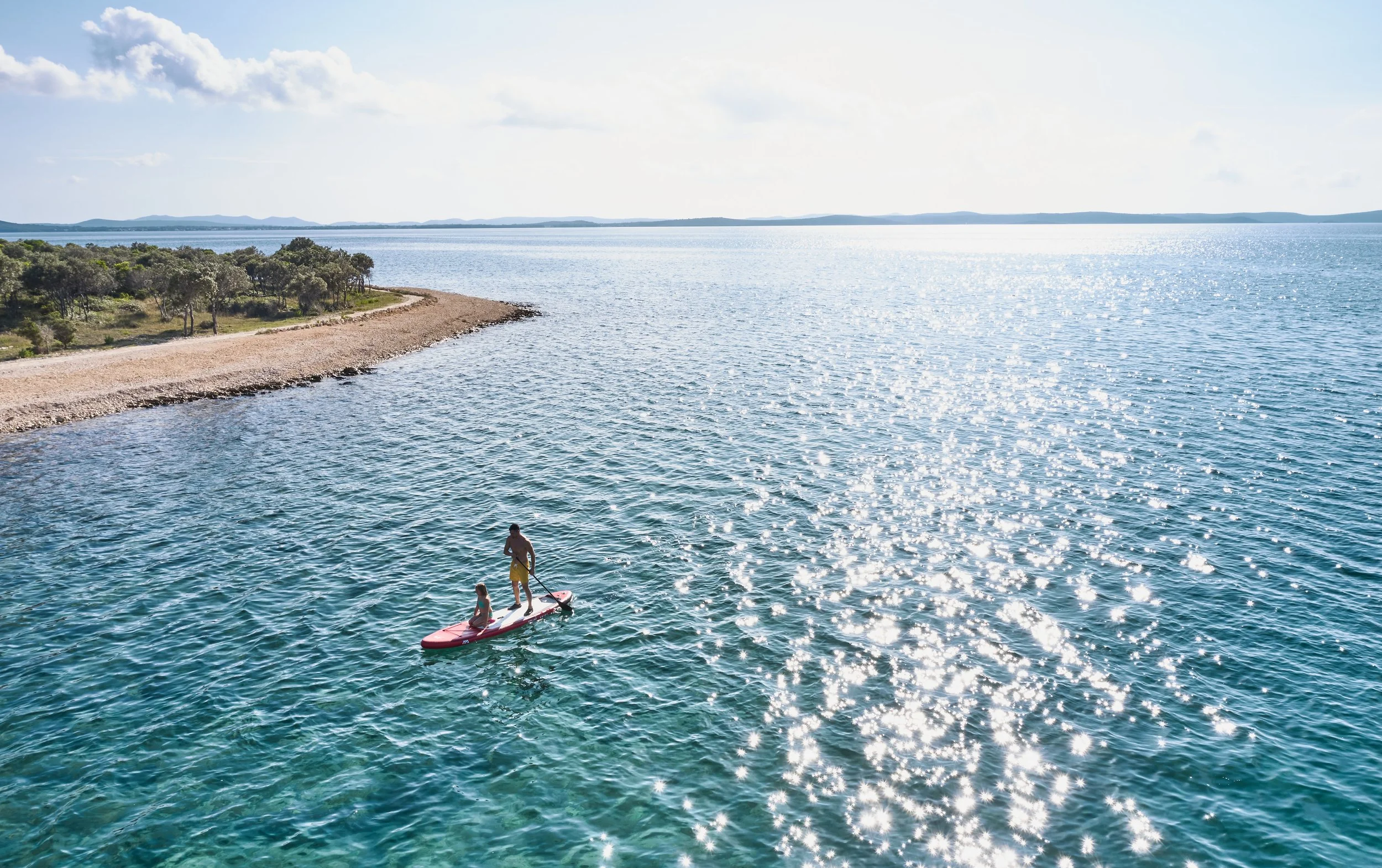
A sense of freedom abounds. Hotel Iadera, Punta Skala
More than a decade after an unexpected night spent sleeping on a bench beside Zadar's waterfront, I found myself standing there once again, watching the light fade across the Adriatic. The city had changed, although not very much. Croatia had changed rather dramatically and in many ways, so had I. Standing there beside the Adriatic, listening to the Sea Organ and watching another a vivid palette of colours dissolve into the horizon, I was reminded why that unexpected night on a waterfront bench has remained lodged in the memory for so long.
Some places stay with you, and Zadar is undoubtedly one of them.
Planning Your Own Zadar Escape?
Falkensteiner Premium Camping Zadar falkensteinercamping.com/en/zadar
Dalmatia's first five-star campsite.
Accommodation ranges from touring pitches to fully equipped mobile homes and chalets.
Falkensteiner Hotel Iadera falkensteinercamping.com/en/hotel-spa-iadera
Part of the beautiful Falkensteiner Punta Skala coastal resort
Aimed at adults, rooms available from £208 per night B&B
Falkensteiner Hotel Adriana falkensteiner.com/en/hotel-adriana
Boutique retreat aimed at adults set within a historic Venetian villa.
Available through easyJet Holidays.
Adventure: Velebit Photo Safari
Organised by Rajna Accommodation & Outdoor in partnership with the Zadar Tourist Board.
Full-day 4x4 excursion through the Velebit Mountains from €135 per person, including lunch and drinks.
Explore Zadar
Guided city tours available through the Zadar Tourist Board.
Recommended guide: Lara Kajmak (lkajmak@yahoo.com).
