
8 UNESCO World Heritage Sites in 5 Hours: Italy's Ultimate Rail Journey
Several times a day, a Frecciarossa train pulls away from Turin's Porta Nuova station. A little over five hours later, it arrives in Trieste. In between, passengers will cross northern Italy, call at six cities, and pass within easy reach of seven UNESCO World Heritage Sites, more than any other single continental European rail route as identified by researchers at Firebird Tours.
It's an impressive statistic, certainly, yet the numbers only tell part of the story. What makes Frecciarossa 9759 remarkable isn't that it links seven UNESCO sites, it's that, in the space of a single evening journey, it clicks and clacks its winding way through some of the defining chapters of Italian history. Royal dynasties, Renaissance masterpieces, medieval city-states, architectural revolutions and scientific discoveries all lie along the same railway corridor, awaiting discovery for those who know the joys of the rail.
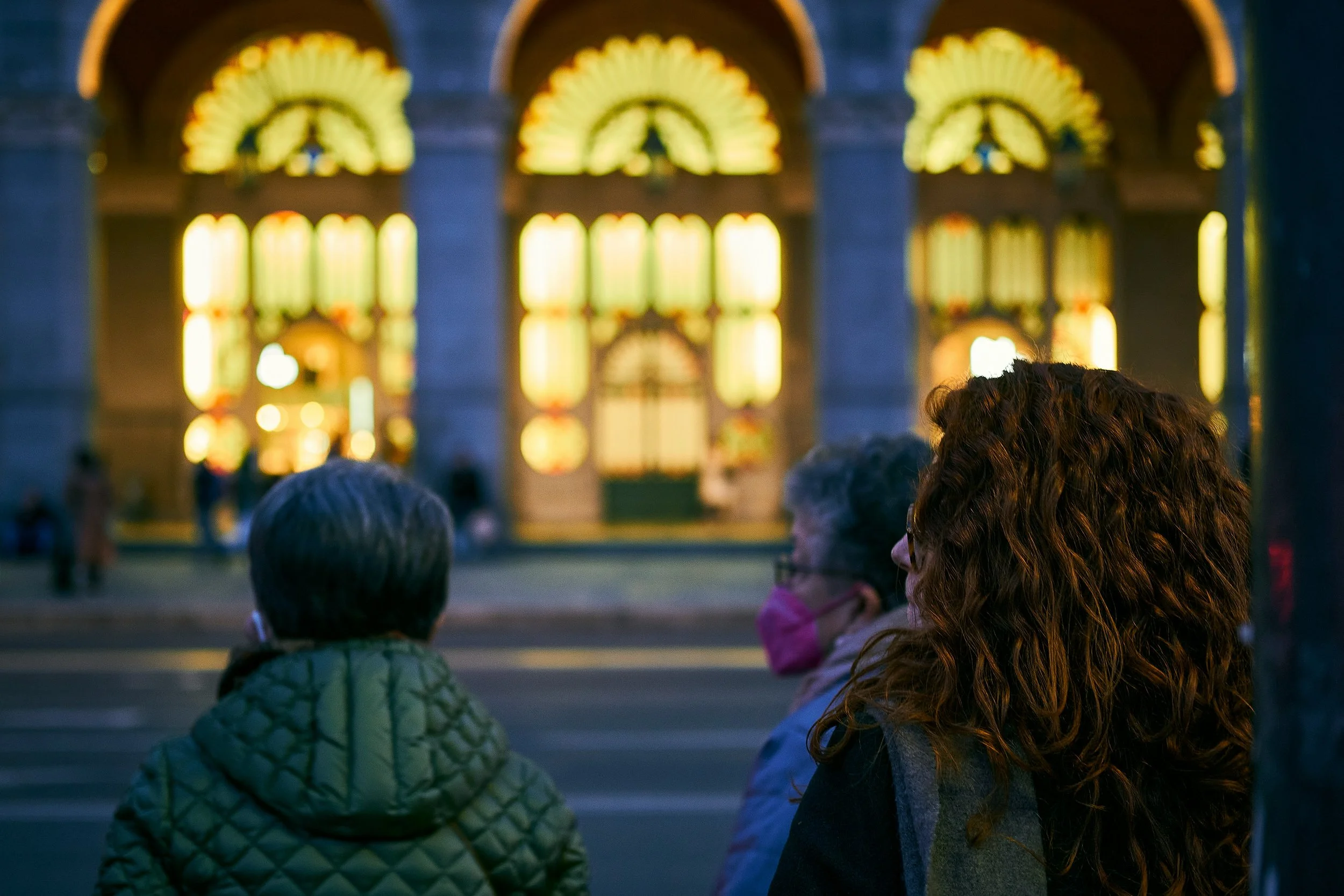
Turin Station: The start of a grand tour by rail
As Firebird Tours' deputy director Ivan Shirokov observes: "European rail journeys are usually planned city by city, but this route proves an entire heritage trail can fit within a single corridor." In many ways, it feels like a modern Grand Tour condensed into a single train ride, and you don’t need to dress like an extra from an E.M Forster adaptation to enjoy each and every stop on the way.
Departing Turin: The Legacy of a Dynasty
Amid the sweep of commuters moving en masse through the station, the journey begins in Turin, one of Italy's most underrated cities. While visitors often gravitate towards Rome, Venice and Florence, Turin tells a different story. This was the seat of the House of Savoy, the royal family that would ultimately lead the unification of Italy, and the city's UNESCO-listed royal residences remain among the country's most significant aristocratic landmarks.
As the train leaves the station and gathers speed across Piedmont – and as sun-baked fields and distant rolling hills paint their pictures beyond your window – the story begins not with artists or merchants, but with kings.
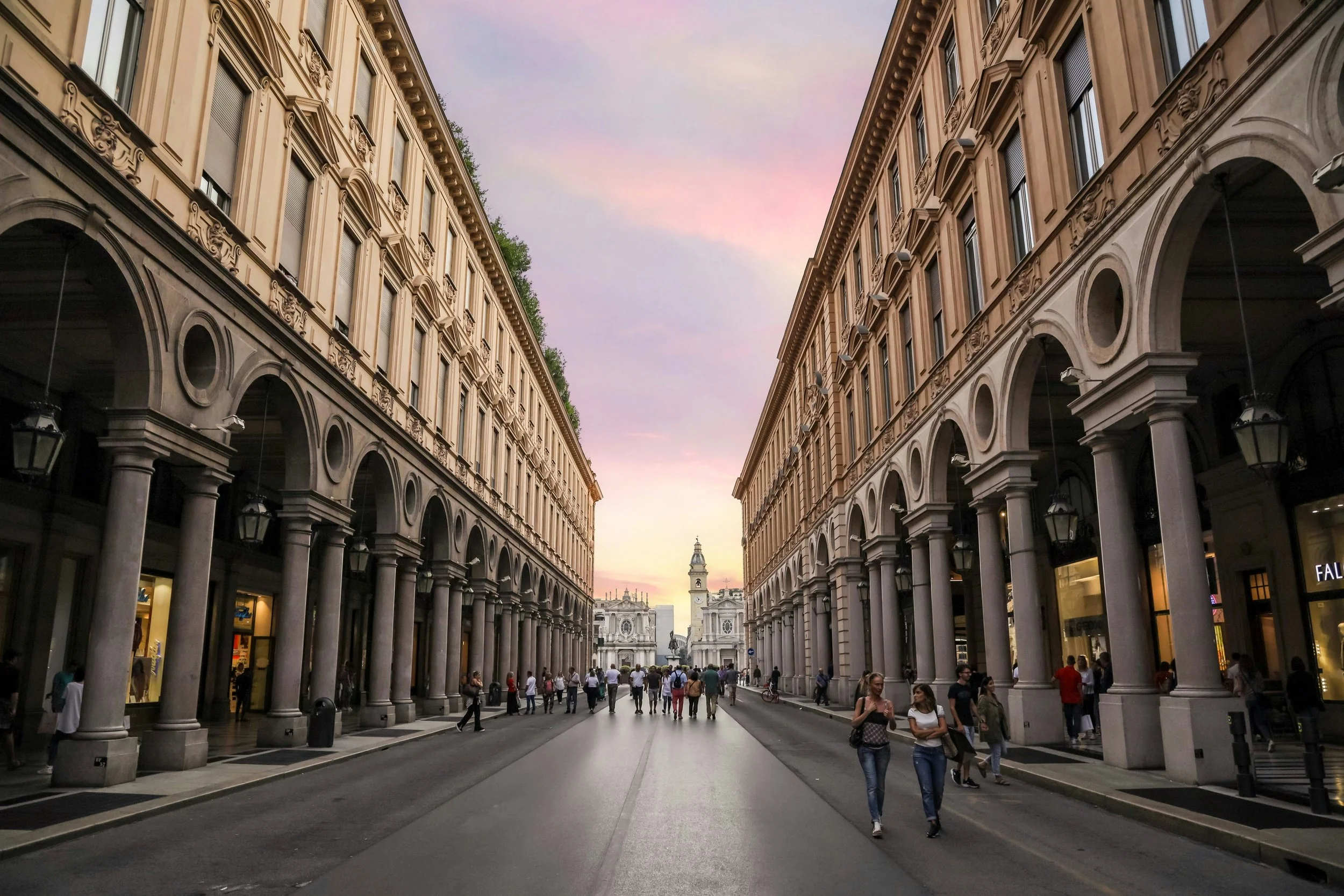
The glories of Turin, worth a stop in itself
Milan and the Renaissance
Just under an hour later, the train reaches Milan. Most travellers know the city for fashion, design and commerce, yet one of the world's greatest artistic achievements lies only a short distance away. Leonardo da Vinci's Last Supper, housed within Santa Maria delle Grazie, remains one of the most influential works of the Renaissance and one of Italy's most sought-after cultural experiences.
Viewed individually, it would be a destination enough for many journeys. On this route, however, it is merely the second stop… and that perhaps says everything about the extraordinary density of culture across northern Italy.
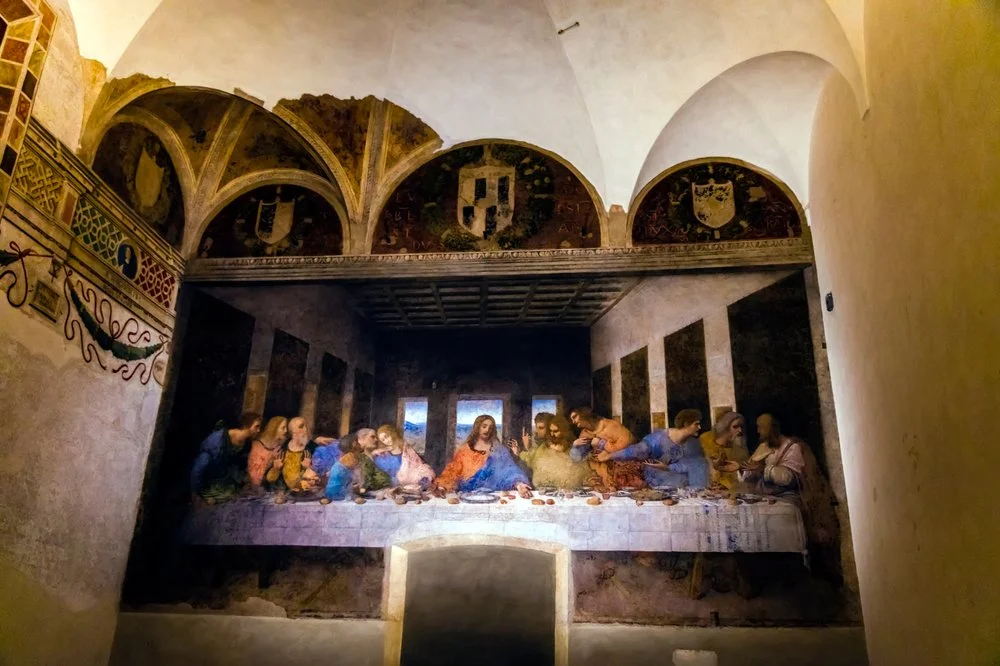
Iconic for a reason: Da Vinci’s ultimate dinner party
Medieval Power and the Beauty of Brescia
With one’s culture cup running over, it’s time to climb back onto your train and continue east towards Brescia, a city that many international travellers bypass entirely. That's a mistake, not least because its UNESCO designation recognises the legacy of the Longobards, whose influence helped shape Italy during the turbulent centuries that followed the fall of the Roman Empire. It's a chapter of history often overshadowed by Ancient Rome and the Renaissance, yet one that remains fundamental to understanding modern Italy.
Perhaps most importantly, there's something rather satisfying about the fact that one of the route's UNESCO sites isn't a famous bucket-list attraction, but a place that rewards curiosity.
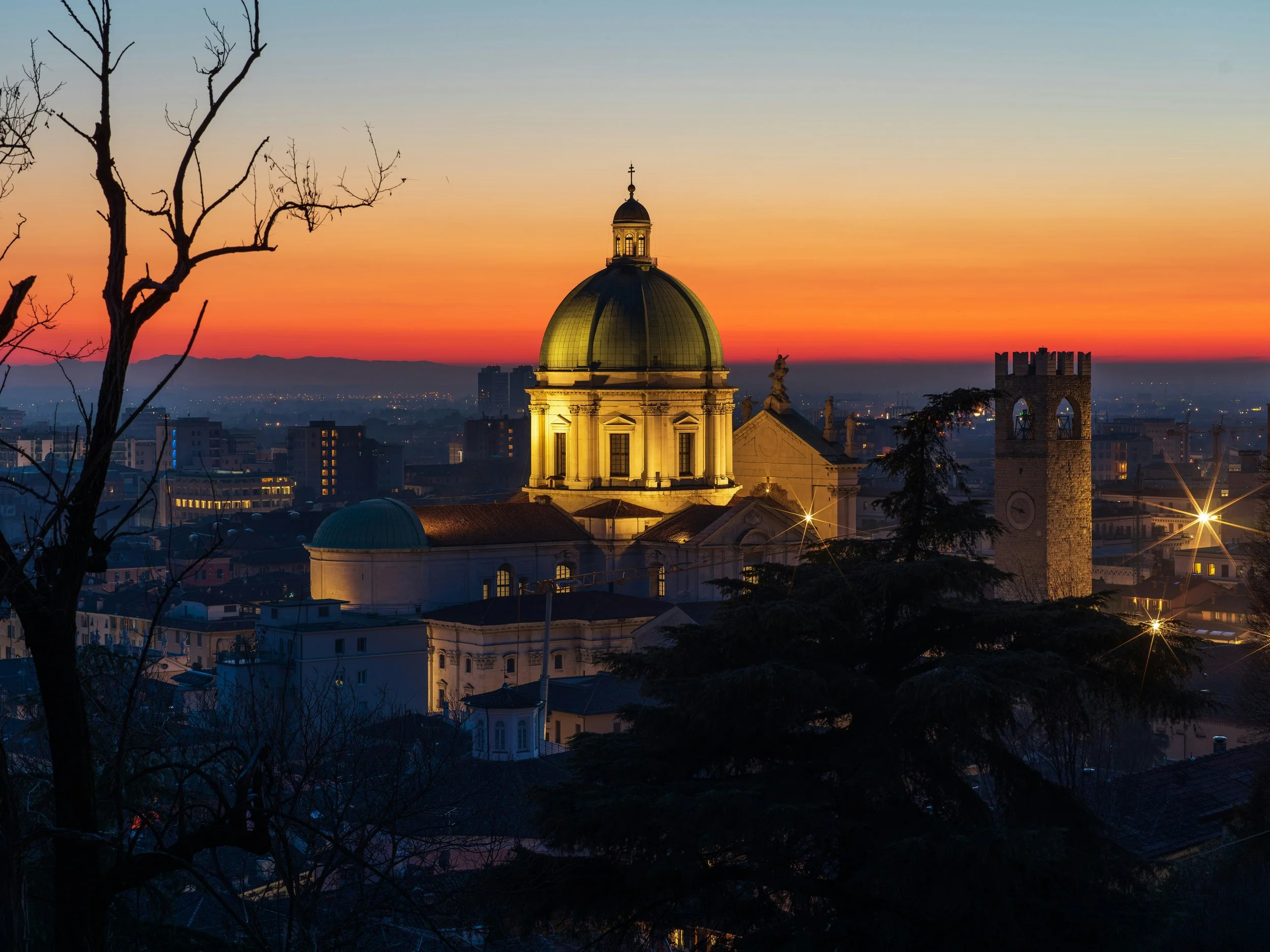
Sunset over Brescia
Verona and Vicenza: Two Cities, Two Visions of Italy
By now, the evening light is beginning to soften, and the next stop is the honey-coloured gem that is Verona. Popular culture has forever tied the city to Romeo and Juliet, but its UNESCO status owes far more to the remarkable preservation of its urban fabric. Roman monuments sit alongside medieval churches and Renaissance palazzi, creating a city that feels layered rather than curated.
Here, history is a process of bricolage, a stacking of wonders, wars and all that remains of the centuries that have passed. It’s the best of Italy, condensed within one spectacular region and awaiting your exploration. You could spend weeks wandering these streets, but the deep dive can wait, for you’ll surely find your way back to the romance that’s baked into the copious terracotta tiles and flagstones.
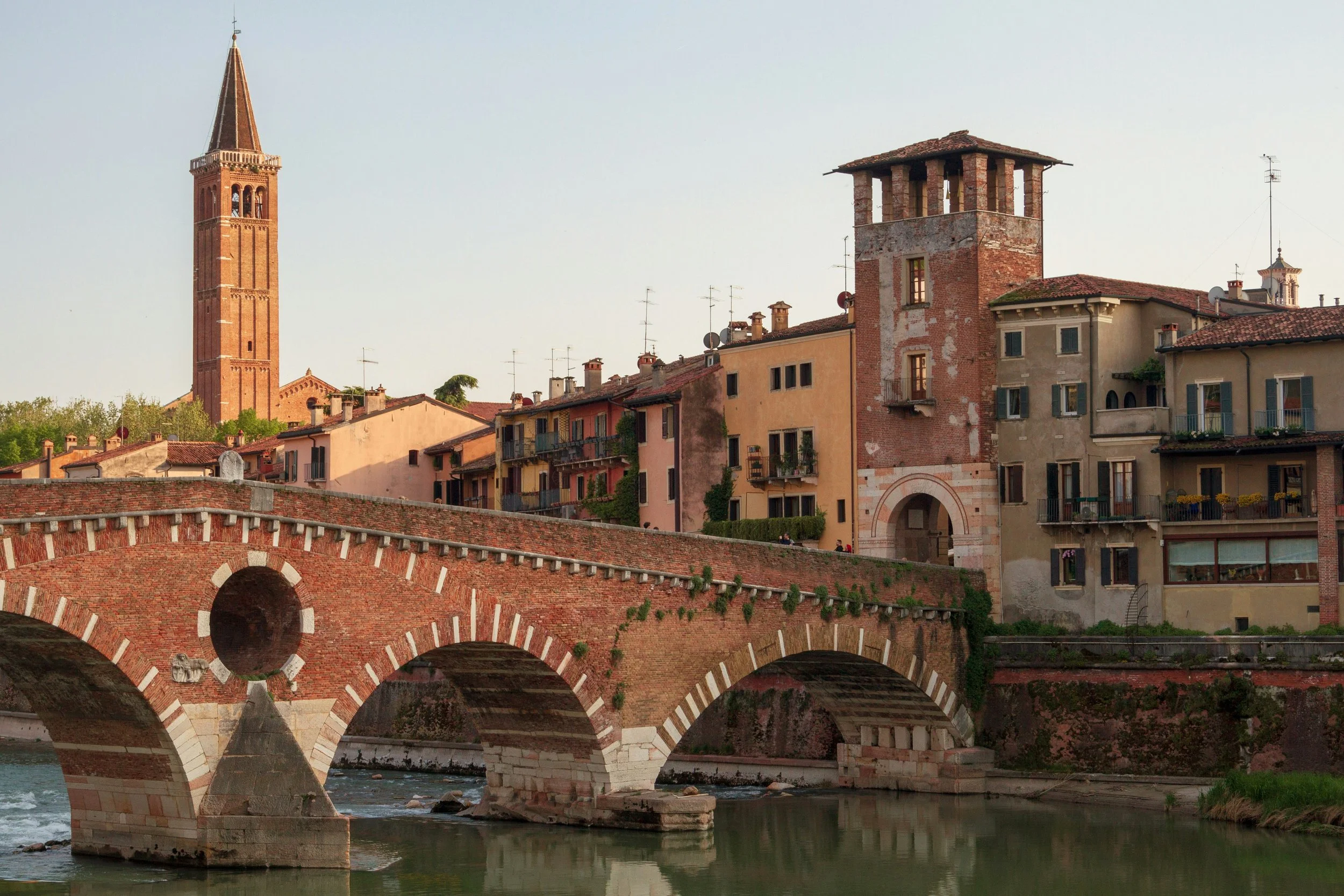
In fair Verona…
Further east lies Vicenza, and if Verona represents Italy's medieval past, Vicenza represents its influence on the wider world. The city is synonymous with the architect Andrea Palladio, whose ideas travelled well beyond the Veneto. His elegant principles would later influence everything from English country estates to public buildings in Washington, D.C.
Few cities have left such an outsized mark on global architecture, and fewer still receive so little attention from international visitors. As hidden gems go, it’s one well worth your time.
Padua's Double UNESCO Distinction
No stop contributes more to the route than Padua, as uniquely, the city accounts for two separate UNESCO World Heritage Sites. The first is its extraordinary collection of fourteenth-century frescoes, centred around Giotto's celebrated Scrovegni Chapel. Widely regarded as a turning point in Western art, they helped lay the foundations for the Renaissance that would soon transform Europe.
The second is entirely different, as founded in 1545, Padua's Botanical Garden is recognised as the world's oldest surviving university botanical garden and remains a centre of scientific study almost five centuries later. Together, the two sites tell a story that feels distinctly Italian: the pursuit of beauty and knowledge, existing side by side.
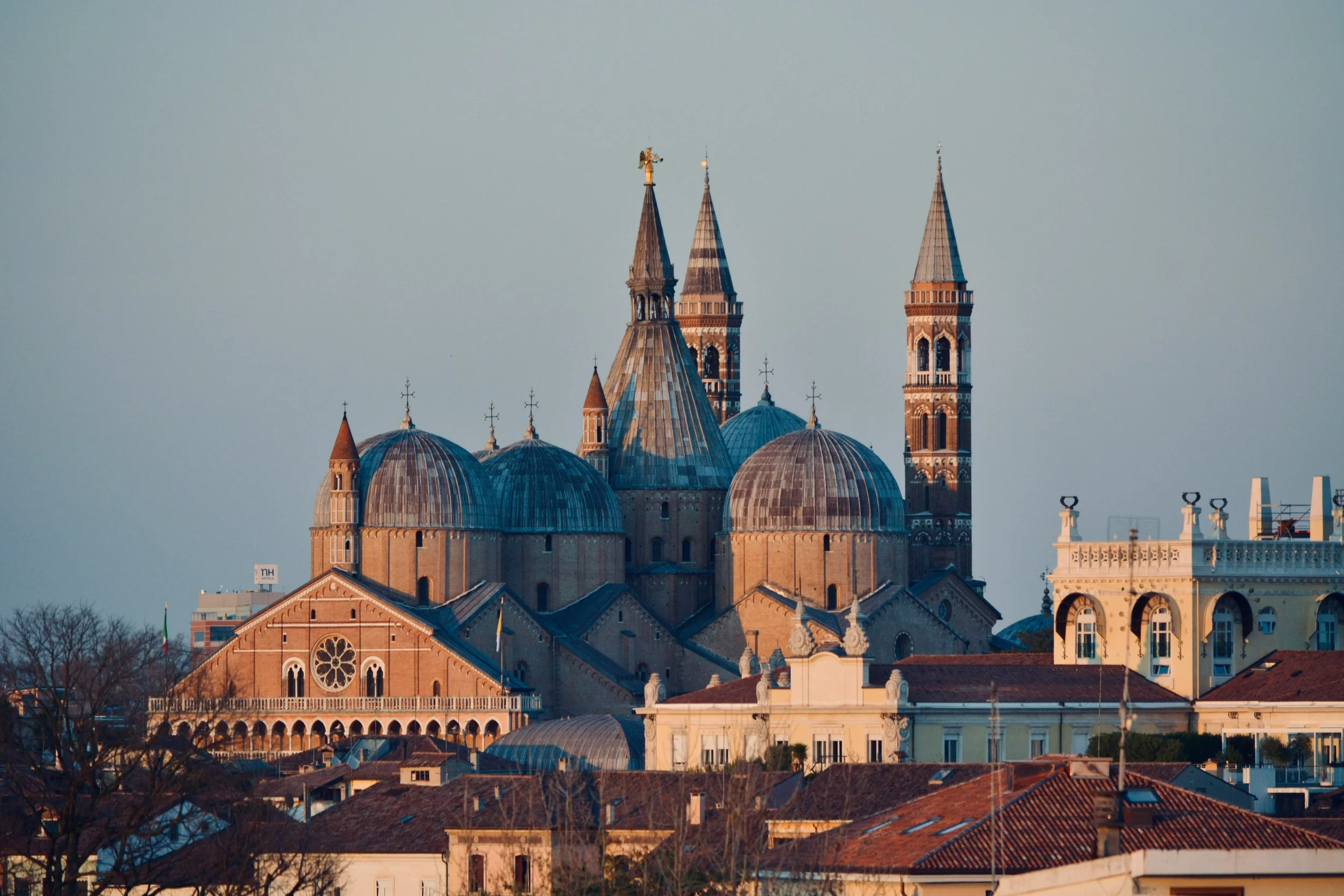
The spectacular spires of Padua
A Single Journey Through Boundless Italian History
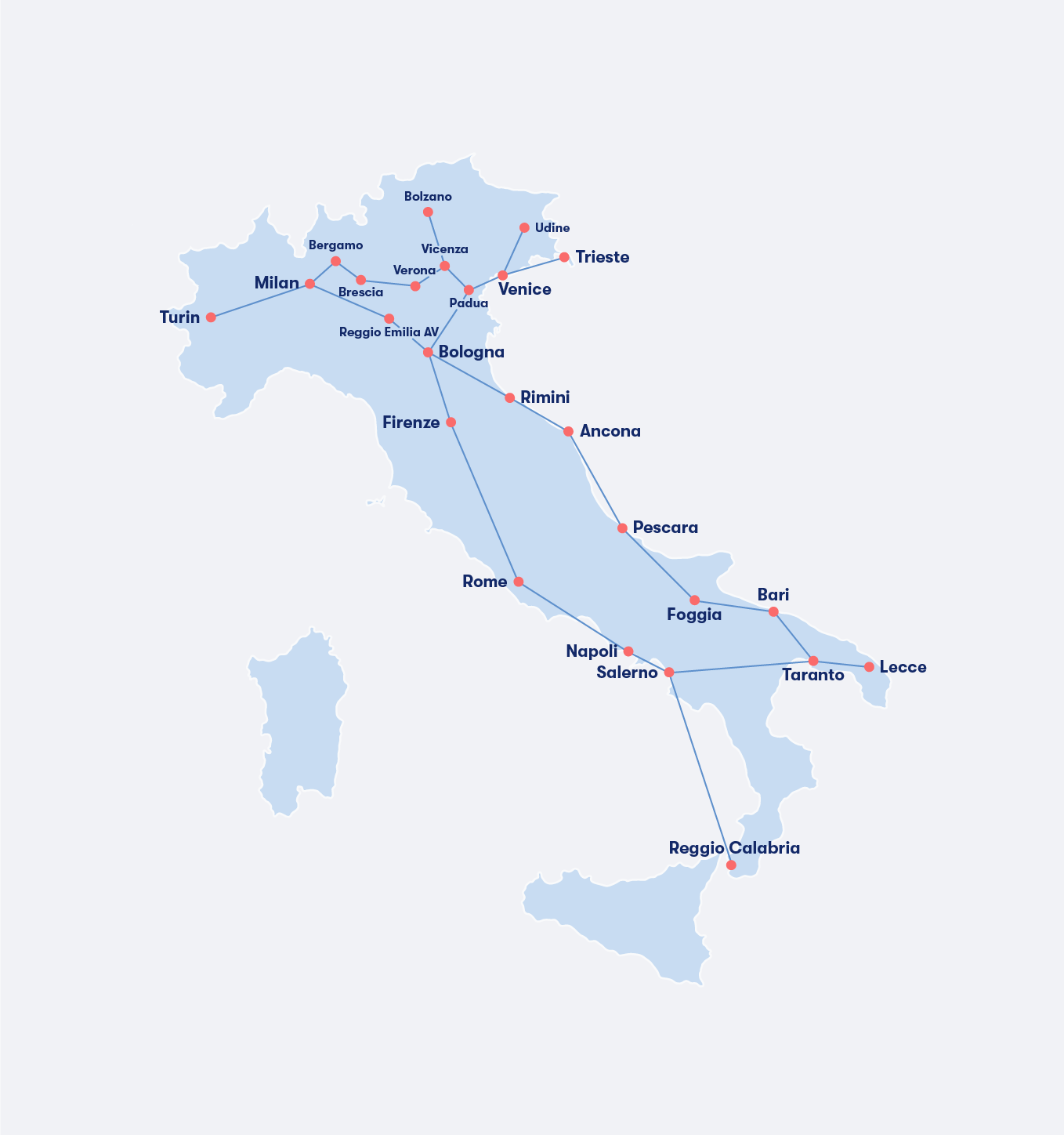
The full Frecciarossa network
Venice itself – the city and its iconic lagoon in their entirety – provides an eighth UNESCO site.
Unlike the route's other listings, which centre on individual cities, monuments or collections of buildings, Venice encompasses an entire living landscape: a city shaped by trade, maritime power and ingenuity, floating between land and sea. For centuries, merchants, diplomats and explorers arrived here from across the Mediterranean and beyond, making it one of the great crossroads of Europe. Even today, and even after seeing it countless times in movies, paintings and more, there is nowhere quite like it on Earth.
In just over five hours, a single evening train connects the legacy of the House of Savoy, Leonardo's Renaissance genius, the Longobards of medieval Italy, Verona's layered cityscape, Palladio's architectural vision and the artistic and scientific achievements of Padua.
You couldn't meaningfully experience all seven UNESCO sites without stepping off along the way, and yet that's precisely what makes the route so appealing. Frecciarossa 9759 isn't simply a train between Turin and Trieste. It's an itinerary hidden in plain sight, and a ready-made framework for exploring northern Italy one stop at a time.
The original Grand Tour took months, and was a delight that only a select few of the bright young things of the landed gentry could afford. This one leaves Turin after work and arrives in Trieste before midnight, and – crucially – today's travellers can decide exactly where to pause the story and dive a little deeper.
Ready to trace the route yourself? Firebird Tours creates bespoke holidays across Italy and beyond, combining seamless planning with deeper cultural experiences at every stage of the journey.
