
Fes Cooking Class Review: Inside the Fez Cooking School at Palais Amani
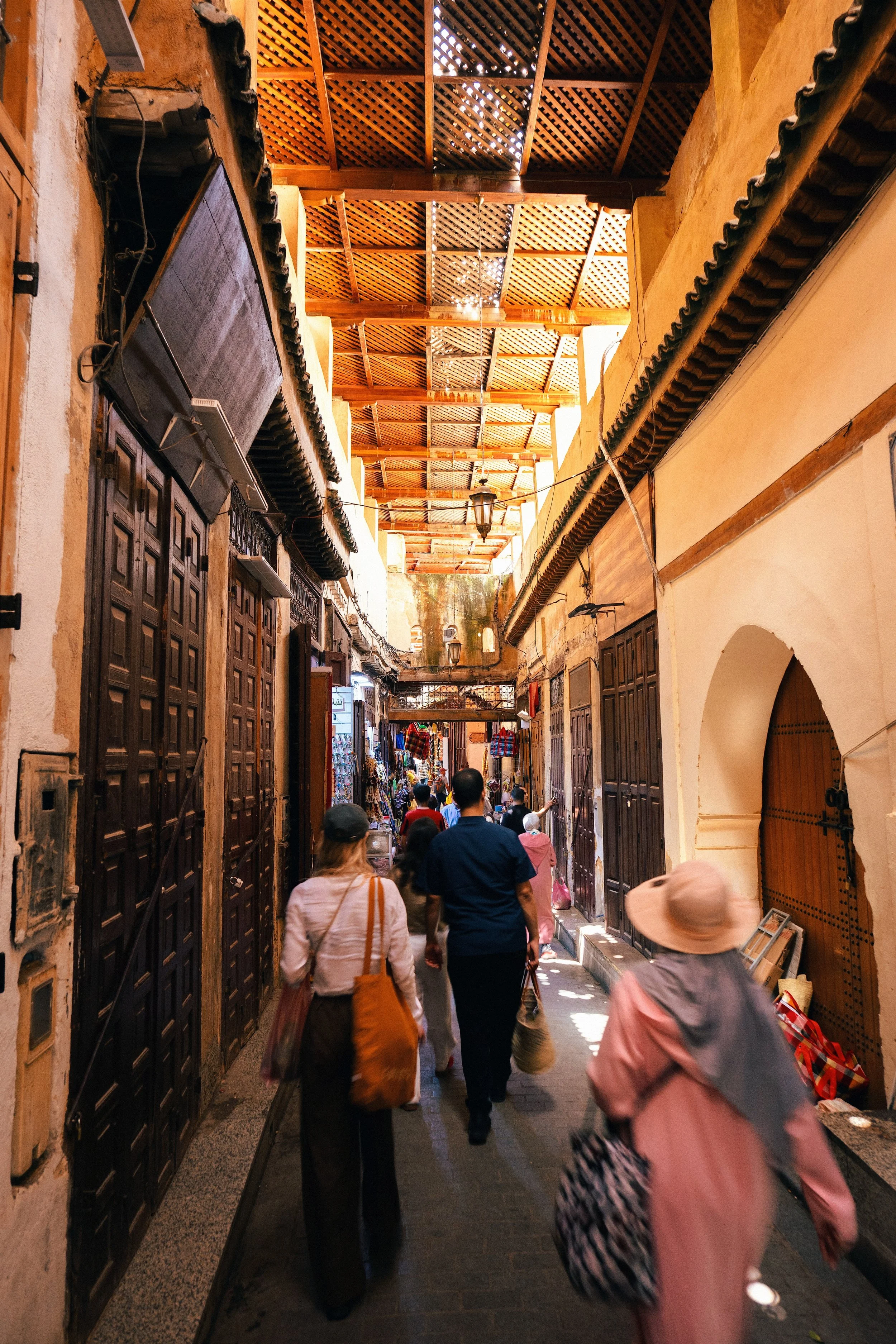
Wandering the souks.
Discover one of the most immersive things to do in Fez with a hands-on Moroccan cooking class at Palais Amani, combining a guided souk tour, traditional recipes and an authentic taste of the city's culinary culture.
Wake up, sliders on for a stroll to the buffet. Plate up a full English, and administer alongside a cup of builders' tea. A day seated around the pool, then head back to the on-site restaurant for something avec fries; rinse and repeat for dinner.
It’s a plate-by-plate culinary portrayal of my idea for the most rotten holiday imaginable.
My appetite to engage with each destination through every sense extends far beyond pasturised group excursions, so the opportunity to take a private cooking workshop whilst staying at the Palais Amani in Fes, Morocco, had enlivened me for weeks before our arrival. Offering group cooking lessons or private baking workshops, and even a full day spent with Dada (the private cook and central figure of a Moroccan household) in her own home for a fully immersive experience, and a peek at secret recipes passed down through the family.
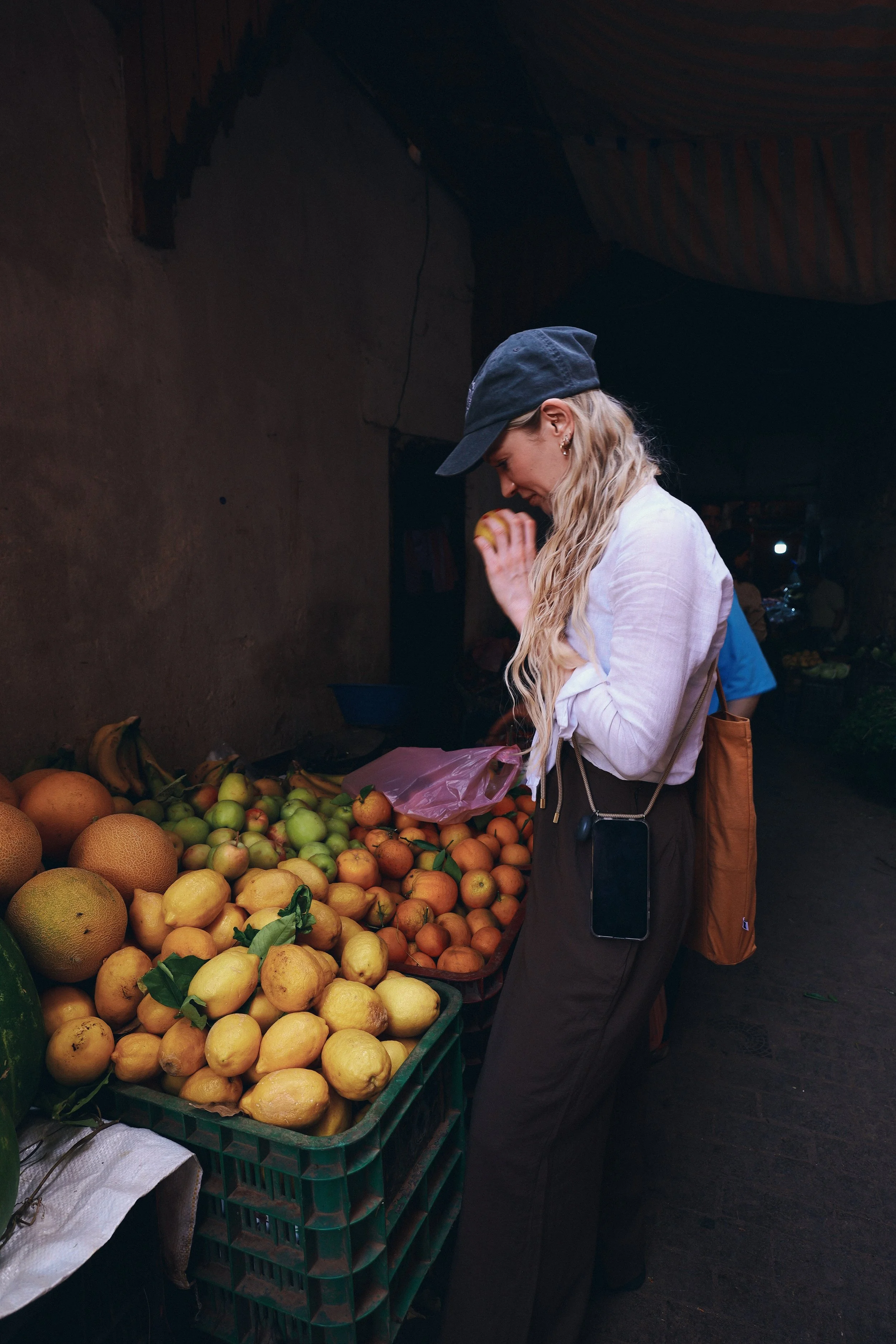
Choosing fresh produce.
After a local's breakfast of msemen and bessara, a flaky, laminated flatbread and a hearty yet austere fava-bean soup, we met our guide, Meryem, and our tutor for the day, Chef Oussama, of the Fez Cooking School.
Equipped with walking shoes, plenty of film rolls, empty tote bags for acquisitions, enthusiastic eyes, and excitable taste buds, we set off into the souk to gather ingredients.
The Souks
Walking down Rue Smmat Laadoul, we hear the rhythmic tap of a nearby loom, as a weaver sets about their day’s assignment. The beat shifts to hooves, as donkeys amble by, laden with skins and headed for the tannery behind us. Passing the community bakery, where locals bring their homemade dough to be finished in a cooperative wood-fired oven, or faran, the sound carries to a gentle scraping of wood over brick, as the baker, or ferrane, expertly arranges each loaf of khobz, the daily local bread, seemingly by muscle memory alone.
We turn off Derb Sagha and arrive at a neighbourhood stall dealing in fruits and vegetables that spills onto the street through a small doorway. Chef Oussama instructs us to select tomatoes, aubergine, courgette, carrots, green beans, onions and potatoes. We gather tremendous bushels of coriander and garlic bulbs the size of apples.
I can’t resist adding a bag of huge, tender figs to our basket of fruit, as we are instructed to choose peaches, ripe, juicy, and immense, and oranges, pitted, fragrant, and still on the stem, for our dessert.
From a covered alleyway of conjoined buildings, we step onto Rue Nouaâriyine, where a slight breeze tickles colourful fabrics that offer shade over the street, as the residents busy themselves with daily errands at the small local stalls just outside the main shopping area, just a few streets away.
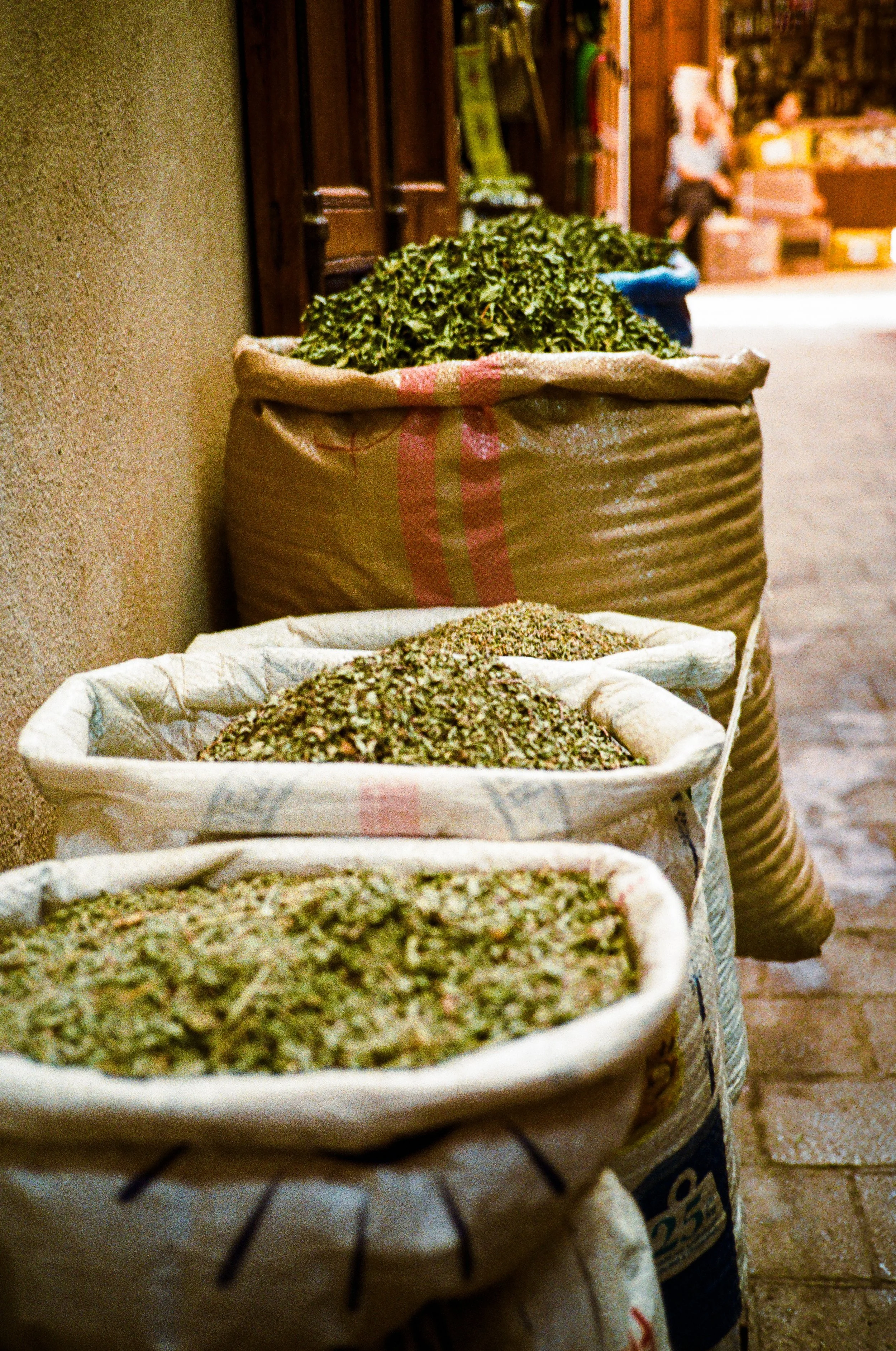
Dried herbs on film.
We turn back onto Rue Talaâ Kbira, one of the most prominent commercial streets of the medina. Translating as "The Great Slope", this historic route descends steeply from the iconic Bab Bou Jeloud, the Blue Gate, to Kissariat al-Kifah, an undercover mall deep in the medina, stretching from west to east for over a kilometre.
Perusing colourful vats of seasonings at the oldest spice shop in the medina, we make sure to pick up their signature recipe, “Head of the Shop”, or ras el hanout, with each shopkeeper fiercely protecting their own recipes, guarded for generations. Gathering blends for fish, poultry, and vegetables, we buy them ready to stock our pantry at home.
Wandering from the intersection of Rue Talaâ Kbira and Guezzarine Jouteya, along Boutouil and past the Al-Attarine Madrasa Islamic school, stalls move without seemingly any boundary, from trading spices and perfume to butchers and fishmongers; where street cats look on in hope for scraps to come their way; to preserves and baked goods.
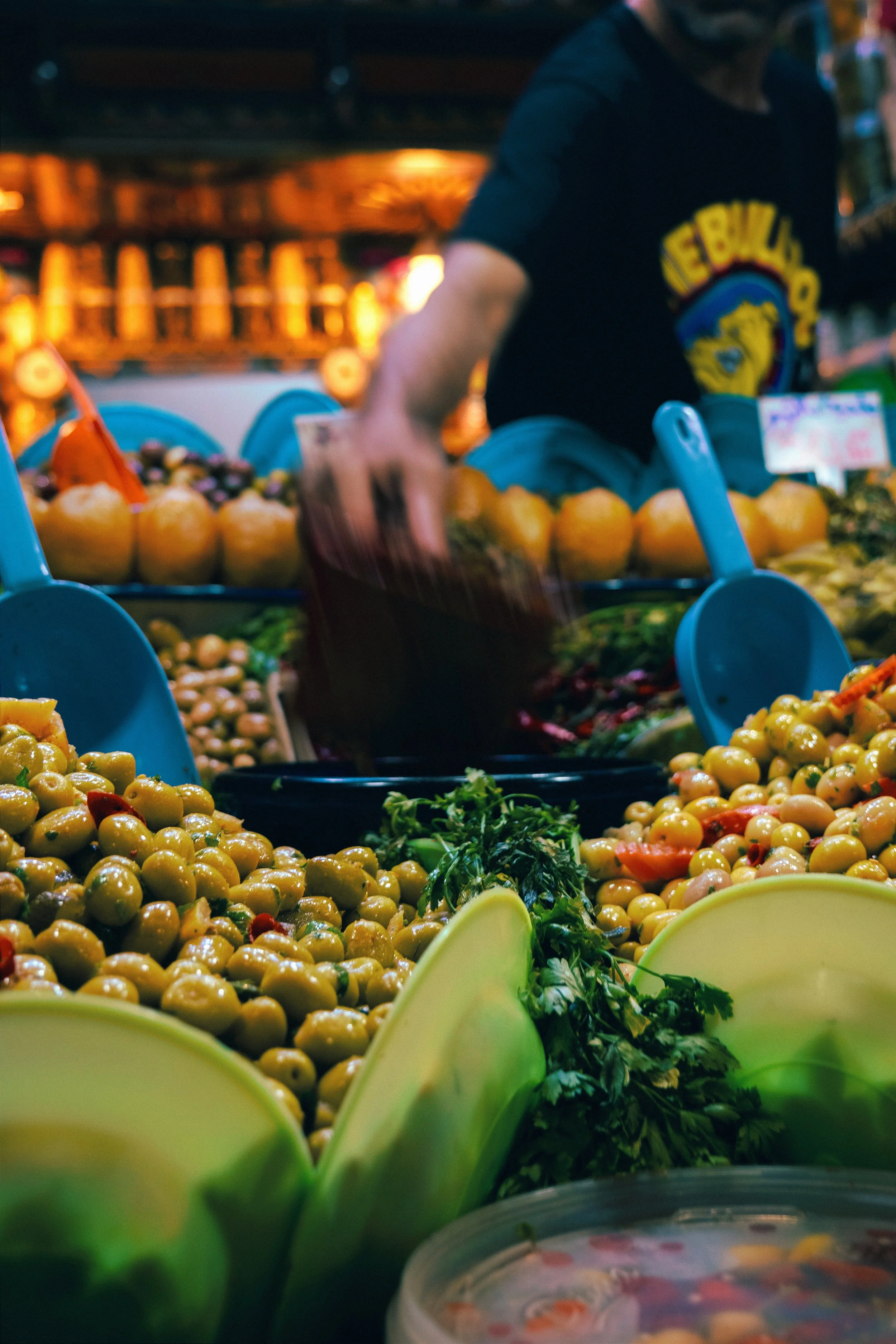
Olives by the bucketload.
I marvel at a stall laden with only artichokes, their trimmed hearts floating in mismatched buckets of lemon water. We stop at another, Chef Ossama's favourite for marinated olives, a riot of texture and colour, with an encyclopedia of flavour combinations, all set against overflowing bowls of vibrant, fresh harissa paste. As the vendor presents us with samples of his wares, he explains how he has developed his own flavour combinations. Boxes are filled with olives flavoured with lime zest, fresh herbs, garlic, and tomato.
We pause again at a nearby hole-in-the-wall stall, taking a plastic seat next to steaming vats of hot soup, for our second round of bessara for the morning, joined by locals who swing by to fuel up. It might just be my favourite dish of the trip, served with a heavy-handed dash of olive oil, a pinch of cumin—which we are told is the go-to seasoning of the table, much like the British use ground pepper—and a sprinkle of flaked chilli.
Along Derb Chemmaine, you’ll find a dense collection of shops with sweet offerings near the Almawla Idriss 2 mosque. Moroccan nougat, or jabane, uses whipped egg whites, sugar, and honey, finished with a speckling of walnuts, almonds, or sesame seeds; the shop owner enthusiastically cuts off pieces for us to try, perfumed with pistachio, and mango.
As we wind our way around the souk, we pass countless artisans creating everything from leather goods and textiles to fresh produce and metalwork. It’s a dynamic machine of activity from every vantage point. We watch the deft hand of a baker as she flips dough over a domed griddle, or tawa, to cook her speciality, msemem.
We stop for extra items like preserved lemons, passing street vendors serving spiced coffee and mint tea. At a stall just vending cheeses, we try jben, a fresh, mild white cheese traditionally made from goat's milk. The owner passes us spoons laden with samples, simultaneously chastising an impatient local cat who shrieks for a share, before dishing him out a stake.
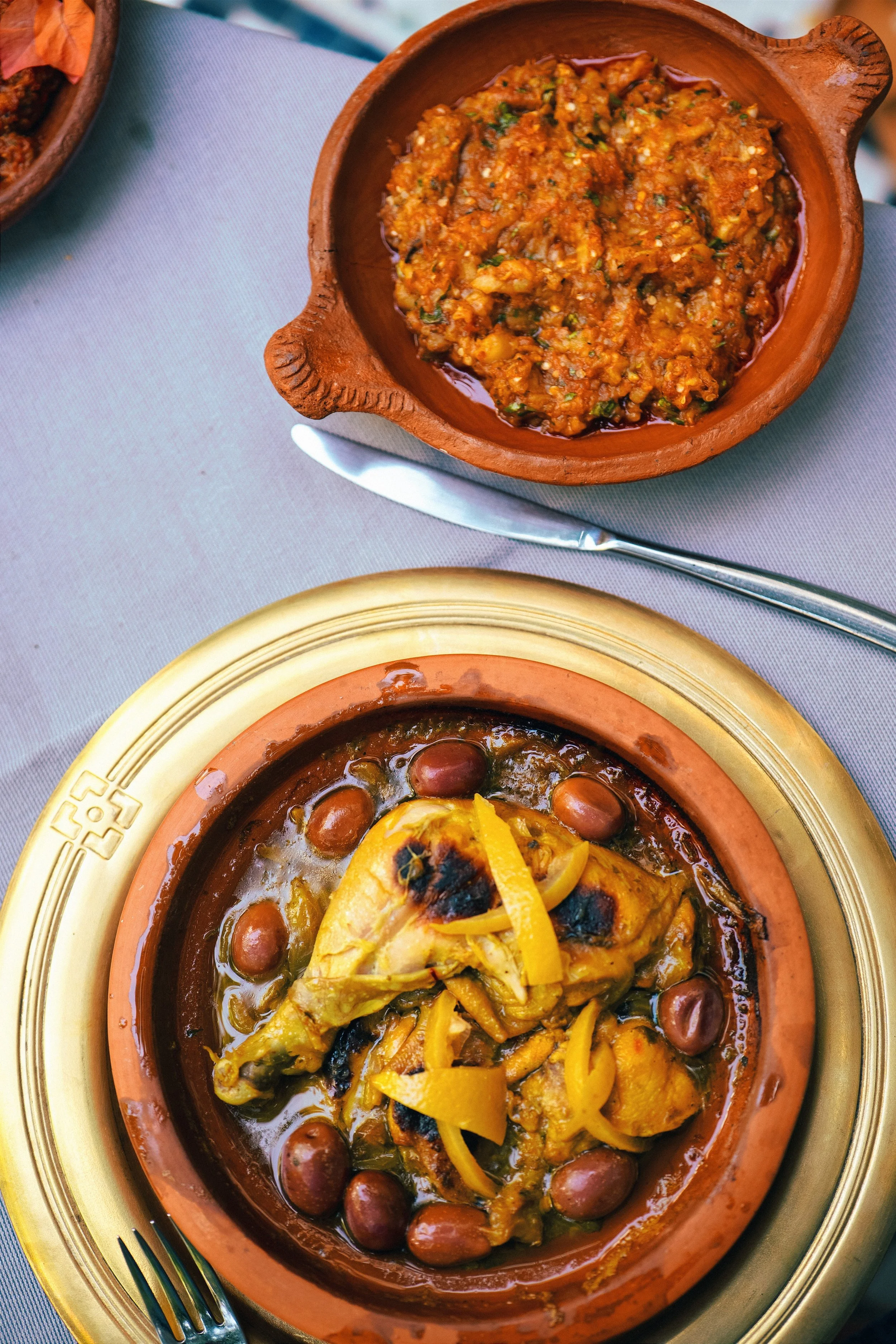
Chicken tagine and zaalouk.
On our way back to Palais Amani, Meyram shows us to a stall with sweet pastries, sharing her grandmother's favourite, chebakia. Each rose of deep-fried pastry is infused with sesame, anise, and orange blossom water, then bathed in honey and finished with toasted sesame seeds. Intensely sweet, chewy, and complex in flavour, whilst tied to tradition in Ramadan, it can be found year-round in Fes as a sweet treat.
The Kitchen
On our return, after a short break for mint tea, we take our positions at the Fez Cooking School at Palais Amani. The open kitchen is situated atop the roof, a serene spot where bougainvillaea and jasmine creep up the walls and pots of herbs and tomatoes bask in the sun, overlooking the courtyard below and the mountain range beyond the old town's nearby walls. Our stations are pre-set with our newly acquired produce, washed, and required equipment, arranged. We turn to the task at hand: preparing our next meal.
We place plump aubergines over an open flame to char and steam, in preparation for our zaalouk, a side dish or a dip for bread.
Meanwhile, we look to one of our mains, a vegetable tagine, a surprisingly simple dish to prepare. Peeling and slicing courgette, carrot, potato, and onion, we arrange them, layer by layer, with aubergine too, into a clay pot. Topping with a mixture of grated garlic, turmeric, saffron and black pepper, we pour over water and add olive oil once boiling. Leaving the covered dish to cook for 35 minutes, we turn to our other dishes.
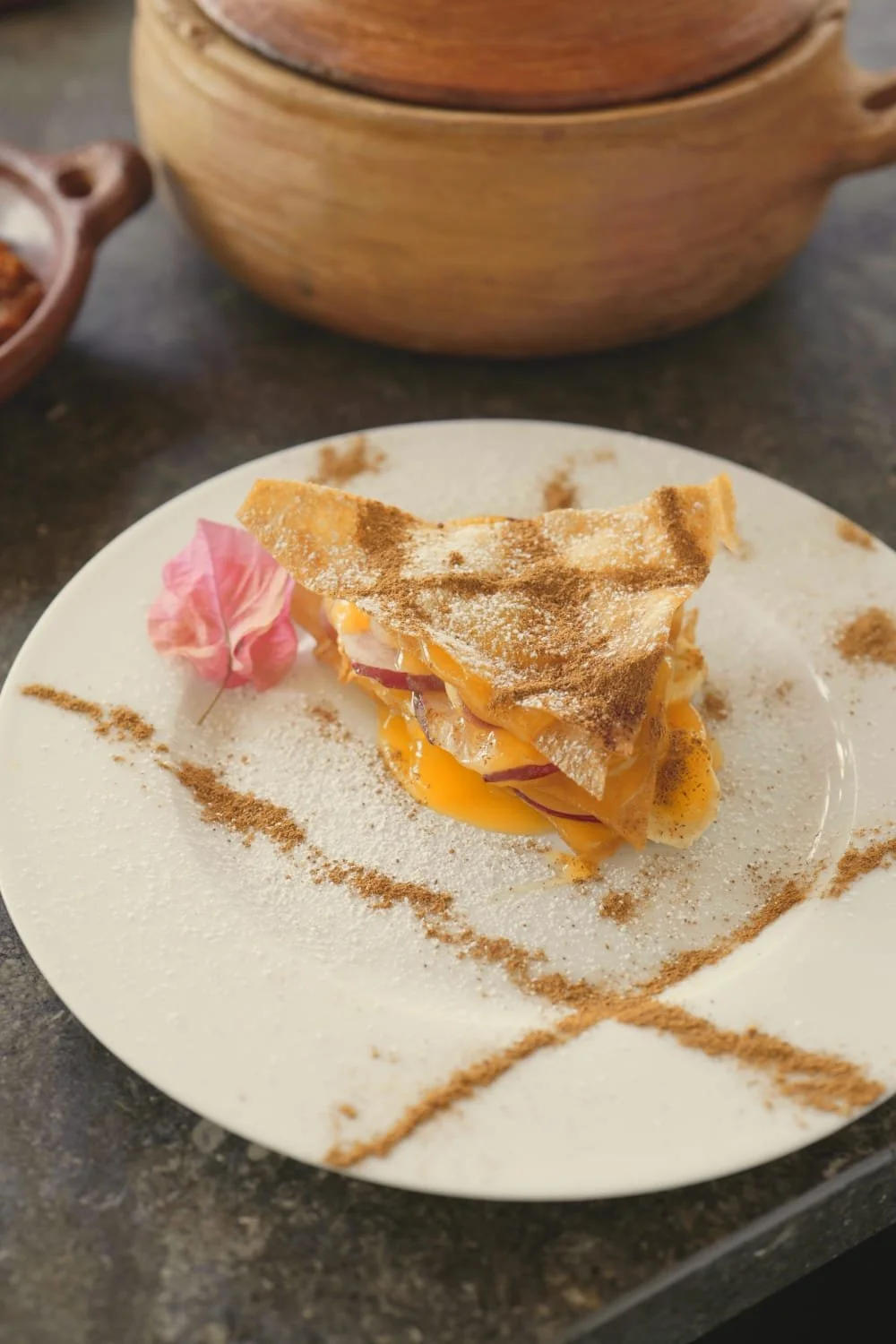
Jawhara, a dessert of fruit and pastry.
We grate fragrant, ripe tomatoes and garlic, placing the pulp into a pan of glistening olive oil, stirring gently as we cook in cumin, paprika, and chilli flakes.
We strip the skins from our aubergine once scorched, and chop the steamed flesh roughly before adding it to our simmering pan, keeping a close eye as the mixture reduces. Once off the heat, we add our bushel of finely chopped coriander, stems and all, with a drizzle of olive oil. Served either hot or cold, our zaalouk is ready.
Our next task, our dessert, involves mixing orange juice, sugar, and cornstarch, then boiling it with cinnamon sticks to create a fragrant fruit custard. While we watch the mixture closely, Chef Oussama fries triangles of pastilla dough (similar to filo). Turning back to our clay pots for just a moment, we add our preserved lemon to the still-reducing vegetables in our tagines for 10 minutes before we take them off the heat.
To finish our dessert, jawhara, we layer thin slices of peach, paper-thin fried dough, and custard, repeat to a glorious height, and dust with a pinch of powdered sugar, ground cinnamon, and bougainvillaea petals.
By the late afternoon, we take a drink and dine on the exquisite spoils of the day, ever more satisfying by our own hands. Replete from a day of knowledge, experience, community and beautiful food, it’s a day exceptionally well spent.
The Fez Cooking School at Palais Amani offers tailor-made group or private cooking experiences in a unique setting, open to residents of Palais Amani and day visitors.
Prices start at €70.00 for a 2-hour Fez Cooking School Group Workshop, without a souk visit.
For more information, visit Fez Cooking School, get in touch at contact@fezcookingschool.com, or book directly at Palais Amani.
