
Neemrana Hotels Review: Rajasthan's Most Remarkable Heritage Stays
Discover how Aman Nath's Neemrana transformed abandoned forts and palaces into some of India's most remarkable heritage hotels, from Neemrana Fort Palace to Hill Fort Kesroli in Rajasthan
There is something undeniably seductive about a ruin. A crumbling bastion, a weathered archway, a staircase leading nowhere – all of these fragments of the past possess a melancholy beauty that invites the imagination to wander. We instinctively try to picture the lives once lived there, the lives it has witnessed: royal processions, family dynasties, grand celebrations and quiet moments of heartbreak and scandal, each long since forgotten by history.
However, heritage cannot survive on admiration alone. Left to neglect, even the grandest of monuments eventually succumb to time. The romance might remain, but the architecture inevitably fades and crumbles.
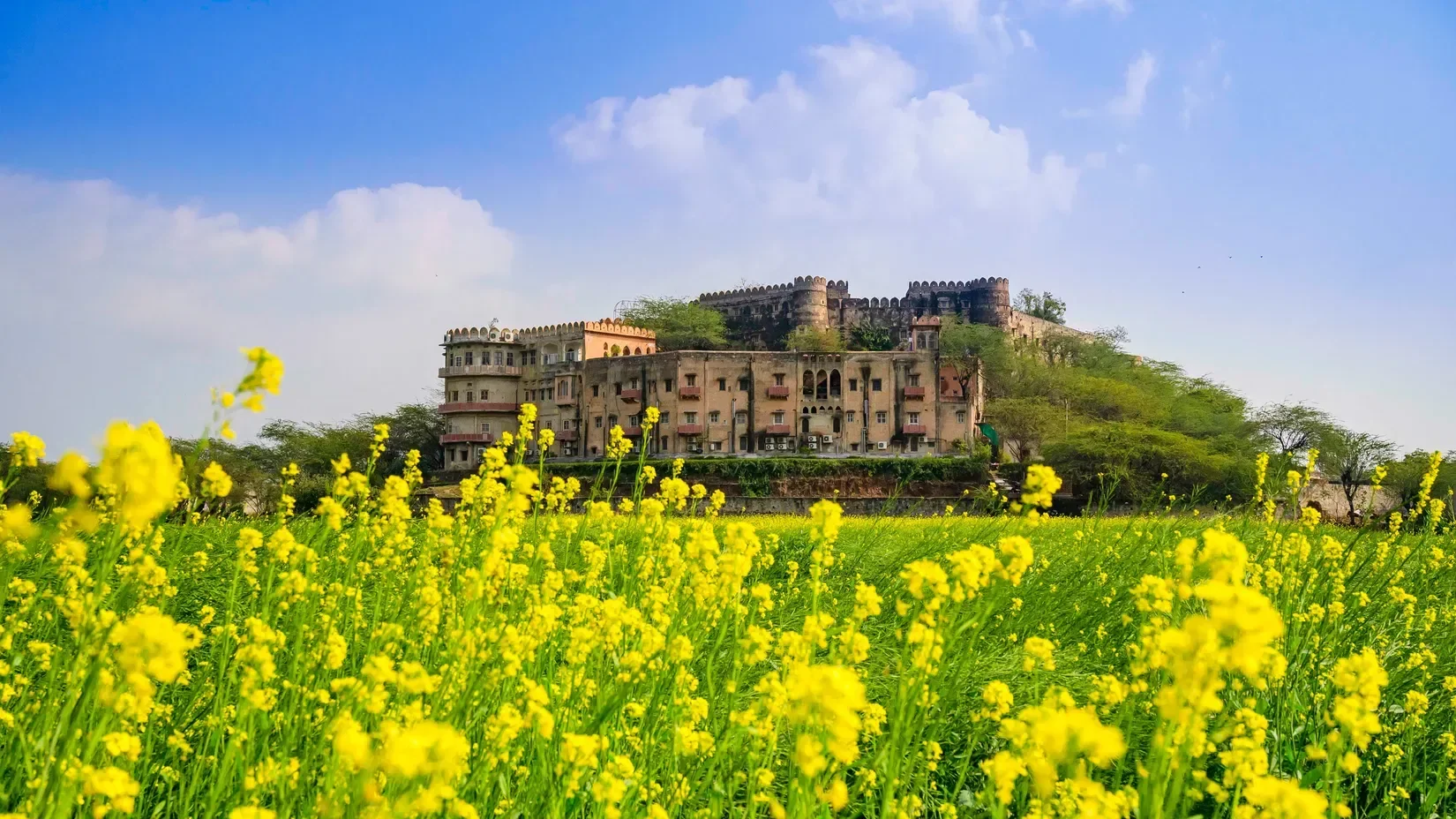
The 14th Century Hill Fort Kesroli, a Neemrana Hotel
This is where the hospitality industry can become something genuinely meaningful, and offer something far more significant than fluffy towels folded into improbable shapes. After all, at its highest expression, hospitality is stewardship as much as it is escapism; the best hotels preserve craftsmanship, safeguard cultural memory and ensure that historic buildings remain part of the living world. That they also provide somewhere comfortable to sleep after one too many martinis is often secondary to that far grander, nobler purpose.
Few organisations embody this philosophy more completely than Neemrana; a hotel group operating solely in India with a portfolio of thirteen historic properties, spread across the subcontinent.
The Keepers of India’s Ghostly Grandeur
Founded by historian Aman Nath and the late French diplomat Francis Wacziarg, Neemrana was built upon a deceptively simple idea: that abandoned historic buildings could be saved by making them useful again. Rather than transforming India's neglected hill forts and palaces into sanitised museums, they restored them as living spaces. Their famous description of themselves as creators of "non-hotel" hotels is not marketing fluff. It is a mission built upon a simple but irresistible premise: When staying at a Neemrana hotel, you are not visiting history. You are living inside it.
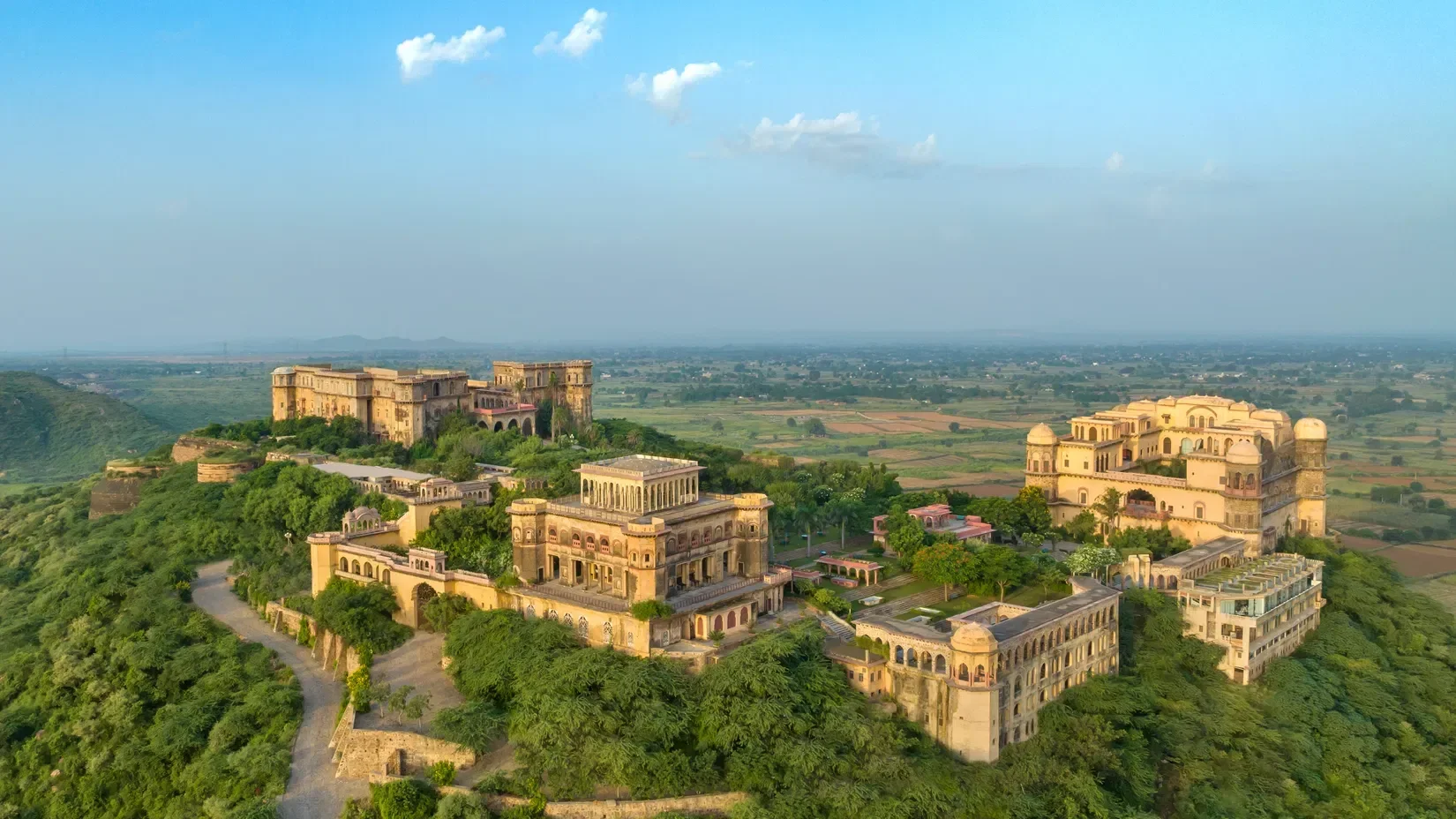
Tijara Fort Palace, Rajasthan
This year, I returned to Rajasthan, India for the first time since my early twenties. I’d first come to this part of the world as a slightly scruffy and rather clueless teenager, somehow traversing the Thar Desert with minimal funds, a pocket full of immodium and very little idea of where I’d end each day. Now, armed with a fully developed frontal lobe and a far more sensible attitude towards accommodation, I knew Neemrana had to feature heavily on the itinerary
As such, I headed out from the careening chaotic beauty of Jaipur into the wilds of India’s most regal state, my compass set for two of the group’s flagship properties: Hill Fort Kesroli and the inimitable Neemrana Fort Palace.
Both had a remarkable impact; neither property feels remotely like a conventional luxury hotel, and neither felt like they could exist anywhere else on Earth. Instead, they felt as though they had evolved organically over centuries, only reluctantly accepting the modern idea that guests might wish to stay the night. That, ultimately, is their charm.
Hill Fort Kesroli Review: The Luxury of Silence
Modern luxury all too often revolves around activity, optimisation and carefully curated experiences. Hill Fort-Kesroli offers something increasingly rare: once within its ancient walls, very little happens – and that’s precisely what makes it so wonderful.
Perched atop a dark ridge overlooking the plains of Alwar, this 14th-century Yaduvanshi Rajput fort feels almost purpose-built for withdrawal from the modern world. There are no crowds, no aggressive itineraries and very little temptation to spend your days rushing from one attraction to another. The fort asks remarkably little of its guests, and knows full well that its greatest luxury is silence.
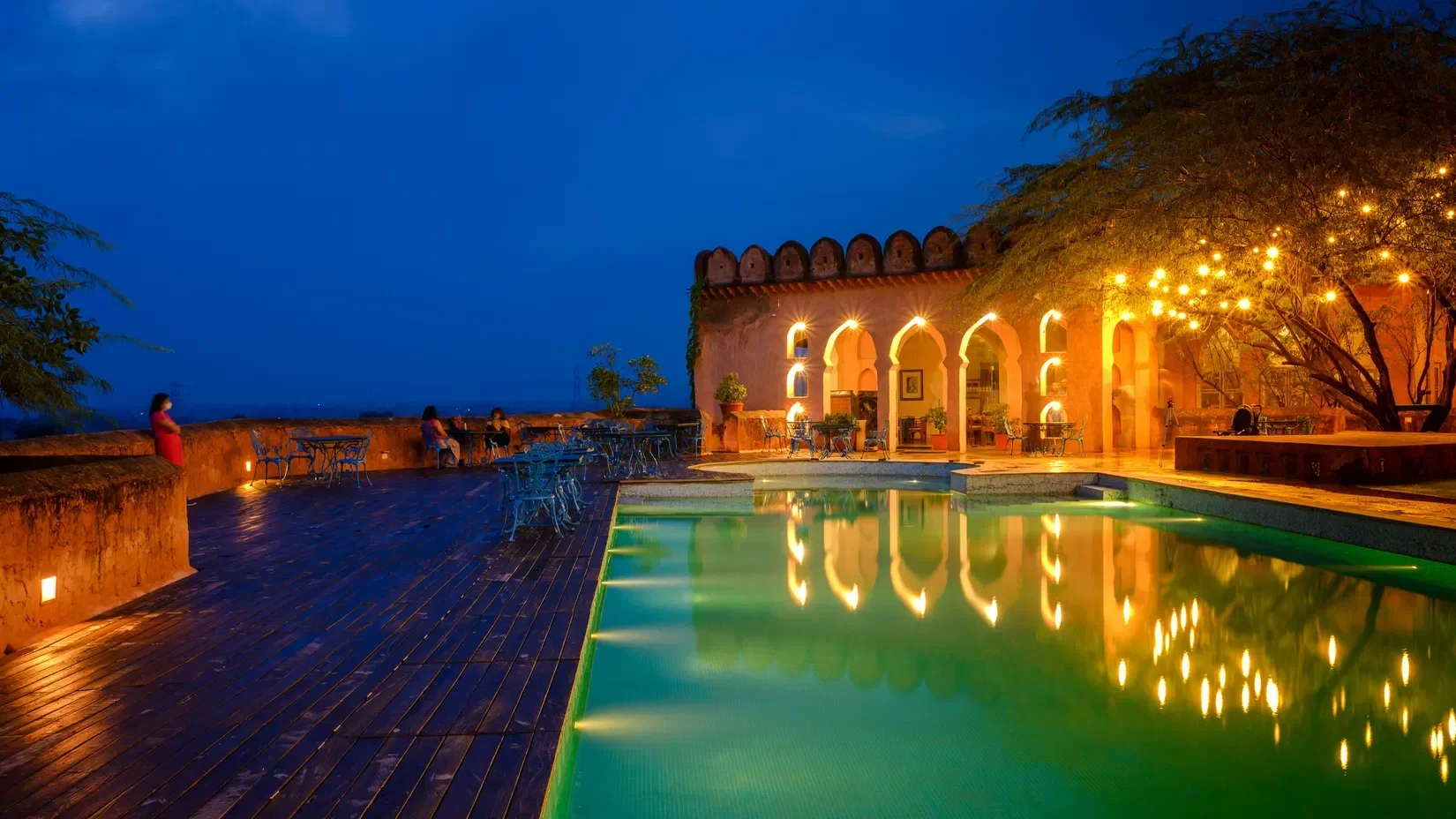
Poolside at Kesroli Hill Fort
Surrounding Kesroli are miles upon miles of mustard fields stretching towards the horizon in vast carpets of green and gold, occasionally dotted with the crimson sari of a local woman at work, the skies periodically carved by migrating swallows and birds of prey. Beyond the farmland rises a rugged mountain range which shields the Sariska Tiger Reserve – out there lies genuine wilderness, where great beasts prowl the undergrowth oblivious to the world beyond the jungle.
The view is best contemplated, naturally, from a poolside table while sipping masala chai and eating cucumber sandwiches, and yes, I’m fully aware that there is something delightfully absurd about that contrast.
One moment you are gazing across a landscape that has changed little in centuries; the next you are enjoying an afternoon tea experience (served without charge for all guests at four o’clock sharp each day) that would not look entirely out of place in the Home Counties. India has always excelled at these beautiful collisions of worlds, and Kesroli captures them perfectly.
Kesroli provides an almost overwhelming sense of stillness. I’m reliably informed that weddings at Neemrana hotels are very much sought after by affluent local families – it’s hardly surprising, considering the Indian wedding industry’s penchant for all things cinematic and breathtaking – and I imagine that sense of serenity can easily be replaced by a raucous brass band and a parade of groomsmen on horses. However, during my two-night stay, the afternoons stretched lazily over the hewn stone ramparts, and the corridors and cobbled walkways revealed themselves without any particular destination necessary.
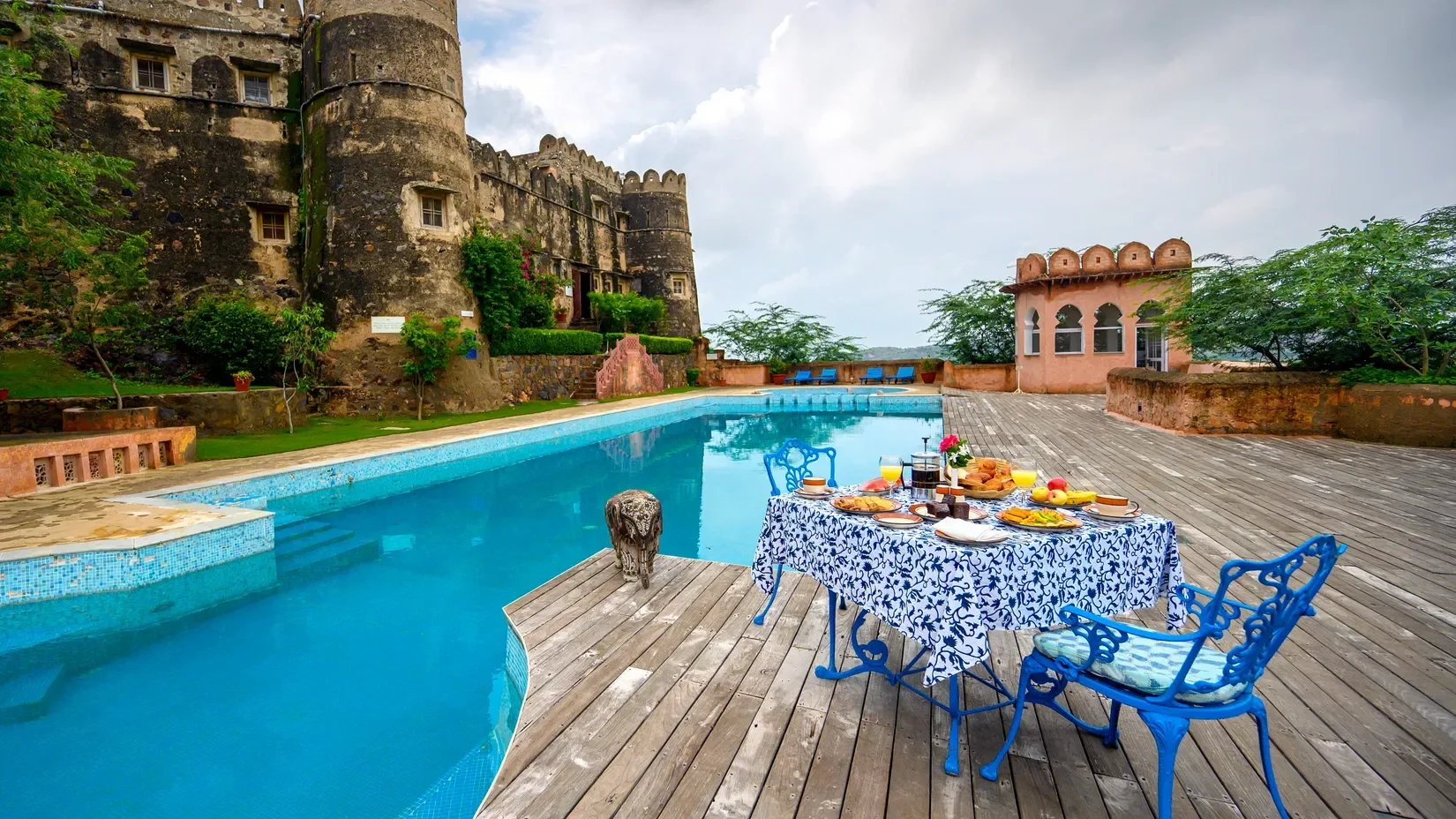
Afternoon Tea at Kesroli
The fort reveals itself gradually, as all good historic buildings should. Staircases appear to lead nowhere before depositing you on a hidden terrace, and small architectural details emerge unexpectedly from the stonework. Every corner feels earned, and there’s a glorious lack of finery or artificial extravagance – the building, the setting and the centuries more than compensate.
Indeed, in an age when luxury is often confused with excess, Kesroli offers a persuasive alternative: Sometimes luxury is simply having nowhere urgent to be.
Neemrana Fort Palace Review: Architecture as Theatre
If Kesroli is contemplative, Neemrana Fort Palace – the flagship property of the hotel group – is unapologetically dramatic, almost absurdly so.
Located just two hours from Delhi, the property rises from the ancient Aravalli Hills in a dizzying series of terraces, gardens, balconies, courtyards and ramparts. Originally dating back to 1464, the fort cascades down the hillside like an entire fortified town rather than a single building. The scale borders on the ridiculous. The fact that this hotel, with all its architectural bombast and period features, isn’t widely known outside of India (perhaps due to it sitting a good distance from the well-trodden tourist trail of the Golden Triangle) is even more confounding.
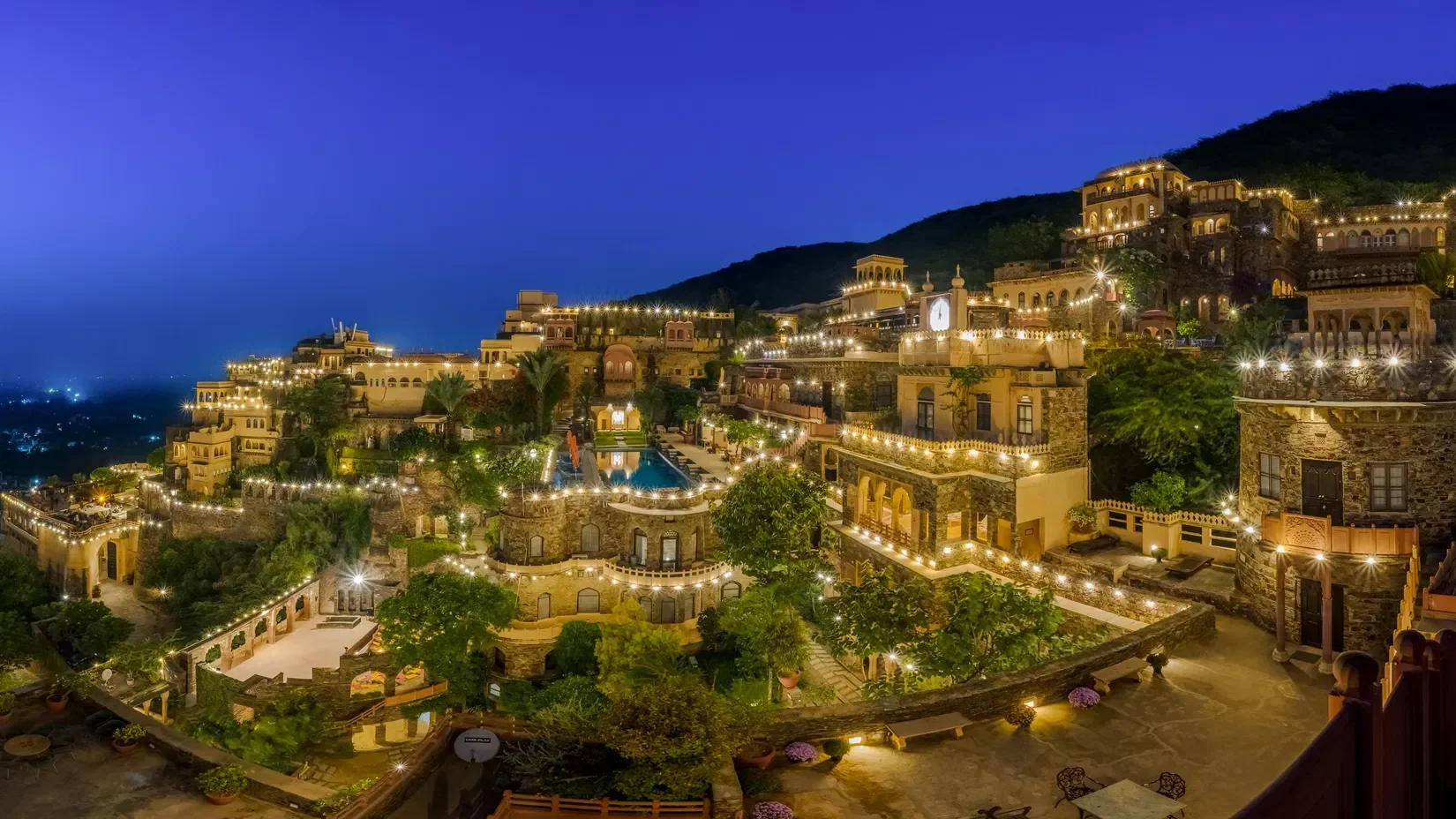
Unparalleled architectural bombast: Neemrana Fort Palace
Now, most luxury hotels have a tendency to reveal virtually everything about themselves within the first fifteen minutes. Even the larger, sprawling resorts come with a map or (god forbid) a smartphone app to stop you getting lost. Neemrana Fort Palace happily keeps its own secrets, and three days into my stay, I was still finding corners, ornamental gardens and more than I’d not yet discovered. More than once I found myself climbing 500 year-old staircases for no better reason than curiosity, then being rewarded by a mountain view, a sunset or an honest-to-goodness wild peacock perched on a ledge, apparently convinced the entire fort existed for its personal admiration.
Of course, there are also the moments you could never plan. On my second afternoon, the palace suddenly began echoing with the unmistakable pulse of thumping Indian pop music. Looking down into the labyrinthine streets beneath the fort, I discovered the source: a group of young locals had assembled an impressive sound system and were taking turns dancing in the street below. First the girls performed in brilliantly coloured traditional dress, followed by the boys, each group greeted with cheers and laughter from a small but growing crowd.
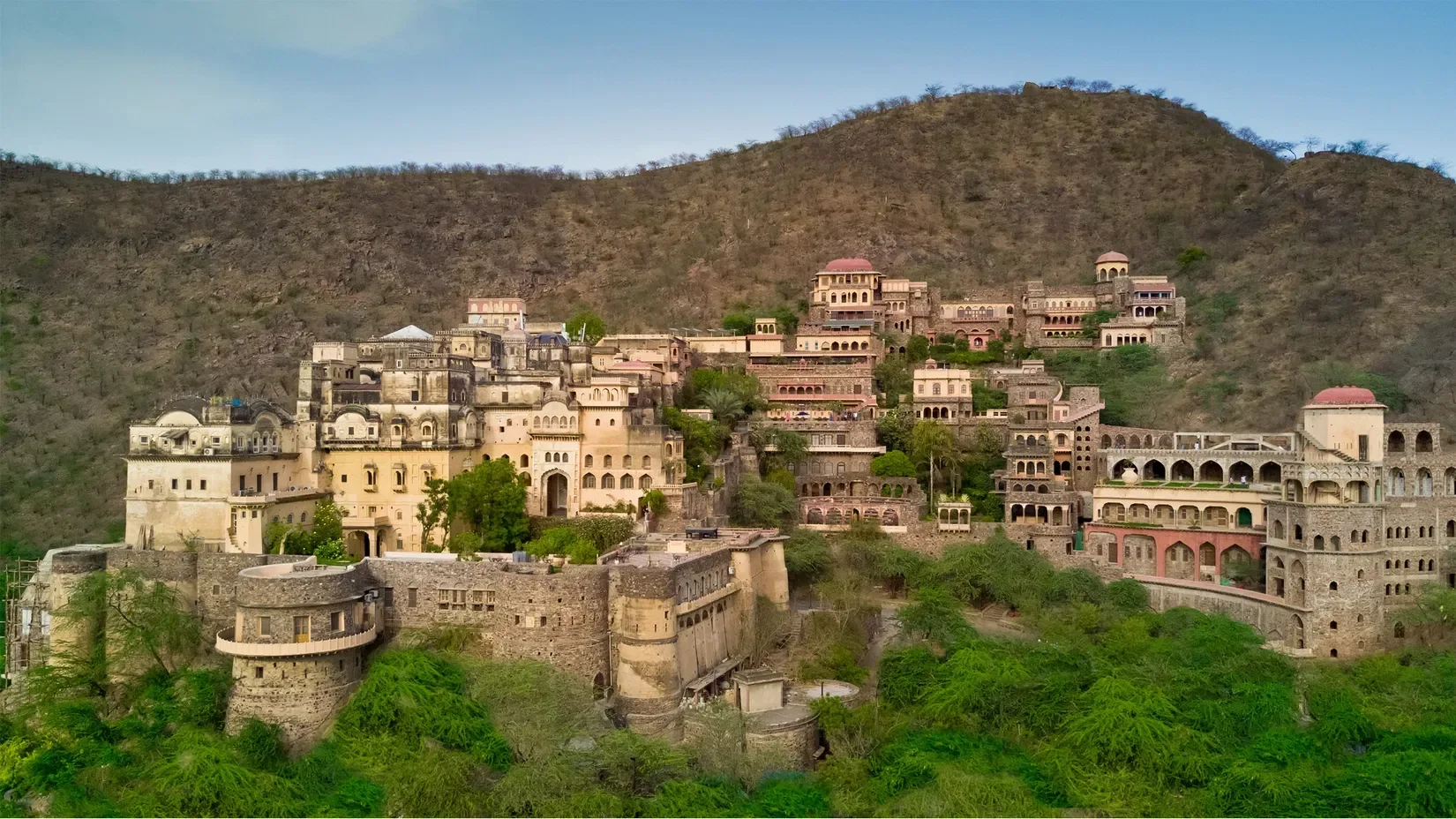
More Citadel Than Hotel, Neemrana Fort Palace
Perhaps it was the third cold beer. Perhaps it was the Rajasthani sun. Naturally, I couldn't stop myself. A few minutes later (after admittedly a few wrong turns and the occasional narrow street blocked by a gathering of cows) I found myself dancing alongside them, throwing shapes imported directly from Bristol into the backstreets of Rajasthan. For an hour, the centuries seemed to dissolve completely with the setting sun, the golden hour working its magic and setting each detail ablaze. Suddenly, there were no tourists and locals, no fort and town, no grand narratives about heritage preservation – there was music, laughter and a shared determination not to let embarrassment get in the way of a good time.
It was not only glorious and slightly mad, it felt oddly consistent with Neemrana’s philosophy: historic buildings aren’t preserved solely to be admired or tiptoed through in hushed reverence. They are maintained so that life – real life, in all its random, joyous wonderment – can continue unfolding and existing around them.
Beyond Rajasthan: A Map of Rescued Histories
What makes Neemrana particularly remarkable is that these properties are not isolated success stories. Across India, the hotel group has demonstrated that historic preservation can take many forms, and each of their projects have copious stories to tell of both ancient pasts and the right here, right now of the country’s ever-evolving hospitality scene.
There’s Tijara Fort-Palace (also in Rajasthan), which transformed an unfinished nineteenth-century palace into an artistic and cultural landmark. The Bungalow on the Beach in Tranquebar preserves a fascinating fragment of Danish colonial history along the Bay of Bengal. The Glasshouse on the Ganges offers a more contemplative relationship between architecture and landscape, while Deo Bagh in Gwalior protects a remarkable historic estate of temples, pavilions and gardens.
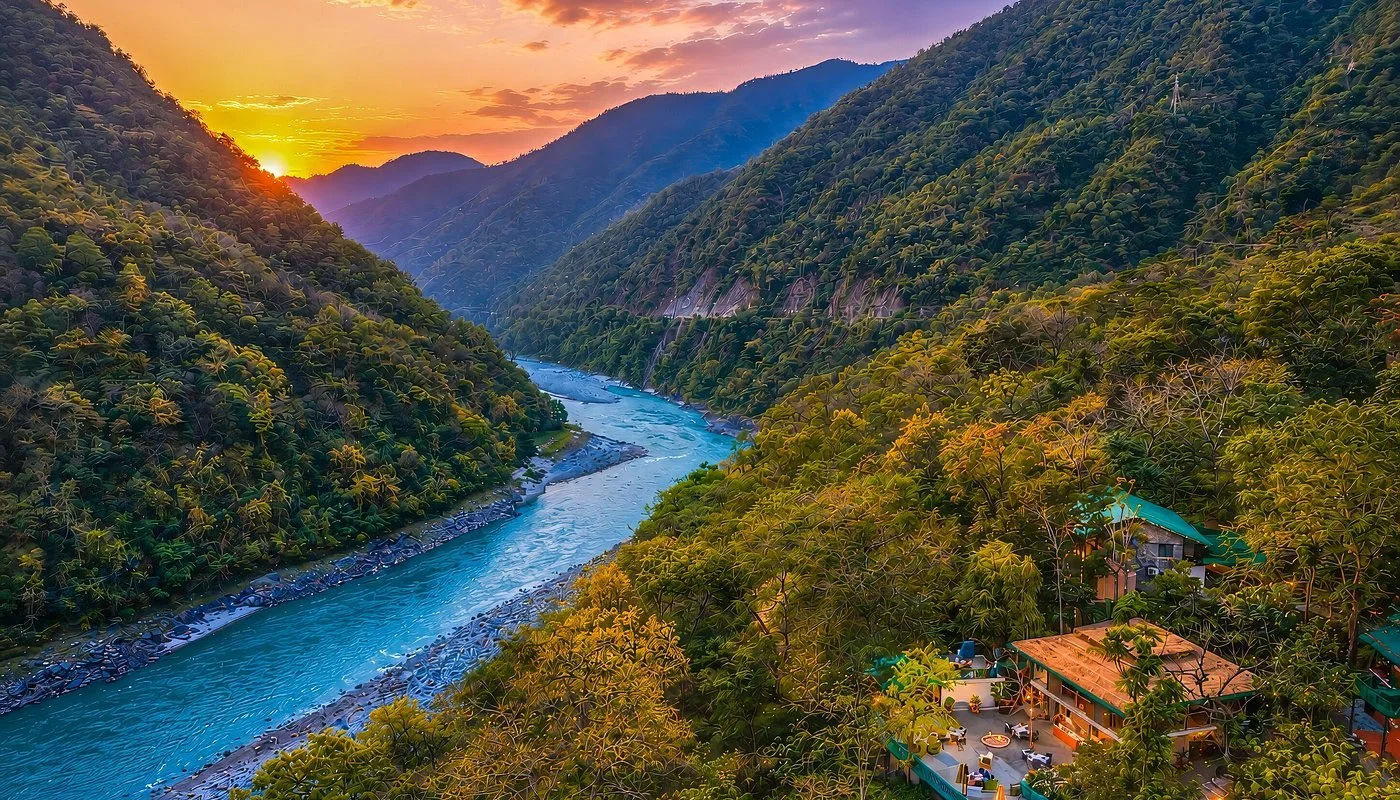
The Glasshouse on The Ganges, a New Addition to the Neemrana Collection
Taken together, these properties form something much larger than a hotel portfolio – they represent a map of rescued histories, breathing new life into buildings which less visionary managers would have stripped of their soul.
Luxury is often discussed in terms of thread counts, private transfers and increasingly extravagant amenities. However, my stays at Hill Fort-Kesroli and Neemrana Fort-Palace reinforced a simple truth: the greatest hotels are not always the newest, but are sometimes the ones that rescue something precious from being lost altogether.
After all, anyone can build a luxury hotel. Rescuing a centuries-old fort from oblivion and transforming it into somewhere people genuinely long to return to? That’s a far rarer achievement, and that’s precisely what Neemrana has spent decades doing.
Long may they continue.
Discover Neemrana Hotels here
