
Too Big To Be Special: Why True Luxury Can't Be Scaled
There is a slightly tragic comedy in watching something beautiful get entirely ruined by its own success.
We see it all the time: a hidden, perfect stretch of coastline becomes a hotspot, and within three seasons it is choked with souvenir stalls selling plastic inflatables. A brilliant, eccentric little jazz club gets written up in a glossy weekend supplement, and by next month you cannot get through the door because it is packed with corporate mid-levels drinking overpriced gin. We are, it seems, a species utterly obsessed with finding absolute magic, and then immediately suffocating it with scale.
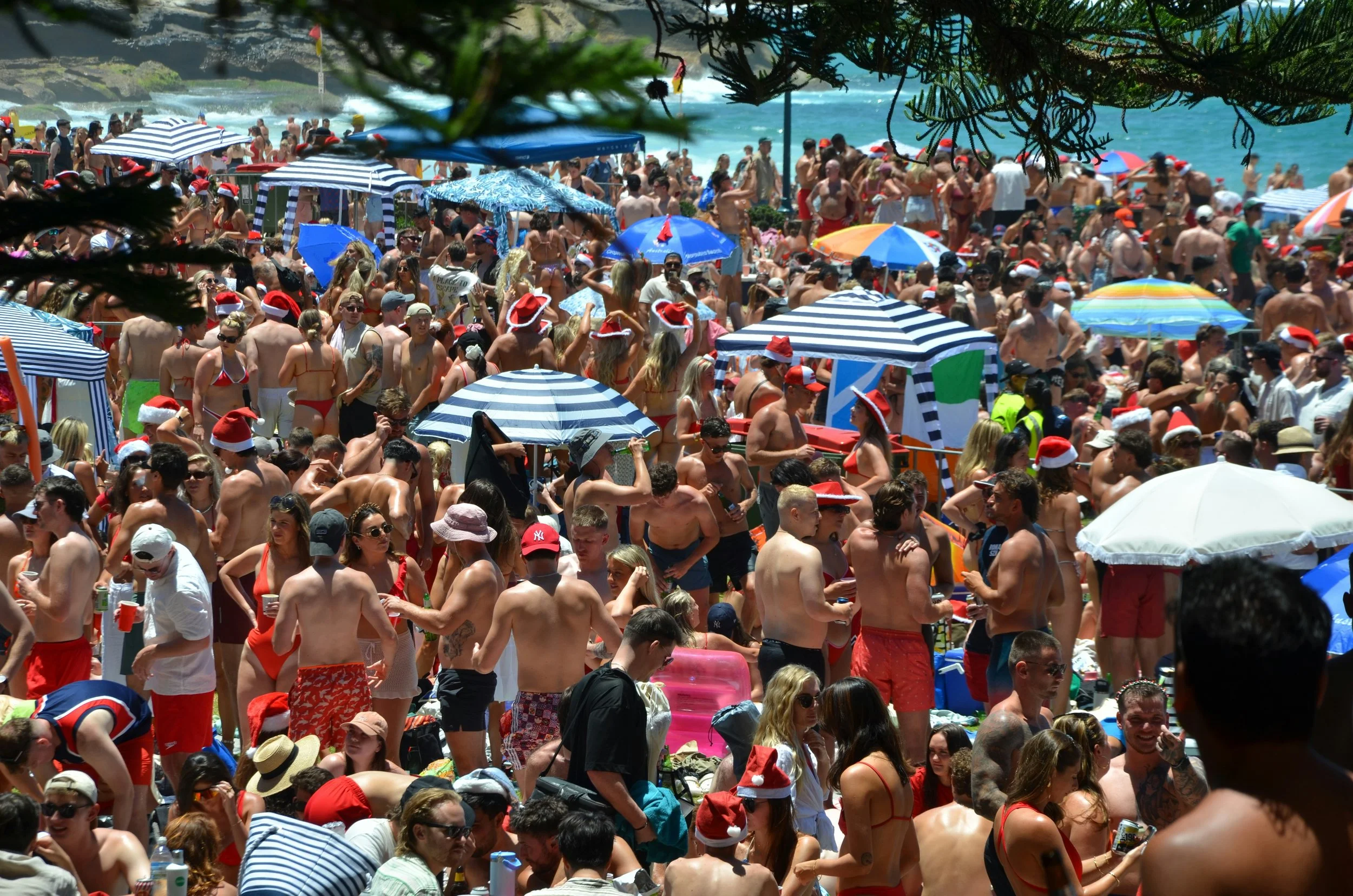
Suffocated by scale
I’m far from the first cultural commentator to declare the death of luxury and to solemnly read its eulogy to the masses, and I surely won’t be the last. Rest assured, this isn’t one of those articles – I have little to no interest in hammering nails into coffins, dancing on graves or scoping out the next big thing that’s destined to fill whatever void is left behind.
Instead, I’m here as a curious coroner, keen to uncover what it was that dealt the final blow. Because the truth is, the last iteration of contemporary luxury did not die because of some tragic, unavoidable decay. It died because it grew greedy, sprawled itself too widely and tried to make friends with all the wrong people.
Let’s take out our gilded forensics kits and take a look at some of the key points of evidence. For the past few decades, the self-appointed arbiters of rarefied taste made a fundamental error: they mistook the mass distribution of exclusive things for a kind of noble democratisation. In doing so, they managed to systematically break a sacred, unspoken rule of the universe: that experiences, flavours, locations and objects that have established themselves on scarcity simply cannot survive being replicated a million times over. Those that do survive ultimately transmute into something else entirely.
Consider the great fashion houses of the world, those which have built their entire brand and persona on the most meticulous definition of craftsmanship and attention to detail. To pride oneself on making a handful of beautifully-stitched items each year is something to be cherished. Once that handful becomes a few thousand, then a few hundred thousand, the brand hasn’t succeeded in scaling luxury. Instead, it has scaled itself out of luxury, leaving behind little but branded keychains, boring perfumes and tote bags in its wake. The masses may be consoled, but the soul has long since left the building.
Celebrating the Soul of the Six-Room Hotel
While this phenomenon has most obviously hit many of the great fashion houses of yesteryear, I feel the more fascinating and altogether more frustrating side of this fall from grace can be found in the travel and dining industries.
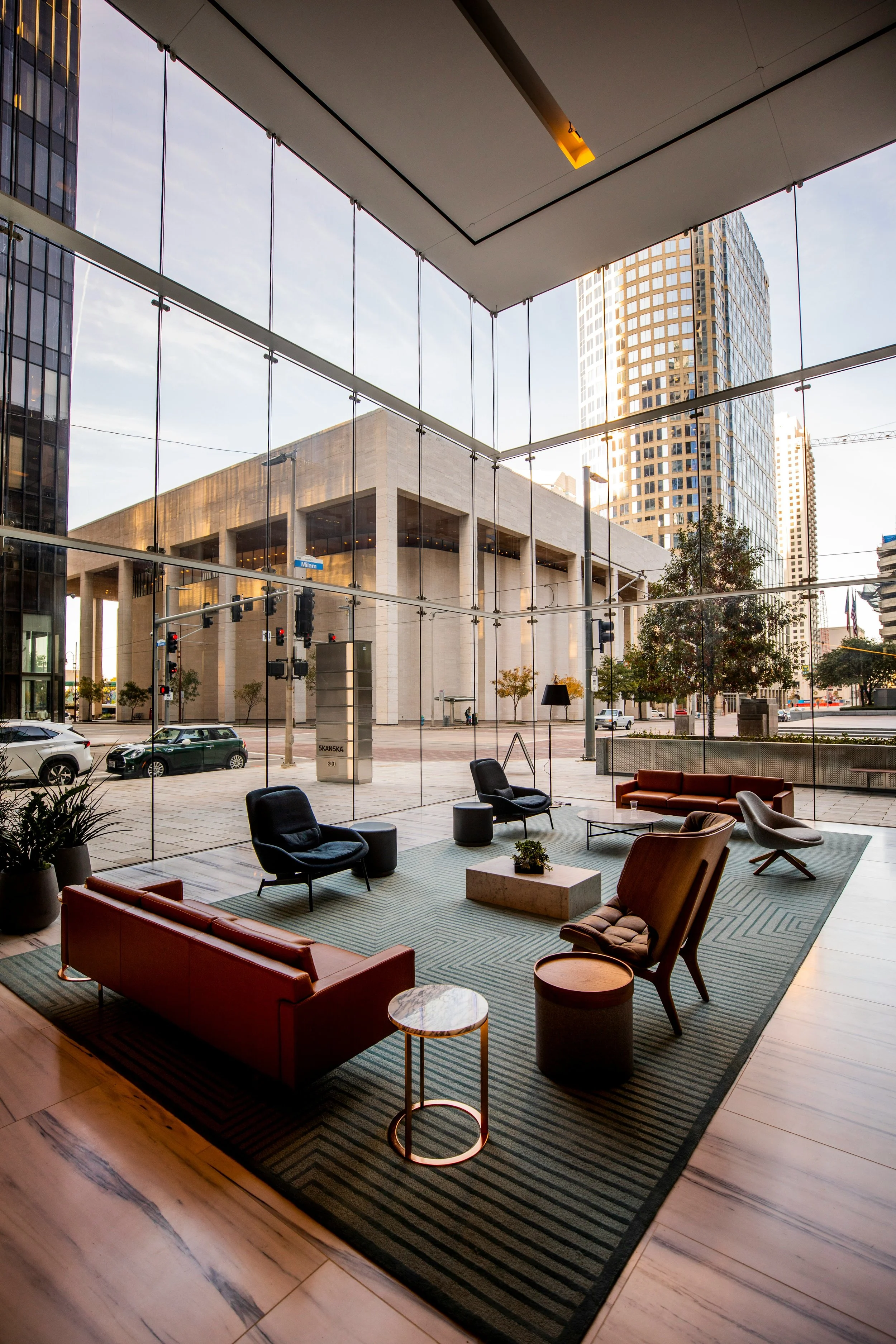
Designed by committee to say precisely nothing
After all, this minor tragedy is no longer confined to the leather workshops of Paris or the watchmakers of Geneva. It has quietly, perversely and pervasively infected the way we travel and where we sit down to eat, and we’ve all been complicit in allowing some serious rot to take root. In hotels, restaurants and resorts the world over, we have allowed corporate logic to standardise our most intimate desires, trading the romantic, slightly chaotic magic of the unexpected for a glossy, focus-grouped illusion of prestige.
Consider the modern "luxury" hotel. We are told to admire the uniform precision of the global five-star resort, where the thread count is identical from Tokyo to New York, and where the concierge greets you with a script so polished it feels entirely devoid of human life. We’re dazzled by gargantuan chandeliers, made en masse in some anonymous factory we dare not ask too many questions about. We nod approvingly at landscaped gardens designed by committee, and wade through outdoor pools engineered to stop us wandering beyond the reinforced outer walls.
Is it comfortable? Undeniably. Is it luxury? Not anymore. Contemporary high-end hospitality has crossed that invisible line where it ceases to generate pure, unadulterated desire. The extraordinary has been flattened into becoming merely ‘premium’, and it’s accompanied by a tired Nespresso machine and a fruit basket featuring a slightly bruised kiwi. Worst of all? It’s boring.
The sad part of all this is that true luxury hasn’t actually gone away. It just refuses to shout, to break through the noise of orchestrated PR campaigns with astronomical budgets, wielding the equivalent of a marble loudspeaker. It’s there in an ancient, slightly drafty masseria in Puglia that refuses to expand beyond six rooms (and not out of some kind of pretentious aesthetic purism, but because adding a seventh would entirely ruin the delicate, unhurried rhythm of the kitchen). It’s there in the places where silence is something to be cherished, not filled. It’s in those places where craftsmanship cannot be compromised, because to do so would break too many hearts and end decades or centuries of continuity. It’s a long way from the nearest waterpark.
Real luxury takes time to cultivate. It’s stubborn in the best possible way. It often requires a host to forgo aggressive volume growth, simply because their soul is structurally incompatible with scalability. It survives on word-of-mouth, and that word is spoken in a revered whisper.
A New Definition of Luxury Dining
I make no secret of finding enormous pleasure in food. It’s a realm in which, when the stars of execution, passion and craftsmanship align, luxury manifests itself in its most satisfying and visceral form. However, the same capitulations have quietly broken the heart of modern dining that have dampened the soul of high end travel – the performance of luxury has become so entangled with the delivery of excellence, that many of us struggle to identify one from the other.
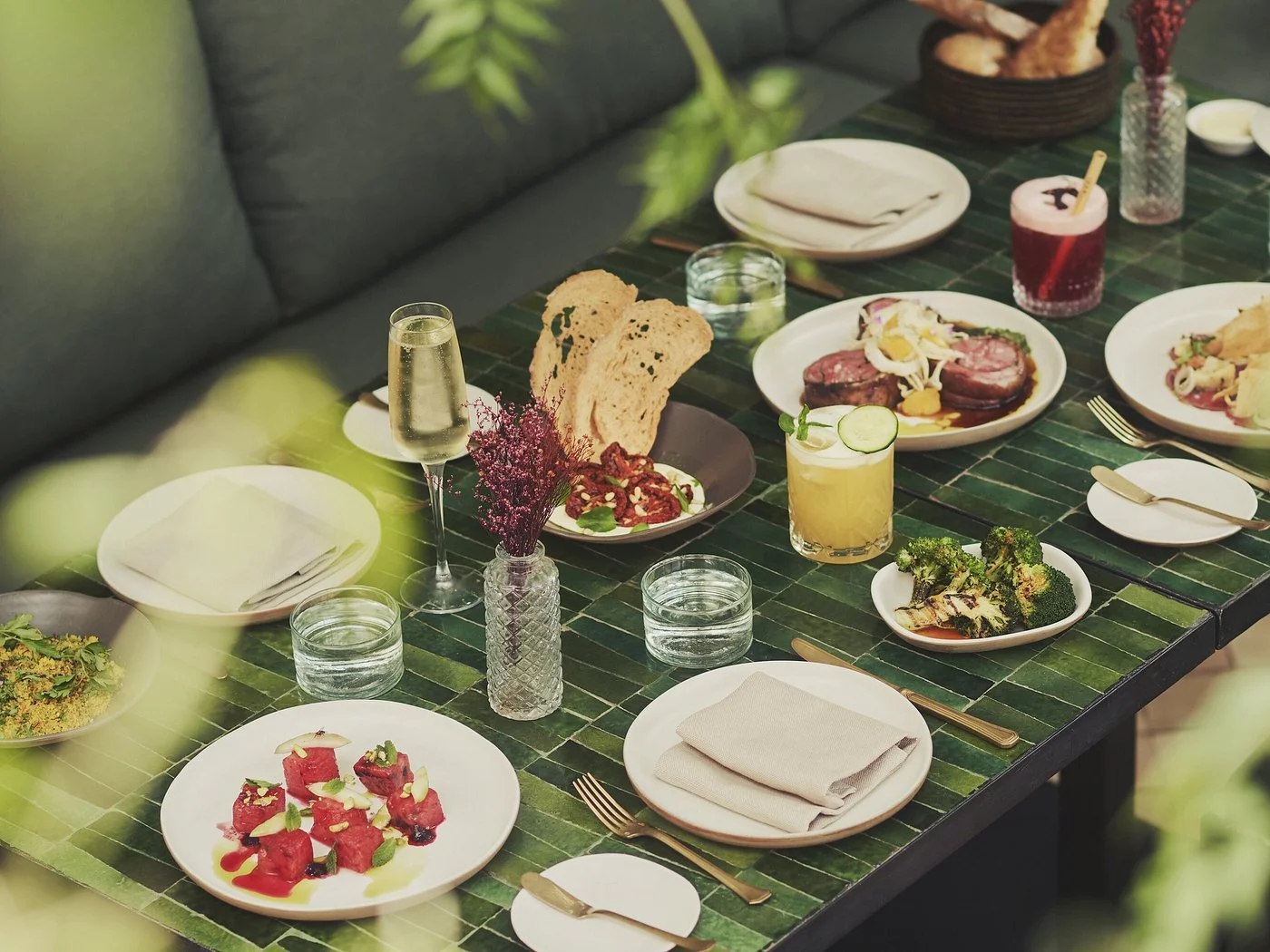
Lunch at Noujoum, Marrakech
Now, this year alone, I’ve had three meals which have genuinely moved me (alongside dozens of others that have been undoubtedly brilliant, and several more that have left me fairly cold). These included a feast at Marrakech rooftop bar, that revelled in the utmost abundance and generosity, all while exuding the flavours of the souk a mere few metres away. There was a tasting menu in a new restaurant in Poznan, Poland, where I genuinely detected the formation of a thrilling new iteration of an underrated national cuisine, and which absolutely communicated the passion and pride of a young, dynamic and ambitious kitchen on every plate. There was, finally, a smoked fish sandwich costing £3.25 in the carpark of a 350 year-old smokehouse in Northumberland, where centuries of love and care had gone into perfecting a humble ingredient, completely without fuss or embellishment.
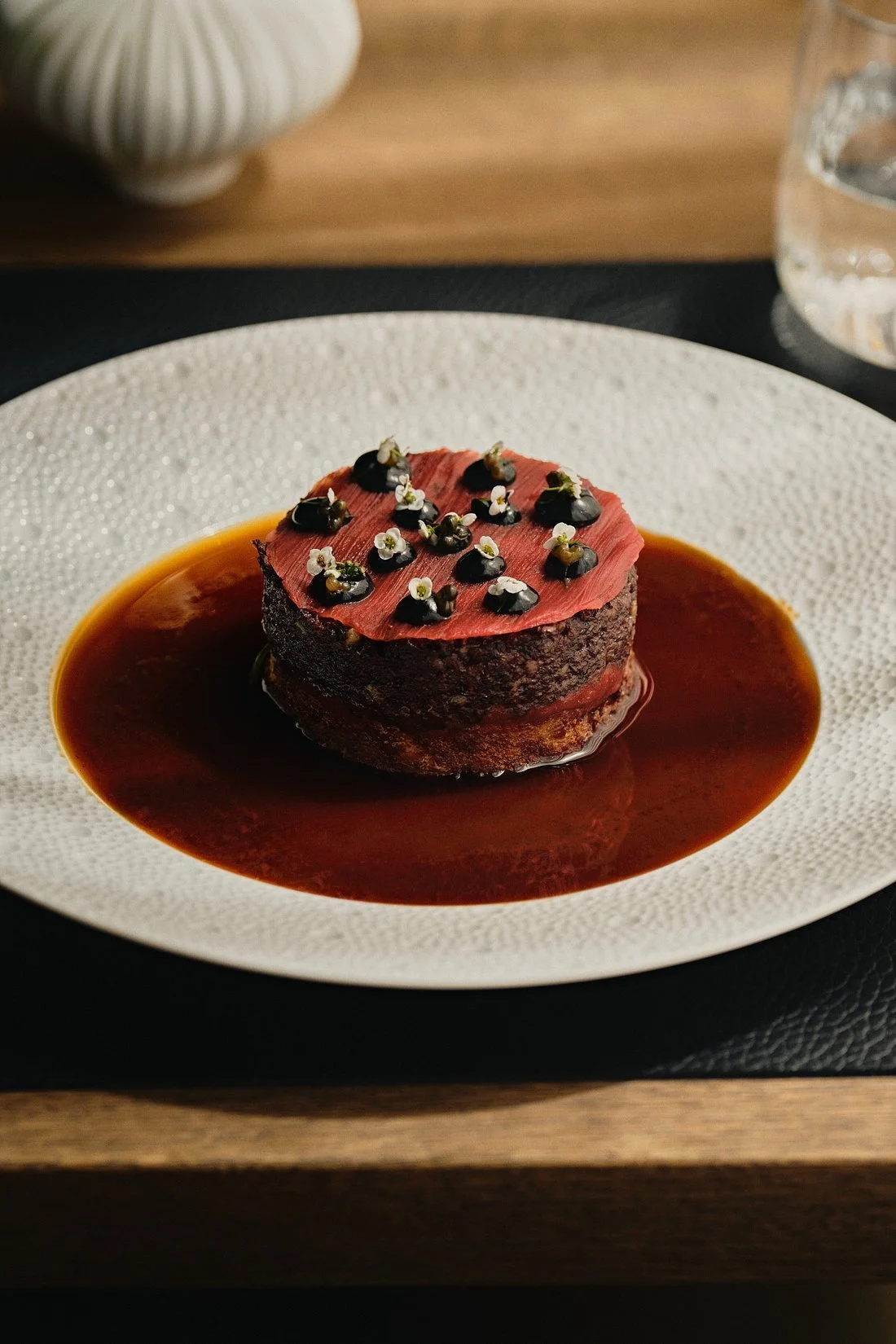
Putting Poznan on the map with passion: Arte Restaurant
Each of these meals were exceptional precisely because they were a long, long way from the loud, visually-saturated theatre of what we’ve come to recognise as contemporary luxury dining. They were in the ‘wrong’ place. They used the ‘wrong’ ingredients. They didn’t even attempt to have the ‘right’ ambience, soundtrack or concept. There wasn’t a minor army of twenty-somethings armed with tweezers, deploying micro-greens onto a custom-carved volcanic rock. They lacked the faint taste of corporate fatigue, and were – as a result – infinitely more delicious and unforgettable.
The institutions that tick every box of contemporary luxury dining do one thing very well: they speak loudly, wave their accolades at every opportunity and ensure their reservation waitlists become public knowledge. They boast eye-watering prices, and yet more often than not leave us entirely empty. And usually quite hungry, too.
Compare such institutions to those which weather the storms of fashion – those immune to the ever-changing ebb and flow of trends. True luxury dining is where expertise, skill and real love for hospitality are fundamental ingredients behind every dish, and such dishes are diametrically opposed to industrial replication. You already know what these places look like: they’re the small, unmarked osterias on cobblestone alleyways in Bologna, where a woman with forty years of muscle memory rolls out pasta by hand.
There are no industry awards here, no slick PR campaigns, and certainly no entry-level tasting menus designed to capture the "aspirational" consumer. There is only a physical limitation as a competitive moat – she has no interest in feeding a thousand people a night, as she can barely feed thirty before her wrists tire and it’s time to open a bottle of red and relax with friends.
That beautiful, stubborn limitation is the real essence of luxury. The value is entirely in the artisanal gesture, and knowing where to find such places – be they in bustling modern capitals, medieval piazzas, on the side of a lake somewhere approaching the arctic circle, or in a carpark in a windswept northern town – is the key we all should be seeking.
Here’s to the Power of Recognition
We are entering an era where the luxury of the next decade will not need to generate loud, universal desire; it will need to generate quiet recognition. Universal desire is cheap – we can see this everywhere via the hellscape of our social media accounts, now bristling with a million influencers extolling the unique brilliance of every single new hotel, restaurant and everything else imaginable… and it’s bought for pennies through campaigns, celebrity endorsements and the visual saturation of modern life. Recognition, however, cannot be purchased. Despite all the noise we’ve welcomed into our lives, this must still be earned slowly, through an uncompromised coherence that never bends.

Real luxury doesn’t need noise
It is the recognition of someone who knows exactly what they are looking at, and understands, without the need for a flashing logo or a long-winded explanation from a sommelier, why that specific moment occupies the place it does in the hierarchy of things. It is the quiet nod shared between two travelers who find themselves at a crumbling, seaside shack on the coast of Scotland, eating langoustines pulled from the water an hour prior. They sit there in the drizzle, fully aware that no amount of money could replicate the fog, the salt, or the absolute authenticity of the moment.
The future does not belong to the destinations or the brands that speak the loudest. It belongs to those that speak the least, and do so with such precision that every word, every ingredient, and every stayed night carries the weight of the silence around it.
