
Ana Mendieta Review: At Tate Modern, her work outlives her death
Campaigners and fans have long asked ‘Where is Ana Mendieta?’ - protesting her omission from major art institutions as well as her controversial death. Her arrival at London’s Tate Modern marks a significant evolution of her legacy.
I first came across Ana Mendieta in Claire Dederer’s Monsters — stories of ‘great art by bad people’. Mendieta’s role in the book is equal parts artist and victim: a sculptor who was “nowhere near eclipsing her husband” when she died falling from a window at the age of 36.
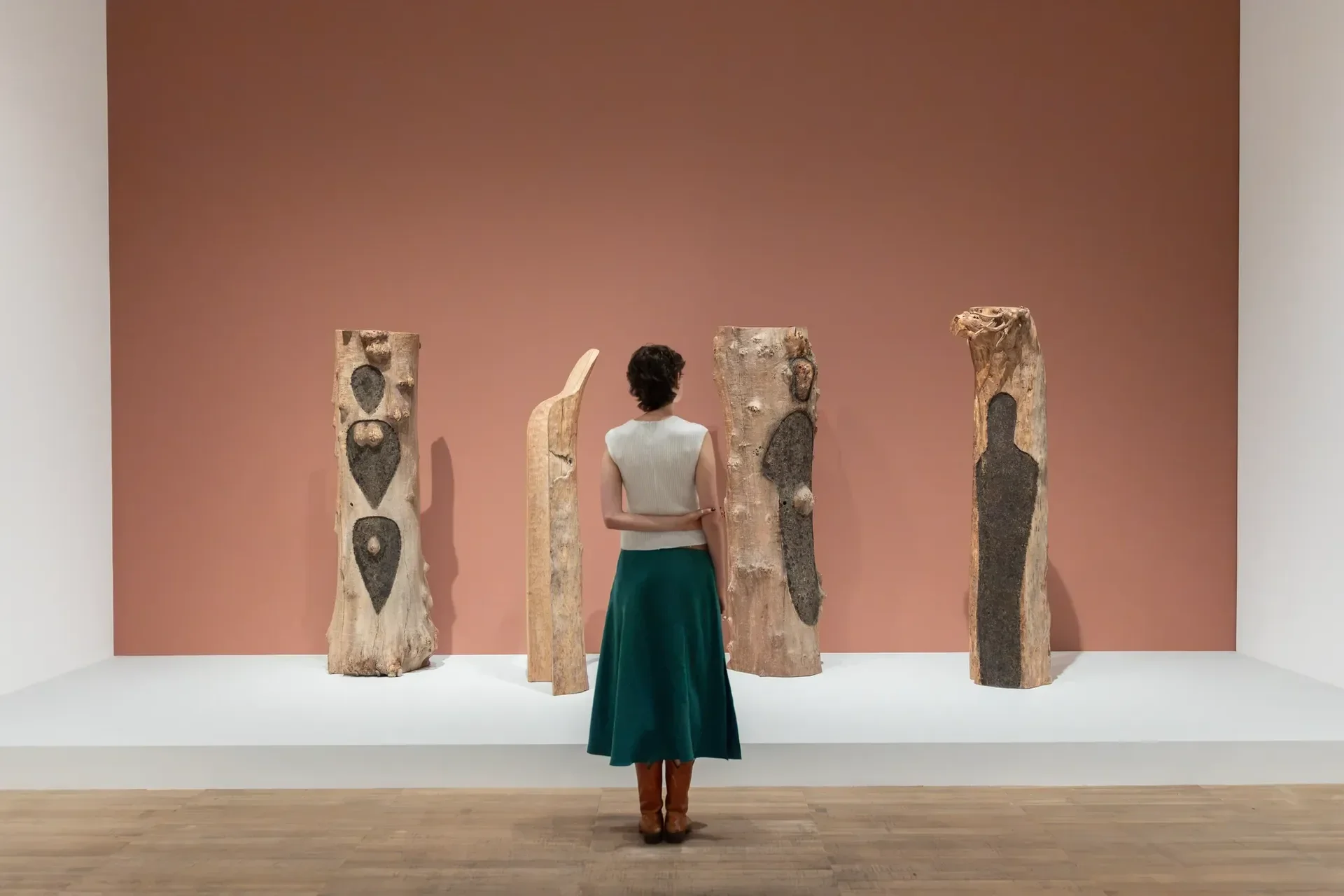
Ana Mendieta, Tate Modern 2026
The book, and her death, evoke a perennial question in art: how do we separate the art from the artist? It’s a dilemma that might bug fans of Mendieta’s husband, Carl Andre, who was charged and controversially acquitted of her murder. Since then, his exhibitions have often been met with protest: in 1992, 500 people crowded a Guggenheim exhibition opening with signs reading ‘¿Donde está Ana Mendieta?’, while a smaller group staged an event named ‘CRYING; A PROTEST’ at his 2011 retrospective in New York.
If the story has haunted his career, the impact on hers has arguably been greater. Often referred to at the time merely as ‘Andre’s wife’, she has been remembered, for the most part, as victim first and artist second.
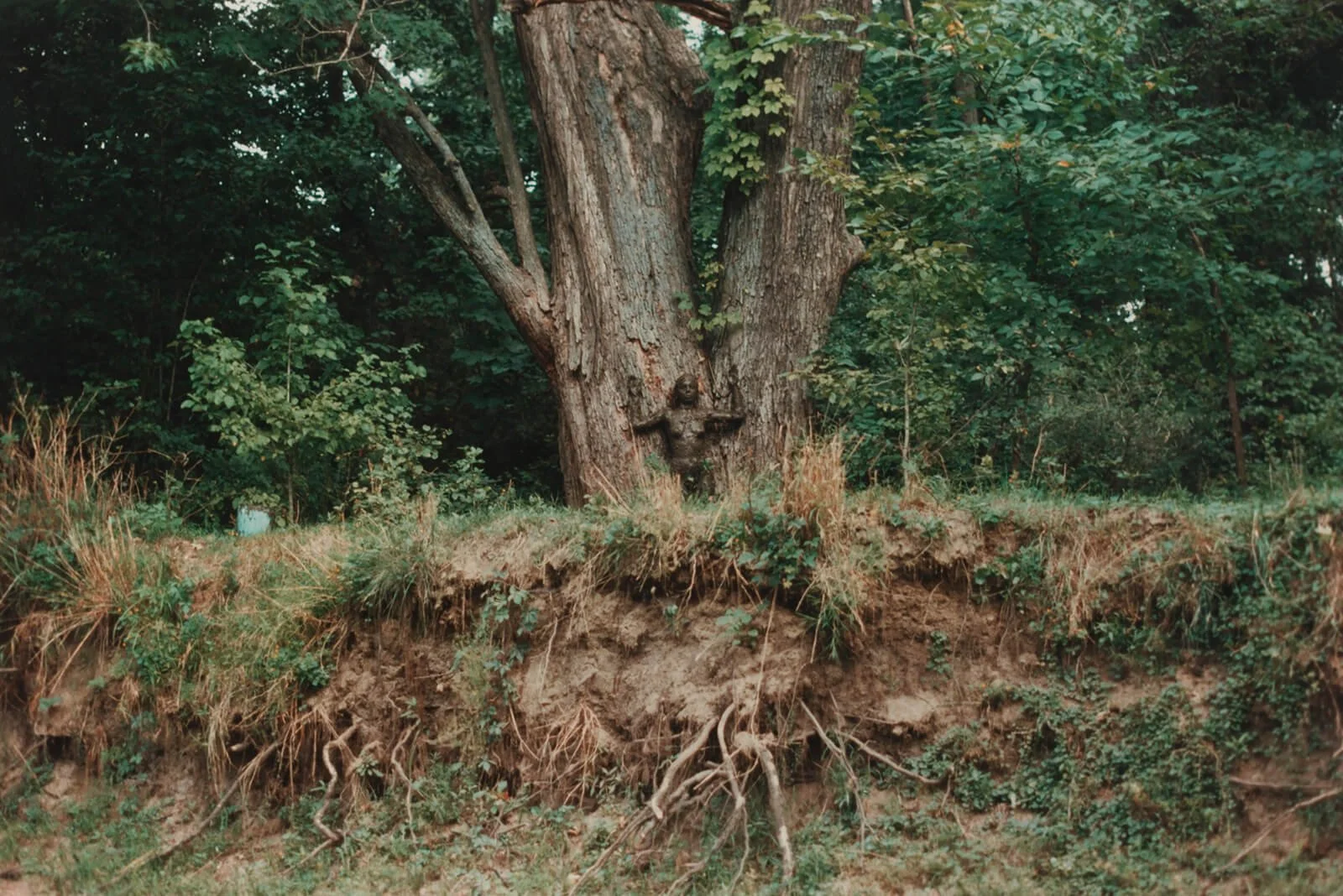
Silhueta, 1976
The Tate Modern seeks to set the record straight this summer. Just stepping into the lofty shade of the Turbine Hall and seeing her name advertised alongside Tracey Emin and Frida Kahlo - the other major exhibitions programmed at the gallery this year - speaks volumes on her artistic significance. But if Andre is a case study for separating the art from the artist, Mendieta holds up a moral mirror to the art world. After 40 years of skewed media focus, the shape of her legacy hinges on one question: how do we separate artist from victim?
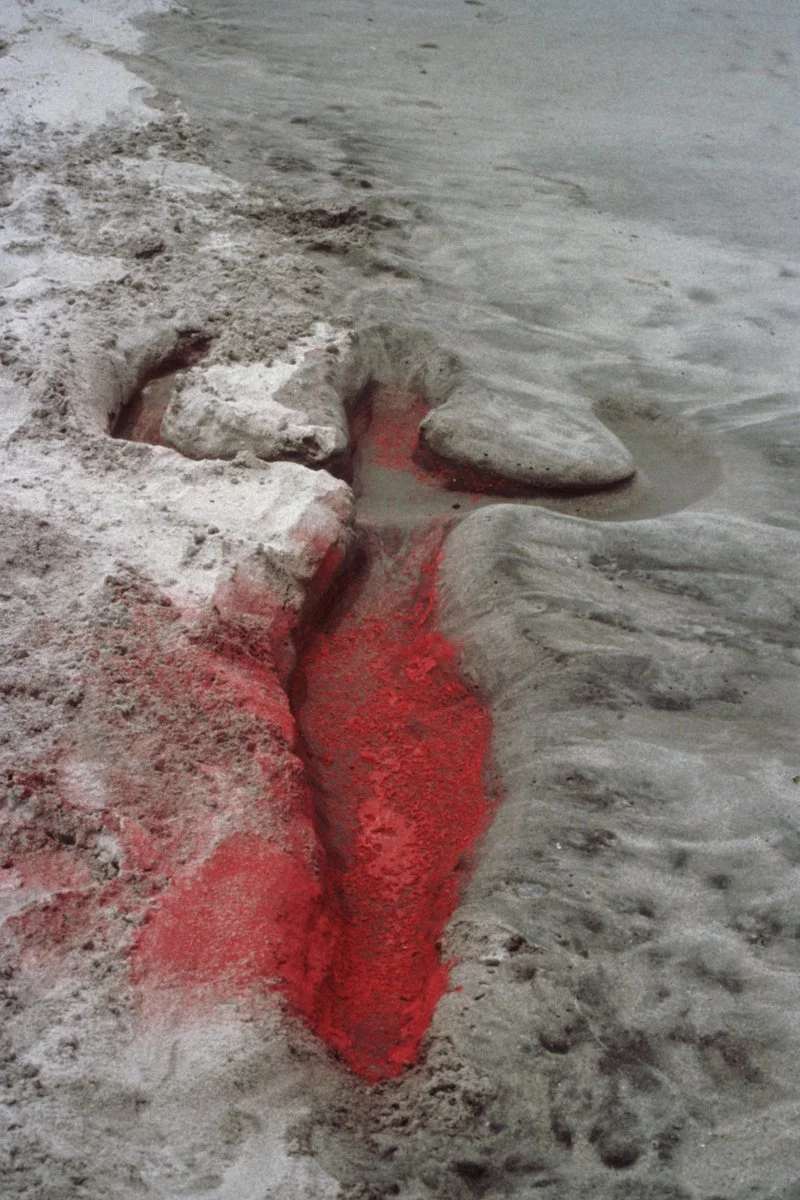
Sihueta, 1976
A body reimagined
The exhibition curators offer a pleasingly no-nonsense response. The art is displayed alongside a scant biography that will divide viewers into those who know the story, and those who don’t. Rather than a chronological display, the pieces are arranged thematically, highlighting the consolidation of key themes throughout Mendieta’s career — and obscuring its abrupt end.
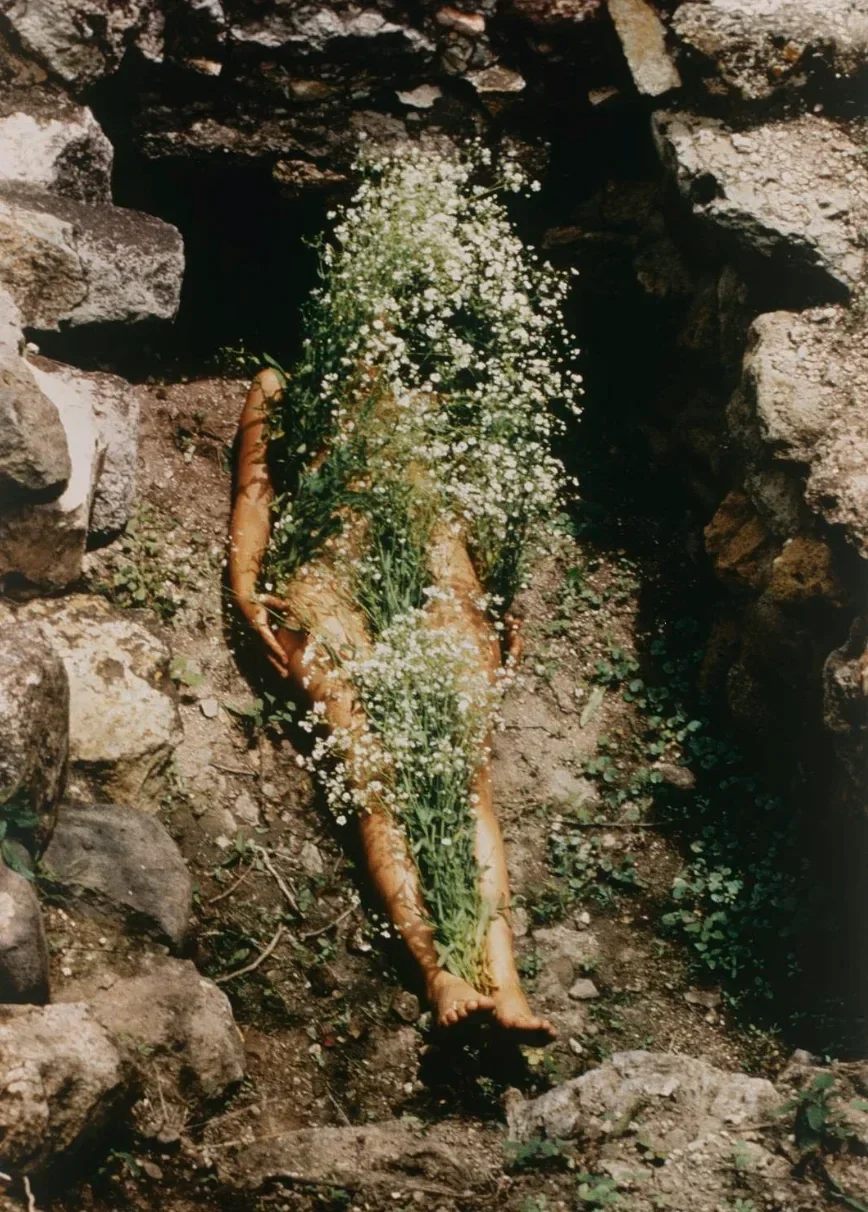
The show dedicates several rooms to Mendieta’s best known series, ‘Siluetas’. The photographs show natural scenes with increasingly ephemeral outlines of the female form. Beginning with her in the flesh, lying in a grave and adorned with flowers, she fades to an outline — snow stacked against a tree, buds in a hedgerow — and eventually nothing.
The fading outlines are suggestive of ‘ready-made siluetas everywhere’, as a contemporary of Mendieta’s commented. The effect is just as strong today, but with a morbid shadow. For those who know how her story ended, the space not only represents where a body could be but could have been. She has cast herself, in this self-described ‘series that will never end’ as perpetually present and permanently absent. The effect is spine tingling. Would a naïve viewer feel the same? Impossible to tell.
Her eerie prescience is a notable feature of the experience, but the collection tells its own stories too. Her sculptures, primitive figures that are carved, dug and burnt into rock, wood and sand, seem in turn to be dancing and praying. Across several decades and mediums they remain broad-shouldered and open-hearted, a raw product of the female gaze.
But there is an undercurrent of violence; one of the Siluetas evoked a grotesque memory from Southern China when I was in my early teens. Five pig carcasses were strewn across a dried-up river bed. A slim trickle of muddy water ran through and around them, each rivulet softening the boundary between body and resting place. Mendieta arranged sand, sea, and blood to the same effect.
The accidental advocate
Through all this visceral imagining you wonder whether it’s even necessary to ask about the separation of artist and victim. But the question proves impossible to escape at the end of the exhibition, which centres on ‘transformation’. To an audience primed with blood and graves and corrosive tides, the word feels like a weak euphemism for decay - and suddenly the elephant is back in the room.
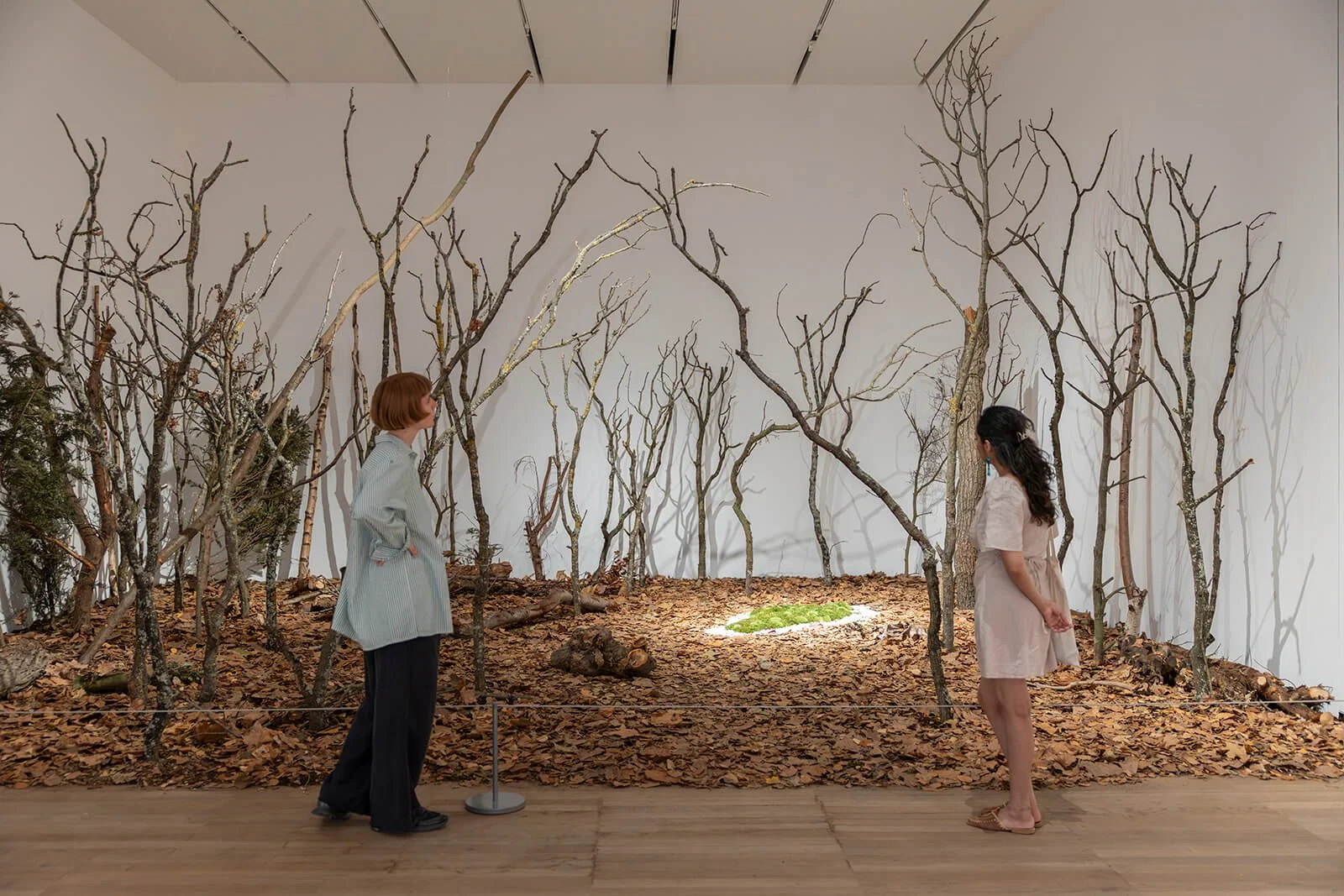
Immersion and interpretation
For those in the know, it’s impossible to judge Mendieta’s work without imbuing it with extra, unintended meaning. But if there is an opportunity cost to viewing her primarily as a victim, there is also one in sanitising her story completely.
Meaning beyond intention
All communication, including art, carries meaning beyond what’s intended. Language theory recognises the difference between what is said (or depicted, in art), what is intended, and what is understood: the listener's interpretation, influenced by context beyond the speaker’s control. Mendieta’s art has expanded way beyond her intended meaning, to include messages that we wouldn’t want to miss.
40 years of media coverage and protest have moulded her legacy around violence and inequality as much as her chosen themes of folklore and femininity. And people are listening: within the art world, the Tate’s Director described a program of ‘three extraordinary woman artists’ for the Modern in 2026. If not a deliberate nod to those who leaned on Mendieta to campaign for fairer representation in the arts, it is certainly a realisation of their goal.
Mendieta has also stood, for some, as a figurehead against gendered violence. But it is a dubious privilege to be co-opted to that particular cause, when her status as an artist is so much clearer than her status as a victim.
Now, (re)emergence
The big questions of how we treat women, victims and perpetrators, artist or otherwise, must be asked. But there are plenty of people living today ready to do that work; my mind jumps away from art, to the way my breath caught on reading Gisèle Pelicot’s statement that ‘shame must change sides’.
The Tate have understood that Mendieta need not be stood into this cause, and shown that all it takes to separate artist from unwitting victim is a stubborn focus on the art. We must allow Andre’s shadow to fade from public memory, and in time the true shape of Mendieta’s legacy will emerge.
Ana Mendieta is at Tate Modern until 17 January 2027, marking the first major UK exhibition of the artist's work in more than a decade. Tickets are available now, with free entry for Tate Members, and optional smartphone audio guides can be added for £5.
Want more art exhibition reviews? Explore our investigations into Tracey Emin at Tate Modern, Whistler at Tate Britain, David Hockney’s final exhibition at The Serpentine and Gilbert and George at the Hayward Gallery.