
Hartwell House Review: One of England's Finest Country House Hotels
Set within 90 acres of Buckinghamshire parkland, Hartwell House combines historic grandeur, fine dining, afternoon tea and one of England's most rewarding luxury country house hotel experiences.
We all spend an awful lot of time looking elsewhere for luxury. We shuffle between our homes and workplaces, daydreaming of drawn-out afternoons on the Amalfi Coast, willing the taste of a crisp rosé overlooking the lavender fields of Provence into tangible existence. We fantasise about Marrakech, the Aegean, paddy fields, jungle-strewn temples and bustling souks. Indeed, entire industries have been built around convincing us that true relaxation and escapism exists anywhere other than on our own doorsteps.
I'm as guilty as anyone. Faced with a spare weekend, my instinct is usually to start scrolling airline routes rather than examining what's available a couple of counties over. As a nation, we've become remarkably good at overlooking ourselves. Perhaps it's familiarity breeding contempt, or perhaps we're simply too close to appreciate what we've got.
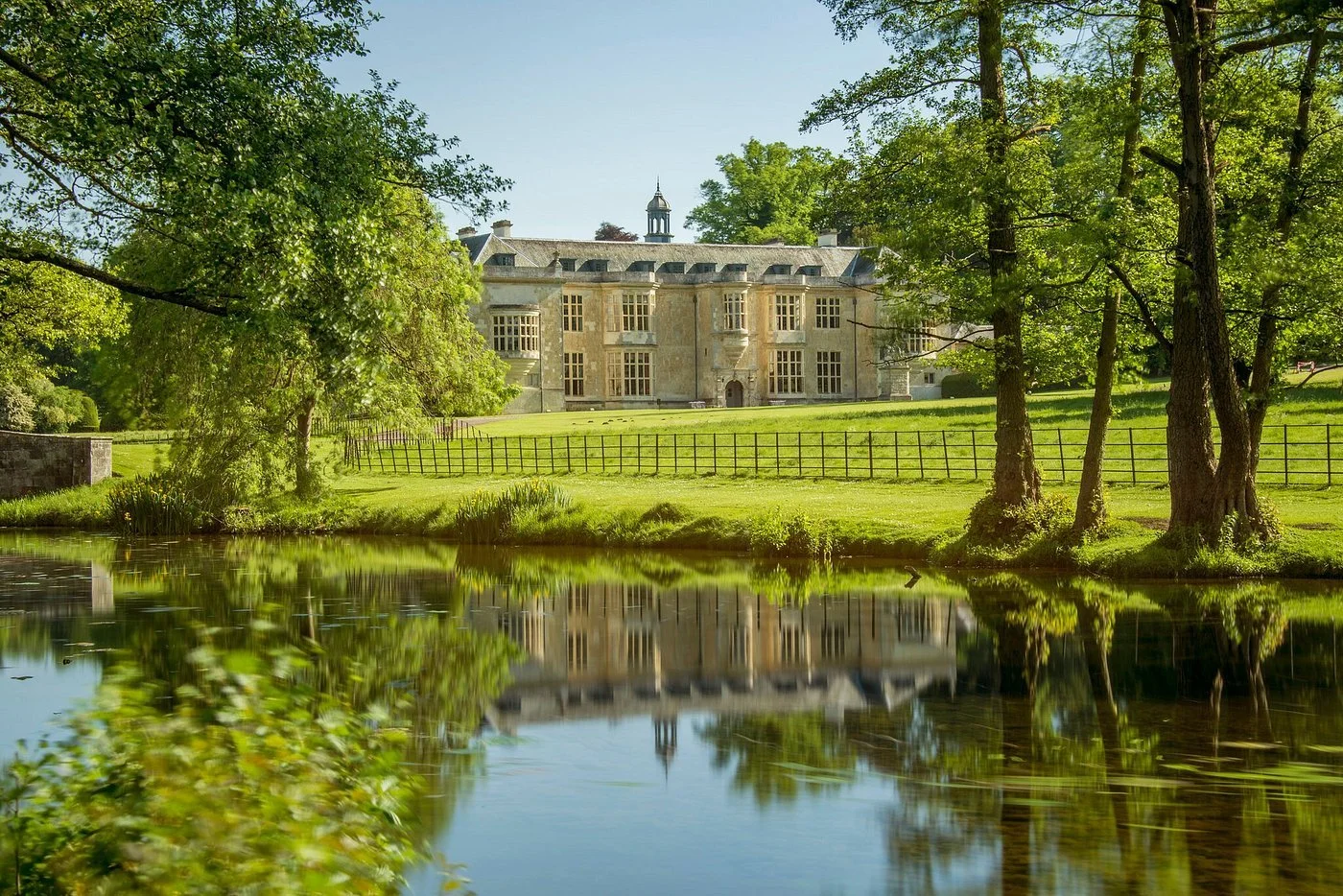
Hartwell House, Aylesbury
Whatever the reason, Hartwell House serves as a useful and convincing corrective. Set amongst 90 acres of Buckinghamshire parkland just outside Aylesbury, the National Trust-owned house is the sort of place that reminds you England has always done hospitality exceptionally well when it puts its mind to it. We’re not talking flashy, social media-driven hospitality, where everything is filtered to within an inch of reality – but rather hospitality in a far older sense of the word: comfort, generosity, beauty and the quiet confidence that comes from knowing there's absolutely no need to show off.
In the midst of a blisteringly hot British summer, the appeal felt particularly obvious. Why scramble for a crowded flight to southern Europe when the sunshine is beating upon one of the country's finest country house hotels, sitting quietly in Buckinghamshire and getting on with things exactly as it has done for centuries?
A House with Stories in its Floorboards
An overnight bag was briskly packed, a one-hour train from Marylebone was boarded, and Hartwell House revealed itself in no shortage of Georgian splendour. At the end of the sweeping, tree-lined driveway, I was greeted by Ethan – a young man who managed the increasingly difficult feat of making a hotel check-in genuinely entertaining. Every historic house hotel has stories, of course, but few seem fortunate enough to have someone capable of delivering them with quite so much enthusiasm.
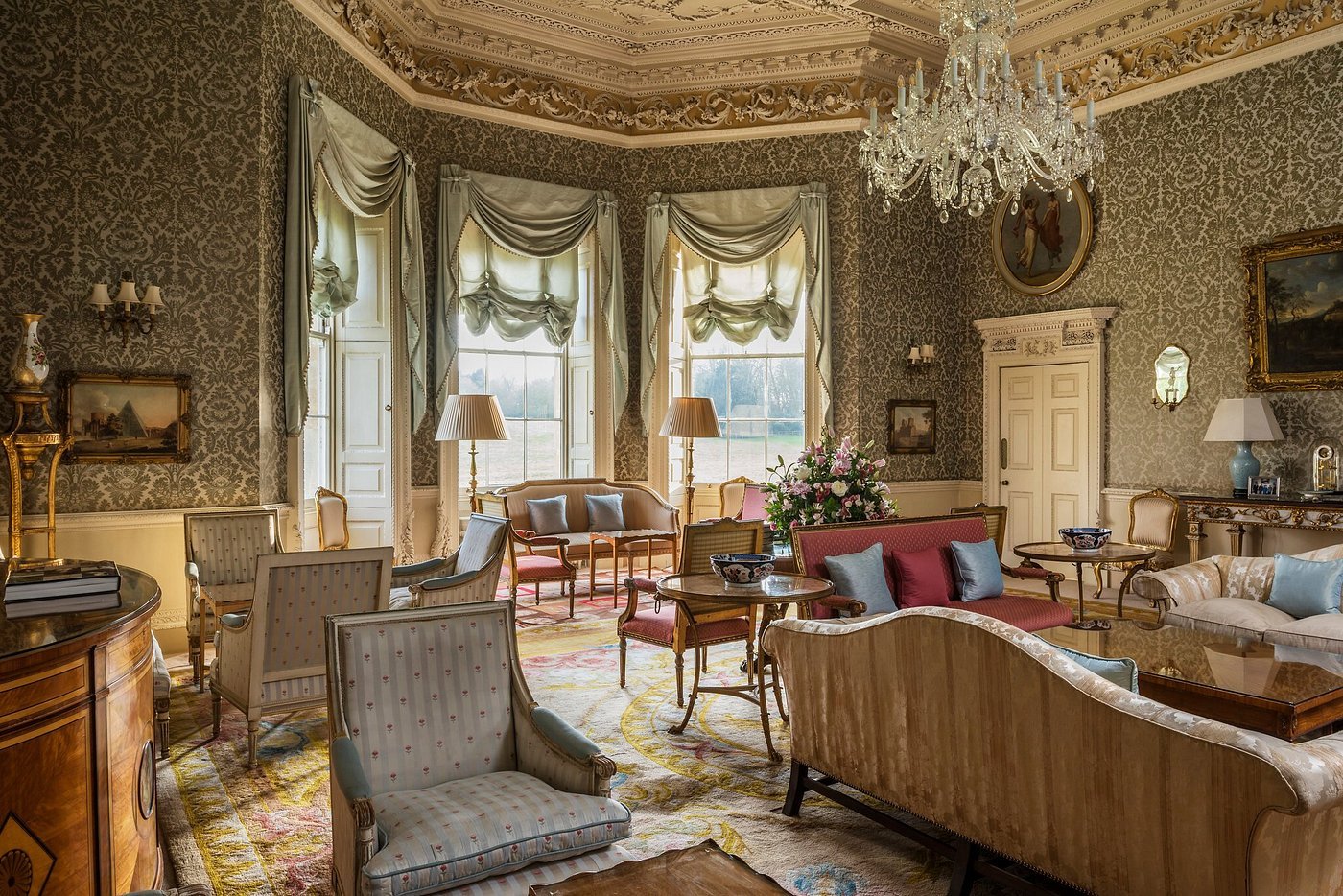
One of many magnificent public rooms
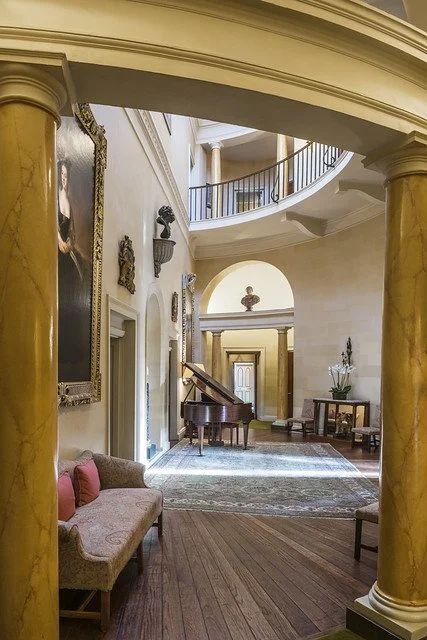
Within minutes we had covered the ancient history of the hotel – built upon land gifted to an illegitimate son of William The Conqueror, no less – as well as the architecture, former residents, restoration work and one particularly irresistible rumour concerning the fire that nearly destroyed the house during the 1960s. Supposedly, the culprit may have been a discarded cigarette tossed aside by a group of secretly smoking schoolgirls, and whether that story belongs firmly in the category of local folklore or historical fact is almost irrelevant. Buildings like Hartwell thrive on such tales, and I’ve long suspected that scandal is never far from the pristine, stucco-work surface and polished silver of any English country house. Frankly, I wouldn’t want it any other way.
Though largely Georgian in appearance, Hartwell wears its age remarkably lightly. Historic House Hotels and the National Trust have restored it with obvious care, but mercifully haven't polished away all traces of character. Rooms open into drawing rooms, drawing rooms lead into libraries, portraits loom from panelled walls and grand staircases disappear towards corners you find yourself wanting to investigate for no reason other than curiosity.
Unlike some country house hotels that feel as though they've been painstakingly designed to resemble a grand historic home, Hartwell – much like its sister hotel, Bodysgallen Hall in North Wales – still feels like a grand historic home that simply happens to welcome overnight guests, and is only too happy to do so.
Sleeping Like A Dauphin In Exile
My room happened to be one of Hartwell's celebrated Royal Rooms, several of which hosted members of the French royal court during their exile following the Revolution. As exiles go, they could have done considerably worse. As selling points go, it's a difficult one to argue with, especially for somebody with a longstanding weakness for grand historical narratives.
I’ve been lucky enough throughout this occasionally ridiculous career to sleep in a number of rooms with a regal pedigree, and my Royal Room at Hartwell House is right up there with the very best of them. It occupies that wonderful territory between hotel suite and stately home exhibit. The ceilings soar, the windows seem determined to let in as much Buckinghamshire as possible and every surface appears to have acquired a story somewhere along the last three centuries. At its centre, a vast four-poster bed, surrounded by enough antiques to keep a Sotheby's specialist occupied for an afternoon. Heavy drapes framed enormous sash windows overlooking the estate, while period furniture and decorative detailing reinforced the sense that modern minimalism (the ever-creeping beige plague eating away at the luxury industry) had been politely but firmly shown the door.
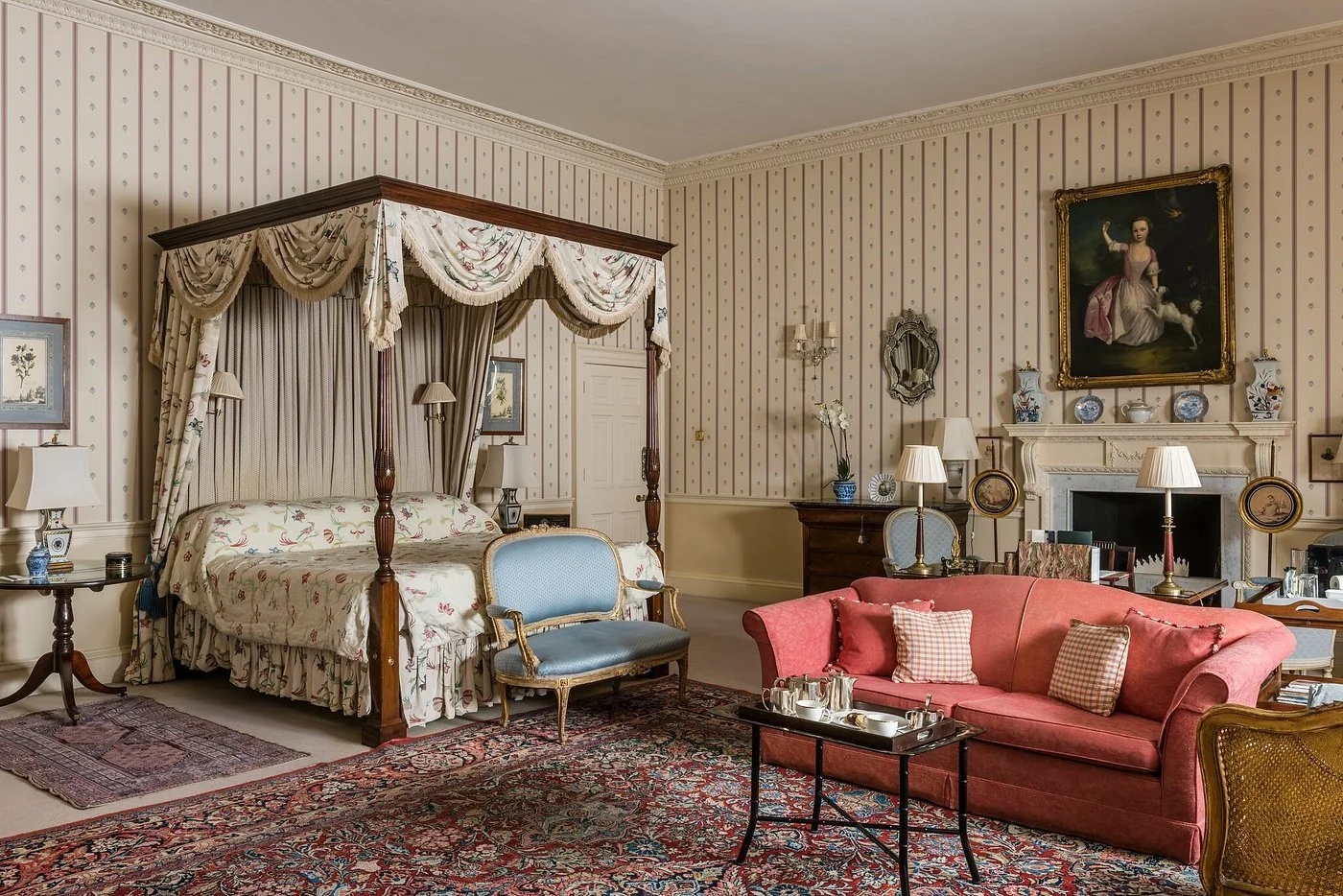
Royal bedrooms, fit for an exiled monarch
Amid all the majestic tapestries, velvet and carved wood, there’s a further attribute to the bedroom that’s well worth mentioning: the silence. After all, modern luxury hotels often excel at giving you more. More technology, more amenities, more distractions and, occasionally, more inventive ways of folding towels into improbable shapes. Hartwell lacks nothing when it comes to comfort, but it also gives you peace.
Looking out across the grounds as the evening light began to soften, it was difficult to detect any sign of the outside world at all. There was no distant traffic or the steady hum of aircraft heading into Heathrow. No sirens cut through the dusk, only birdsong ricocheting off the cedar trees and the occasional crunch of footsteps crossing the gravelled paths. Unsurprisingly, I slept extraordinarily well. Presumably the exiled French royals did so too, although I imagine being several hundred miles from the nearest guillotine probably helped.
Afternoon Tea, as Civilisation Intended
Three o’clock rolled around, and it was time to indulge in one of the UK’s great gifts to the world.
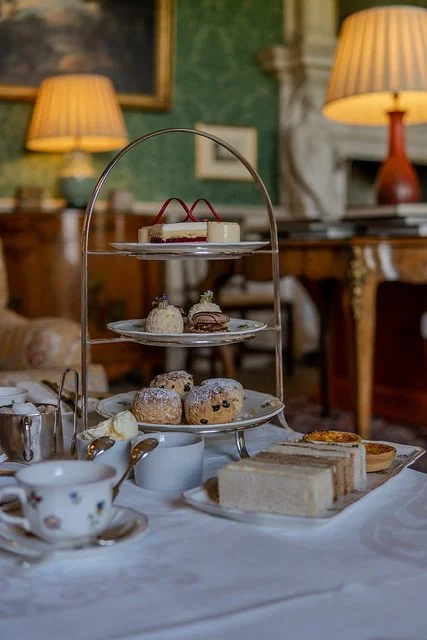
Afternoon tea, Hartwell House style
Served in the beautifully ornate drawing room and beneath the watchful eye of the Lee family portraits, it would be easy enough for the Hartwell House team to rest on their laurels when it comes to the ceremonial serving up of the ultimate array of picky bits.
However, clear effort had gone into producing a tea that’s more than worthy of the setting; a still-warm cheese and chutney quiche was wrapped in pastry of almost scandalous butteriness, the quartet of sandwiches offered enough variation to remain interesting, and superb scones were accompanied by enough clotted cream to briefly make me reconsider some of my long-term life choices. A quartet of beautifully constructed sweet pastries completed proceedings. Better still, there was Lapsang Souchong. Regular readers will know my feelings on the matter. The steady disappearance of properly smoky Lapsang from British supermarket shelves remains a source of low-level irritation in my life, so encountering a pot of the good stuff at Hartwell felt rather like being reunited with an old friend.
From my seat in the drawing room, surrounded by antiques, portraits and generations of accumulated history, I found myself wondering why we ever feel the need to improve upon traditions like this. Tea, cake and nowhere urgent to be remains an extraordinarily difficult formula to beat.
Dinner in the Grand Tradition
By dinner (and following a vigorous and lengthy stroll), I had somewhat miraculously worked up precisely the sort of appetite country house hotels were invented to satisfy. Served in a beautiful, hushed dining room, the kitchen focuses on doing classic things well and allowing quality ingredients to take centre stage.
A glass of excellent Albariño set the tone, followed by an amuse-bouche of parmesan foam and mushroom consommé. Starters included a beautifully cooked hand-dived scallop served atop salt-baked celeriac, alongside a goat's cheese soufflé that achieved the near-impossible trick of being simultaneously rich and impossibly light.
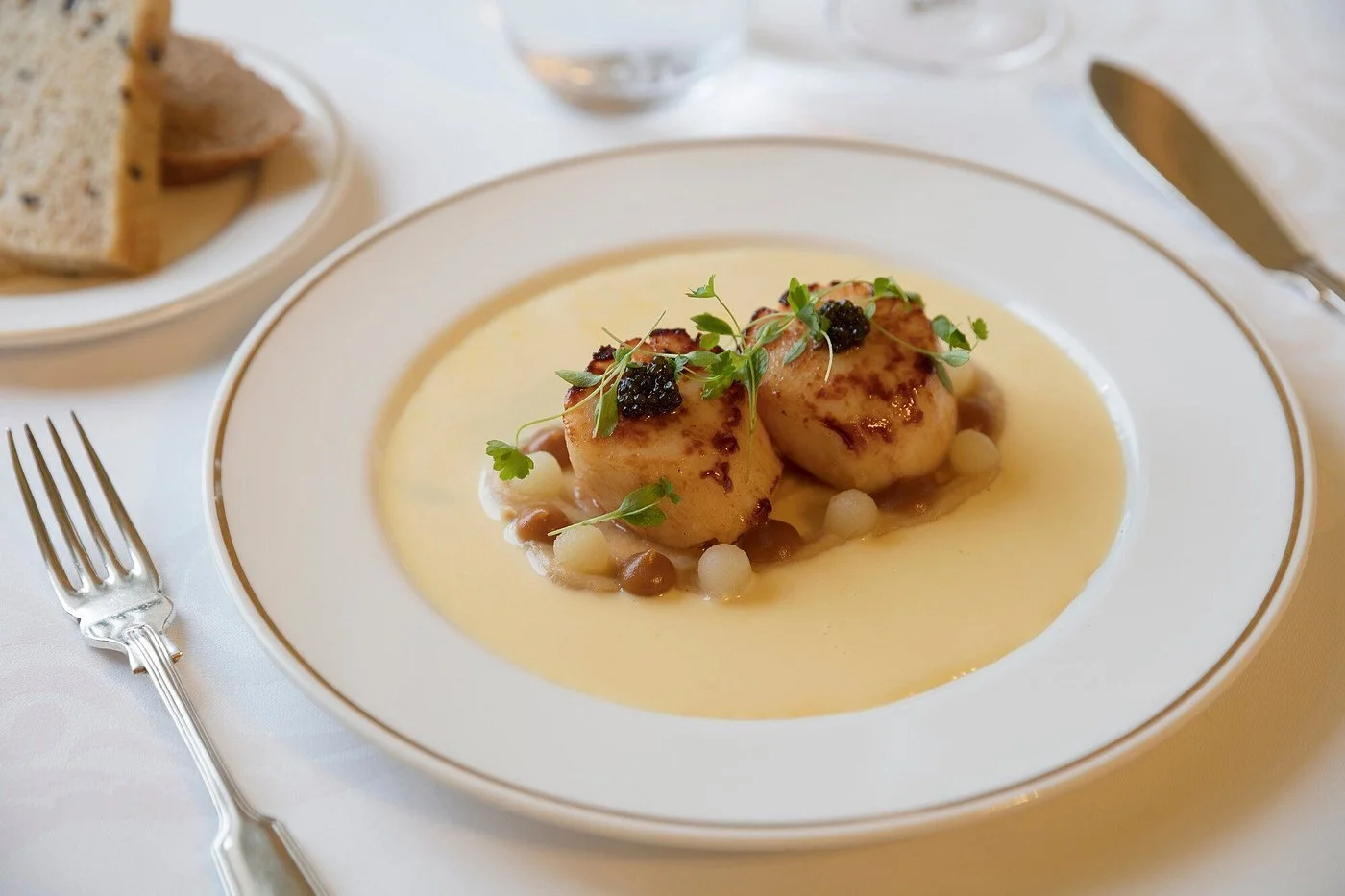
Hand-dived scallops, one of many delights on the Hartwell House menu
My sea bass main course was similarly accomplished. The skin arrived wonderfully blistered and crisp, while the fish beneath remained moist, pearlescent and expertly cooked. The only slight disappointment came from an accompanying crab orzo that seemed rather reluctant to showcase the presence of any actual crab. If a menu promises crustaceans, I want sweetness, salinity and unmistakable seaside character. Here, those qualities remained frustratingly elusive.
Fortunately, the kitchen redeemed itself almost immediately through a warm milk loaf served with vibrant green tarragon butter that was nothing short of exceptional. Rich, fluffy and deeply comforting, it reinforced a suspicion formed during afternoon tea: somebody in Hartwell's kitchens possesses a serious talent for baking. Restaurants often underestimate how much diners notice these details. They shouldn't.
An elegant, elevated Eton Mess rounded off proceedings. Personally, I prefer my Eton Mess a little less refined and a little more faithful to the clue sitting there in the name, but it remained a pleasant ending to a thoroughly enjoyable meal.
Ninety Acres Of Reasons To Stay Longer
As you’ve probably gathered, Hartwell House is clearly the kind of place that feels a compulsion to feed its guests very well indeed, and pay little attention to matters such as calories. Quite right, too – life is short, and dining is one of the few pleasures many of us have left. Thank goodness, therefore, for the extensive grounds that surround the hotel, allowing the greedy and guilt-ridden to counteract the effects of some of Buckinghamshire’s best butter and cream.
The estate is as magnificent as the interiors. Designed in part by Richard Woods, a contemporary of Capability Brown, the grounds unfold through lakes, woodland, formal avenues and ornamental curiosities that reveal themselves gradually the further you wander.
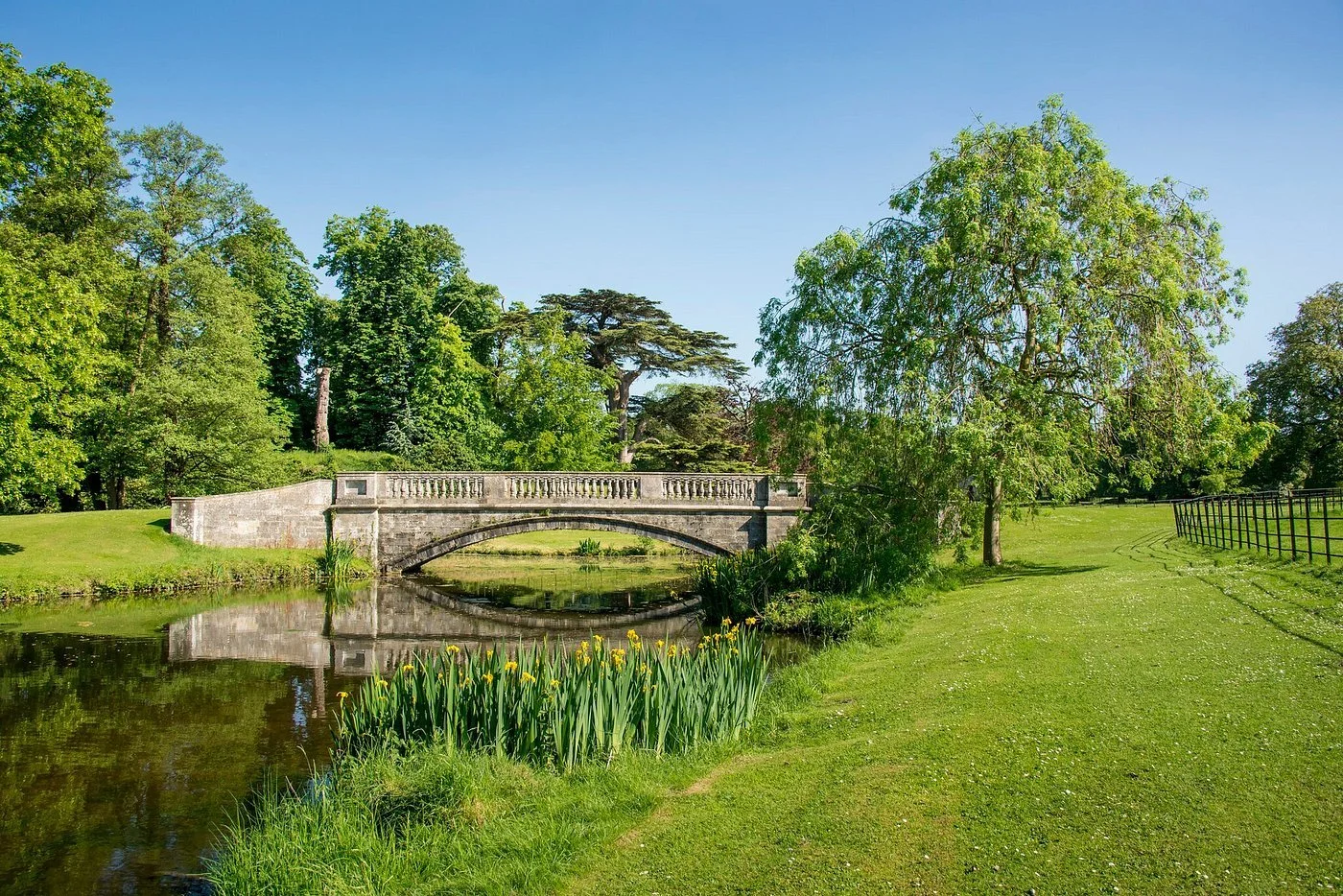
Acres of pristine greenery, perfect for ambling
Ornithologically, it’s something of a wonderland. Red kites circle overhead in astonishing numbers, filling the sky with their unmistakable cries before periodically plunging earthward in pursuit of something unfortunate and furry. Grey herons stalk the lakeside with professional seriousness, elegant white egrets pick their way through the shallows. Geese of various sizes, shapes and colours march around conducting urgent goose-related business and swans drift serenely across the water, radiating the quiet confidence of creatures fully aware they own the place. A kingfisher darts into the canal, a flash of halcyon blue catching the eye before vanishing into the trees.
Beyond the wildlife, Hartwell possesses precisely the sort of eccentricity one hopes to find in a great English estate. Woodland paths suddenly reveal ornamental columns and follies emerge unexpectedly between the trees. Somewhere, centuries ago, somebody looked at a perfectly attractive section of countryside and decided it could be improved further by installing a classical structure for absolutely no practical reason whatsoever. Thank goodness they did.
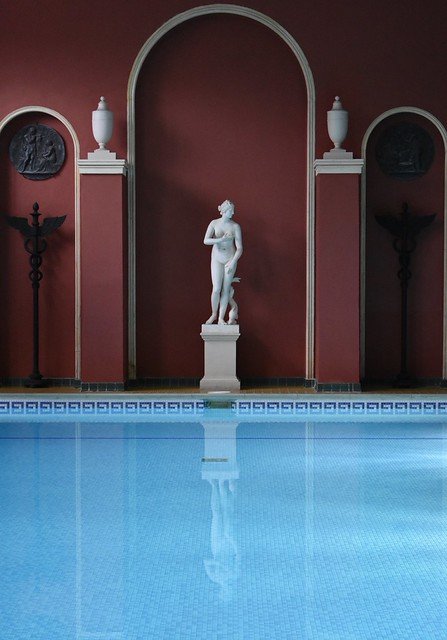
Classical flourishes at the spa
The Spa That Accidentally Stole My Afternoon
Hartwell House, like all good countryside hotels, boasts its own spa complex for guests looking to unwind with the help of hot water, steam and an impressive menu of treatments and beauty rituals.
Housed within the former stables of the house, a mere five-minute walk from the grand entrance, the spa offers a swimming pool, sauna, steam room, spa bath and gym. It's decked out in a deep, regal red colour scheme and features the sort of classical busts that seem quietly judgemental of your front crawl technique. Honestly, I’d planned to spend about half an hour there, cooling off from the intense sunshine and refreshing the senses for the trip ahead. I emerged about two hours later, slightly unsure of where the time had gone, and I’m struggling to think of a better compliment one could pay to a spa.
In Praise of the Old-Fashioned
It would be very easy to describe Hartwell House as old-fashioned, because in many ways, that’s exactly what it is. The service is old-fashioned. The afternoon tea is too, as is the dress code for dinner, the landscaped parkland and the meticulously-preserved interior design. Indeed, the idea that a luxury break might involve sitting with a pot of Lapsang Souchong and a good view, rather than documenting every movement and moment for strangers online feels positively prehistoric.
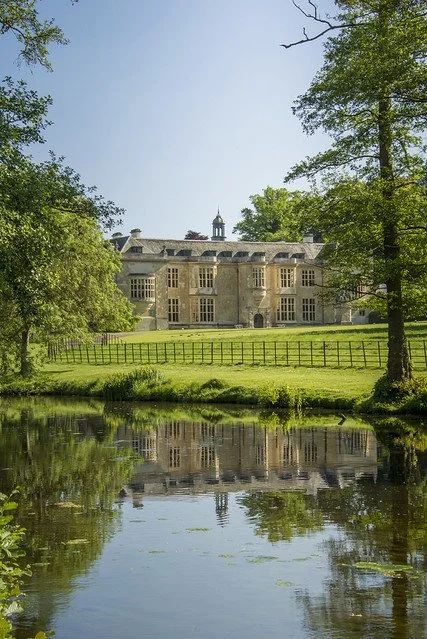
A compelling reason not to fly
However, spend the night or a couple of days at Hartwell House, and it becomes abundantly clear that these traditions haven’t survived because of sentimentality or a rose-tinted view of the past; they’ve endured because they really, really work.
Hartwell House, the National Trust and Historic House Hotels aren’t striving to reinvent the country house experience. They could spend their time and money on chasing the latest trends and manufacturing moments for viral fame, but they choose to focus on a more timeless sense of pleasure and relaxation. They achieve this with remarkable confidence because, quite simply, genuine luxury isn’t found in novelty or the shifting sands of fashion. It’s uncovered in the attentive service of staff who’ve learned every story and who know every hidden nook, in a perfectly-brewed pot of tea, and the feeling that – at least for a day or two – the outside world can wait a while.
Best of all, it's all within easy reach of London, Oxford or Birmingham, and it doesn't require dragging a suitcase through security, removing your belt for strangers or paying £7 for a bottle of water in Departures. Hartwell House is a reminder that genuine escapism isn't always found somewhere far away. Sometimes, it's been sitting quietly in Buckinghamshire all along.
Love historic country house articles? Check out our reviews of Jane Austen Hotels in England, Bodysgallen Hall, Chillingham Castle and The Falstaff Hotel.
